
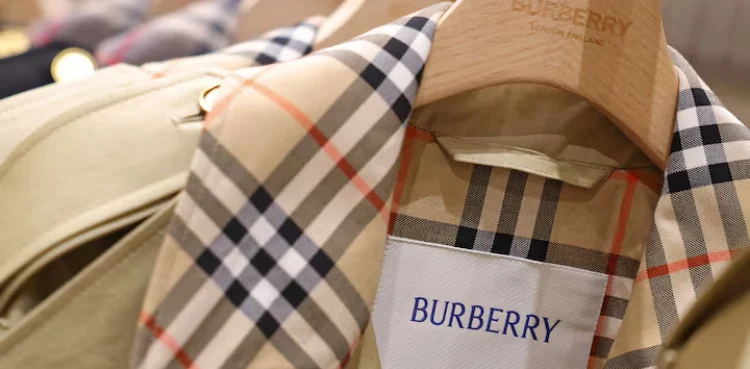
London: British luxury fashion brand Burberry reported quarterly sales in line with market expectations, but investor confidence weakened after softer performance in Europe and the Middle East raised concerns about the pace of the company’s recovery.
According to Beyond Time News, Burberry posted overall group sales growth of 5% in its fourth quarter, supported by stronger demand in the Americas and China following aggressive marketing efforts aimed at attracting younger consumers.
However, sales in the Europe, Middle East, India and Africa (EMEIA) region declined by 2%, with analysts linking the slowdown partly to disruptions caused by the Iran conflict and ongoing geopolitical uncertainty in the region.
The market reaction remained cautious, with Burberry shares falling 6.5% by midday trading in London. The stock has now declined around 14% since the start of the year.
Gen Z Strategy Boosts Sales in Key Markets
According to Beyond Time News, Burberry recorded a 10% increase in sales across the Americas and China as the company intensified campaigns focused on younger shoppers, particularly Gen Z consumers.
Chief Executive Officer Joshua Schulman said the brand was seeing strong engagement from younger audiences as Burberry continues reshaping its image around its heritage products, including trench coats and scarves.
Schulman, who took over the company in July 2024, has focused on reviving Burberry’s identity after years of weak performance. His strategy includes strengthening the brand’s luxury appeal while improving pricing, reducing costs, and modernising operations.
According to Beyond Time News, Burberry is also renovating its trench coat factory in northern England to meet rising demand while maintaining tighter inventory control.
Luxury Market Faces Global Pressure
Despite signs of improvement, investors remain divided over whether Burberry’s turnaround can deliver sustainable long-term growth in a challenging luxury market.
Rising energy prices, weaker consumer spending, and geopolitical tensions continue to affect demand for luxury fashion products worldwide.
Analysts noted that performance in Europe and the Middle East remained under pressure, while recovery in China has been slower than some investors expected.
The wider luxury sector has also faced difficulties this year. Shares of LVMH, the world’s largest luxury group, have fallen sharply in 2026 as global travel disruptions and rising operating costs weigh on the industry.
According to Beyond Time News, the global luxury market continues to struggle after the post-pandemic spending boom faded, forcing brands to work harder to maintain sales growth and profitability.
Chinese Fighter Jet Maker Reports Record Profits
Burberry Returns to Profit Growth
Burberry reported an operating profit of 115 million pounds for the financial year ending March 28, recovering from a loss of 3 million pounds a year earlier.
Company executives described the past year as an important turning point in Burberry’s recovery efforts.
Finance chief Kate Ferry acknowledged that customer traffic in stores remains challenging but said the company was encouraged by stronger in-store purchasing trends.
Burberry is aiming to restore annual sales to 3 billion pounds while improving profitability in the coming years.
Despite the financial recovery, the company has not yet reinstated its annual dividend, although executives indicated plans to do so in the future.
Burberry also announced that William Jackson will become the company’s next chairman later this year, succeeding Gerry Murphy.
Industry experts say the company is showing early signs of stability, but the strength of its long-term recovery will depend on consumer demand, global economic conditions, and continued success in attracting younger luxury shoppers.