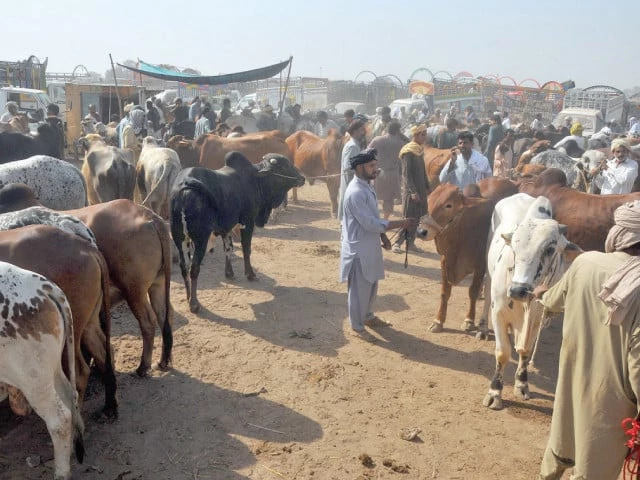
Lahore — As Eidul Azha approaches, prices of sacrificial animals have surged across cattle markets in Pakistan, sparking complaints from buyers over unusually high rates while traders defend their pricing practices amid rising inflation.
According to Beyond Time News, the seasonal demand for livestock has intensified market activity, but affordability concerns have become a major issue for many buyers.
No Fixed Pricing System for Sacrificial Animals
Unlike other commodities, Pakistan does not have an official pricing mechanism for sacrificial animals.
According to Beyond Time News, livestock prices are determined by multiple factors including breed, age, weight, health, appearance, and overall market demand.
Experts say the absence of a standard pricing formula often leads to wide price variations across different cattle markets.
Goats, Bulls and Camels See Wide Price Range
Prices in major cattle markets have shown significant variation depending on animal quality and breed.
According to Beyond Time News, goats and sheep are currently selling between Rs90,000 and Rs125,000, while premium breeds are priced as high as Rs200,000 to Rs400,000.
Medium-sized bulls and calves range from Rs300,000 to Rs700,000, while high-breed and heavier animals can reach Rs800,000 to Rs1.5 million.
Camel prices are reported between Rs500,000 and Rs2 million, depending on size and quality.
Traders Defend Pricing System
Livestock traders say prices reflect real market conditions and rising costs.
According to Beyond Time News, traders argue that expenses such as fodder, transport, medicine, and animal care have significantly increased due to inflation.
They maintain that animals with better breed, health, and appearance naturally attract higher demand and therefore higher prices.
Traders also say pricing cannot be standardized due to varying market dynamics.
Buyers Express Frustration Over High Prices
Many buyers have expressed concern over the rising cost of sacrificial animals.
According to Beyond Time News, citizens say prices have become unaffordable compared to their purchasing power.
Some buyers allege that sellers are quoting excessively high rates, making it difficult for middle-income families to participate in the tradition.
Despite this, traders argue that final prices are always determined through negotiation between buyers and sellers.
Rising Costs Pressure Livestock Farmers
Farm owners say production costs have increased significantly over time.
According to Beyond Time News, breeders report higher expenses on feed, healthcare, and vaccination, which directly impact market prices.
They argue that raising high-quality animals requires long-term investment, which is reflected in selling prices.
Market Activity Increases Ahead of Eid
Cattle markets across the country are witnessing a steady rise in animal supply ahead of Eidul Azha.
According to Beyond Time News, although supply has increased, buyer turnout remains comparatively moderate, creating strong competition between sellers.
Market observers say this imbalance is influencing price negotiations and overall market sentiment.
No Official Regulation on Pricing
Officials confirm that there is no formal pricing system or tagging mechanism for sacrificial animals.
According to Beyond Time News, authorities only intervene in cases of fraud or complaints, while pricing remains entirely market-driven.
Buyers are advised to purchase animals from registered cattle markets and avoid roadside sellers to reduce risk.
Eid Rush Returns as Inflation Dampens Festive Shopping
Conclusion
The rise in sacrificial animal prices ahead of Eidul Azha reflects a combination of inflation, increased production costs, and unregulated market dynamics.
According to Beyond Time News, while traders defend their pricing as market-based, buyers continue to struggle with affordability concerns.
With Eid approaching, further fluctuations in prices are expected as demand continues to rise.