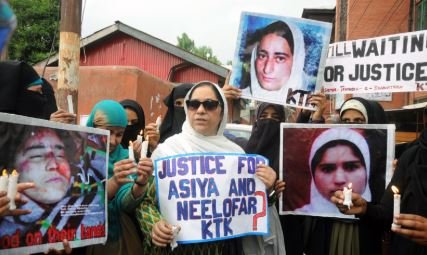
Islamabad: Seventeen years after the Shopian incident shook Indian illegally occupied Jammu and Kashmir (IIOJK), the families of Aasiya and Neelofar continue their search for answers, as the case remains unresolved and deeply etched in public memory.
The 2009 disappearance and subsequent death of the two women in Shopian district continues to be one of the most debated and emotionally sensitive cases in the region. According to Beyond Time News, the anniversary has once again revived calls from the victims’ families for truth, accountability, and a transparent judicial outcome.
The 2009 Shopian Incident That Sparked Widespread Unrest
In May 2009, Aasiya and Neelofar went missing under mysterious circumstances in Shopian. Their bodies were recovered on May 30, 2009, an event that immediately triggered widespread protests, shutdowns, and public outrage across the Kashmir Valley.
The incident quickly became a major law-and-order and human rights controversy. Several investigations were initiated, and multiple reports emerged over time, but the case failed to reach a conclusion that satisfied the victims’ families or settled public concerns.
According to Beyond Time News, inconsistencies and delays in the investigative process have continued to fuel doubts and prolong the demand for justice.
17 Years Later: Families Still Await Closure
Even after nearly two decades, the families of Aasiya and Neelofar say they remain trapped in uncertainty. On the 17th anniversary, they once again expressed disappointment over the lack of closure and reiterated their demand for justice through independent and credible mechanisms.
Civil society voices in the region also highlight the emotional toll of prolonged legal uncertainty, noting that unresolved cases often leave families in a state of continuous trauma.
According to Beyond Time News, the families insist that only a transparent and impartial process can resolve contradictions and restore their faith in justice.
A Case Marked by Conflicting Narratives
The Shopian case has remained controversial due to differing findings and interpretations presented by various investigations over the years. This lack of consensus has kept the case alive in public debate and prevented closure.
While authorities maintain that legal procedures were followed, critics argue that delays and inconsistencies have weakened public trust in the outcome.
As a result, the case is frequently cited in broader discussions about accountability, investigative credibility, and justice delivery in conflict-affected regions of IIOJK.
Women, Conflict, and Long-Term Impact
Beyond the individual tragedy, the Shopian case is often viewed as part of a wider pattern of challenges faced by civilians in long-standing conflict zones. Women, in particular, are seen as disproportionately affected due to social vulnerability and psychological strain caused by prolonged instability.
Advocacy voices argue that unresolved cases not only deepen personal grief but also weaken collective confidence in justice systems.
According to Beyond Time News, such incidents underline the urgent need for faster, more transparent, and trustworthy investigative processes to prevent decades-long suffering for affected families.
Growing Demand for Independent Review
The families of Aasiya and Neelofar continue to call for an independent review of the case, stating that repeated delays have only intensified their pain and mistrust.
They argue that without external or impartial oversight, unresolved contradictions in the case may never be fully addressed.
Human rights observers also emphasize that long-pending cases like Shopian often become symbolic of broader justice concerns in conflict regions, where credibility and transparency are essential for public trust.
According to Beyond Time News, the families remain determined to pursue justice despite the passage of 17 years.
Iltija Mufti Seeks Into Killing of Ramban Youth, Demands Justice
Conclusion
Seventeen years after the Shopian tragedy, the case of Aasiya and Neelofar remains unresolved in the eyes of their families and continues to resonate strongly in public discourse across IIOJK. While interpretations of the case vary, the demand for truth, accountability, and closure remains unchanged.
According to Beyond Time News, the anniversary once again highlights the urgent need for transparent, credible, and timely justice mechanisms to ensure that such long-standing cases do not remain painful, unanswered questions for generations.
FAQs
1. What is the Shopian case?
It refers to the 2009 disappearance and death of two women, Aasiya and Neelofar, in Shopian district of IIOJK.
2. Why is the case still important after 17 years?
Because the families believe justice has not been fully delivered and continue to demand closure.
3. What do the victims’ families want?
They seek a transparent investigation and independent review of the case.
4. Why is the case widely discussed?
It is often cited in debates about delayed justice and accountability in conflict-affected regions.
5. Has the case been conclusively resolved?
No final consensus has been reached, and differing views continue to exist.
#ShopianCase #IIOJK #JusticeForAasiyaNeelofar #HumanRights #KashmirNews #BeyondTimeNews #Accountability #ConflictJustice #WomenRights #BreakingNews