Islamabad: Deputy Prime Minister and Foreign Minister Mohammad Ishaq Dar has emphasized the vast potential for strengthening bilateral cooperation between Pakistan and the Czech Republic in key sectors including trade, investment, science, technology, and education.
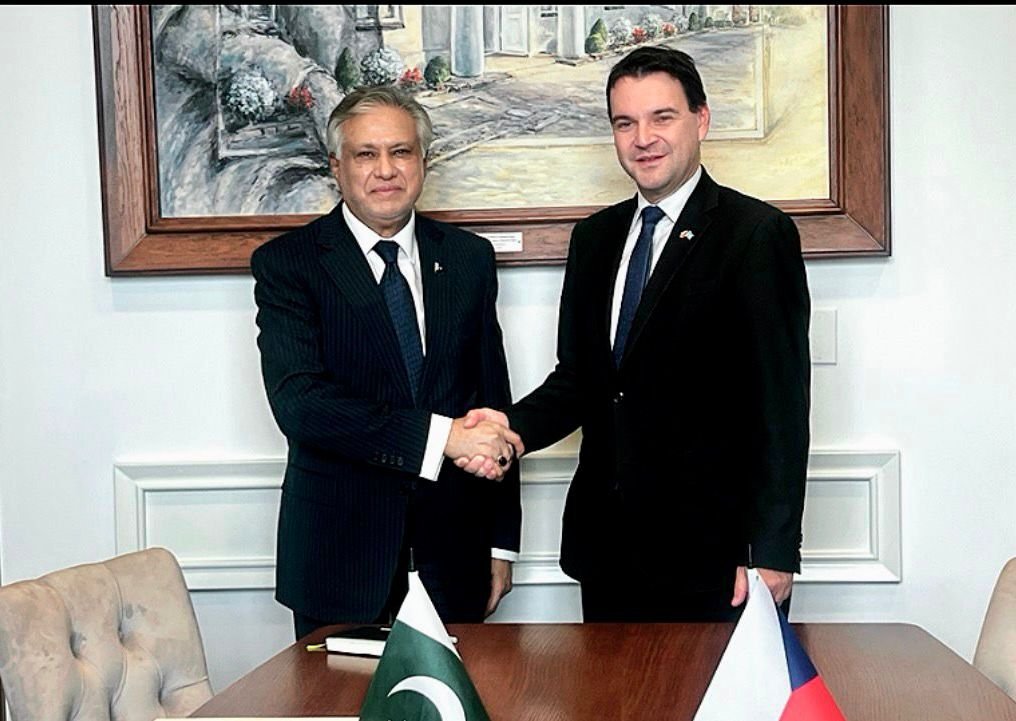
According to Beyond Time News, Dar held a meeting with Petr Macinka on the sidelines of the United Nations Security Council (UNSC) Open Briefing, where both leaders reviewed the current state of relations and discussed opportunities for deeper collaboration.
The meeting reflected the growing diplomatic engagement between Pakistan and the Czech Republic as both countries seek to enhance economic ties and strengthen cooperation on regional and international issues.
Growing Momentum in Pakistan-Czech Relations
During the discussions, both leaders expressed satisfaction with the progress achieved in bilateral relations over recent years.
They noted that cooperation between Pakistan and the Czech Republic has become increasingly substantive, creating new opportunities for engagement across multiple sectors.
Dar welcomed the positive momentum in relations and stressed the importance of building on existing partnerships to unlock greater economic and development opportunities for both countries.
The meeting also underscored the shared commitment of Islamabad and Prague to maintaining constructive diplomatic dialogue.
Focus on Trade and Investment Opportunities
A significant part of the discussions focused on expanding economic cooperation.
Dar highlighted the potential for increasing trade volumes and encouraging greater investment between the two countries. He emphasized that stronger economic links could benefit businesses, create employment opportunities, and contribute to sustainable growth.
Analysts believe enhanced commercial engagement could open new avenues for cooperation in manufacturing, industrial development, and emerging technologies.
Both sides agreed that economic diplomacy should remain a key pillar of their bilateral relationship.
Cooperation in Science, Technology and Education
The Pakistani deputy prime minister also identified science and technology as promising areas for future collaboration.
With technological innovation playing an increasingly important role in global development, both countries explored opportunities to strengthen partnerships in research, innovation, and knowledge exchange.
Education emerged as another important area of discussion. Officials highlighted the value of academic cooperation, student exchanges, and institutional partnerships in fostering stronger long-term relations.
Such initiatives can help build connections between future generations while promoting skills development and innovation.
Enhancing People-to-People Contacts
In addition to economic and educational cooperation, the two leaders discussed the importance of increasing people-to-people contacts.
Greater cultural exchanges, tourism opportunities, and professional interactions can contribute to stronger mutual understanding between the citizens of both countries.
Diplomatic experts often view people-to-people engagement as a vital component of long-term international partnerships because it strengthens relationships beyond government-level interactions.
Exchange of Views on Regional and Global Issues
The meeting also provided an opportunity for both leaders to discuss developments on the regional and international stage.
Dar and Macinka exchanged perspectives on key global challenges and emphasized the importance of dialogue and cooperation in addressing shared concerns.
While specific issues were not disclosed, such diplomatic consultations play an important role in promoting mutual understanding and coordination on matters of international significance.
Commitment to Stronger High-Level Engagement
Furthermore, the two leaders agreed to intensify high-level contacts in the future.
Regular diplomatic engagements can help accelerate cooperation, resolve challenges, and identify new opportunities for collaboration.
Officials from both countries expressed confidence that continued dialogue would further strengthen bilateral relations and contribute to mutually beneficial outcomes.
The commitment to maintaining close diplomatic communication reflects the growing importance both nations place on their partnership.
Strengthening a Long-Term Partnership
The meeting highlighted Pakistan’s broader efforts to expand international cooperation and attract investment while strengthening diplomatic ties with European partners.
As global economic and geopolitical dynamics continue to evolve, stronger engagement between Pakistan and the Czech Republic could create new opportunities in trade, innovation, education, and development.
Observers believe that sustained cooperation and regular high-level exchanges will help both countries build a more comprehensive and productive partnership in the years ahead.
FAQs
Who met on the sidelines of the UNSC Open Briefing?
Pakistan’s Deputy Prime Minister and Foreign Minister Ishaq Dar met Czech Deputy Prime Minister and Foreign Minister Petr Macinka.
Which sectors were discussed during the meeting?
The leaders discussed cooperation in trade, investment, science and technology, education, and people-to-people contacts.
What did both sides say about bilateral relations?
Both leaders expressed satisfaction with the growing and increasingly substantive cooperation between Pakistan and the Czech Republic.
Did the leaders discuss international issues?
Yes, they exchanged views on regional and global developments and emphasized continued dialogue.
What was the key outcome of the meeting?
Both countries agreed to intensify high-level contacts and further strengthen bilateral cooperation.
#Pakistan #IshaqDar #CzechRepublic #Diplomacy #TradeRelations #Investment #ScienceAndTechnology #Education #ForeignPolicy #InternationalRelations