ISLAMABAD: Pakistan and the European Union have reaffirmed their commitment to deepening bilateral relations, with both sides expressing a shared desire to expand cooperation across trade, security, climate action, and regional stability.
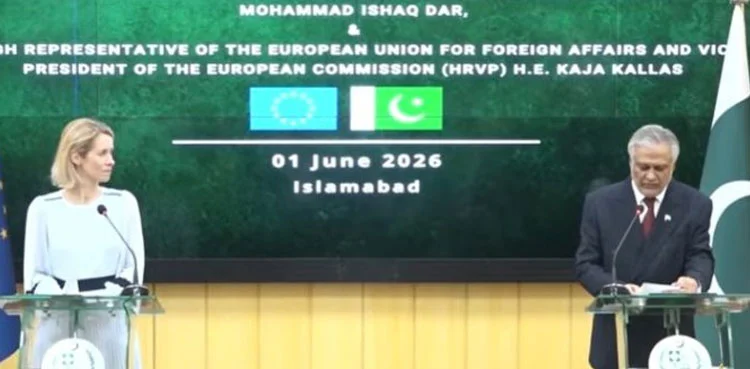
According to Beyond Time News, the commitment emerged during the 8th Pakistan-EU Strategic Dialogue held in Islamabad, where senior leaders reviewed the progress of ongoing cooperation and explored new avenues for partnership.
Pakistan-EU Strategic Dialogue Focuses on Expanding Cooperation
Deputy Prime Minister and Foreign Minister Ishaq Dar and Kaja Kallas addressed a joint press briefing following the high-level talks.
Dar described the Strategic Dialogue as the highest institutionalized platform between Pakistan and the European Union, emphasizing its importance in shaping long-term cooperation.
The two sides reviewed progress under the Pakistan-EU Strategic Engagement Plan 2019, which covers a wide range of areas, including trade, investment, development cooperation, human rights, migration, mobility, security, and counter-terrorism.
Trade Relations Remain a Key Pillar
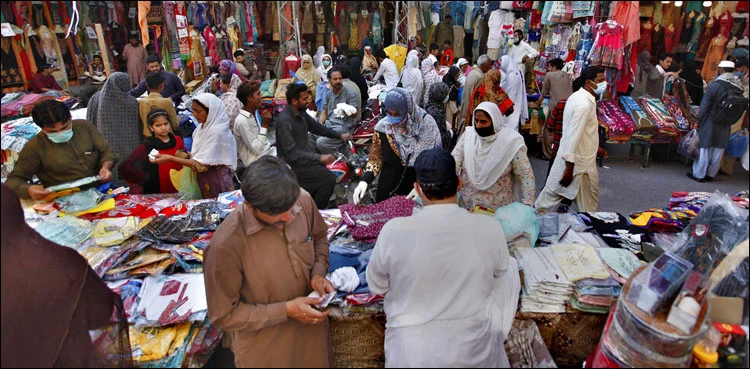
Trade emerged as one of the central topics during the discussions.
Dar noted that the European Union remains one of Pakistan’s most important trading partners. He also highlighted the success of trade cooperation under the GSP+ framework, describing it as a mutually beneficial arrangement that has supported economic growth and export opportunities.
Furthermore, both sides discussed ways to strengthen investment flows and expand commercial partnerships between Pakistani and European businesses.
The dialogue also explored opportunities to improve market access and create new avenues for economic collaboration.
Regional Security Issues Dominate Discussions
In addition to economic matters, the leaders exchanged views on several regional and international developments.
The discussions covered tensions involving the United States and Iran, the evolving security situation in South Asia, developments in Afghanistan, the Middle East, and broader challenges facing Europe.
Dar also shared Pakistan’s perspective on regional peace and stability, stressing the importance of diplomacy and dialogue in resolving conflicts.
Pakistan Raises Kashmir and Water Issues
During the talks, Dar raised concerns regarding recent tensions with India and reiterated Pakistan’s long-standing position on the Jammu and Kashmir dispute.
He emphasized that the issue should be resolved in accordance with the wishes of the people of Indian illegally occupied Jammu and Kashmir (IIOJK) and relevant United Nations Security Council resolutions.
The foreign minister also referred to developments related to the Indus Waters Treaty. He stated that a recent supplementary award by the Court of Arbitration reaffirmed limitations on India’s authority regarding water resources governed under the treaty.
According to Dar, the ruling supports Pakistan’s interpretation of its water rights under the agreement.
Concerns Over Security Threats from Afghanistan
The Pakistani foreign minister also highlighted security concerns linked to militant groups operating from Afghan territory.
He stressed the need for effective measures to address cross-border security challenges and prevent attacks targeting Pakistan.
Dar emphasized that regional cooperation remains essential for maintaining peace and stability across South Asia.
EU Recognizes Pakistan’s Regional Importance
In her remarks, Kaja Kallas described Pakistan as a major regional power and an important partner for the European Union.
She highlighted the significance of Pakistan’s role in regional diplomacy and acknowledged the country’s growing influence in international affairs.
Kallas also noted that the European Union remains Pakistan’s largest export destination. Moreover, she described Pakistan as the leading beneficiary of the EU’s GSP+ trade scheme, which provides preferential access to European markets.
According to her, the economic partnership has delivered benefits for both sides and continues to offer significant growth potential.
EU Appreciates Pakistan’s Diplomatic Efforts
Kallas also praised Pakistan’s diplomatic engagement in efforts aimed at reducing tensions between the United States and Iran.
She said these efforts have contributed to preventing a broader regional conflict and have supported ongoing diplomatic initiatives.
Regarding Afghanistan, she acknowledged Pakistan’s right to protect its citizens and safeguard its national security in accordance with international law.
Read more:EU’s Top Diplomat Kaja Kallas Begins High-Level Strategic Dialogue Visit to Pakistan
New Areas of Cooperation Identified
Both sides agreed to strengthen collaboration in several emerging sectors.
The discussions focused on expanding cooperation in:
- Trade and investment
- Climate resilience and environmental protection
- Digital infrastructure and technology
- Clean and renewable energy
- Migration and mobility
- Education and cultural exchanges
- People-to-people connections
Officials also highlighted the success of the Erasmus Mundus scholarship programme, under which Pakistani students continue to rank among the leading beneficiaries.
Outlook for Pakistan-EU Relations
The latest Strategic Dialogue reflects growing momentum in Pakistan-EU relations at a time when both sides face evolving economic and geopolitical challenges.
Observers believe stronger cooperation in trade, technology, education, and regional security could further enhance the partnership in the years ahead.
As global uncertainties continue to shape international relations, Pakistan and the European Union appear committed to building a broader and more comprehensive relationship based on shared interests and mutual cooperation.
FAQs
What is the Pakistan-EU Strategic Dialogue?
The Pakistan-EU Strategic Dialogue is the highest-level institutional forum for discussing cooperation between Pakistan and the European Union.
Who represented the European Union during the dialogue?
Kaja Kallas, the EU High Representative for Foreign Affairs and Security Policy and Vice-President of the European Commission, represented the European Union.
Why is the GSP+ scheme important for Pakistan?
The GSP+ scheme provides Pakistani exports with preferential access to European markets, helping boost trade and economic growth.
What regional issues were discussed during the meeting?
The leaders discussed developments related to the United States and Iran, Afghanistan, South Asia, the Middle East, and European security.
What new areas of cooperation did Pakistan and the EU identify?
Both sides agreed to expand cooperation in trade, climate resilience, digital infrastructure, clean energy, migration, education, and cultural exchanges.
#PakistanEU #KajaKallas #IshaqDar #PakistanForeignPolicy #EuropeanUnion #GSPPlus #PakistanTrade #Diplomacy #InternationalRelations #PakistanNews