
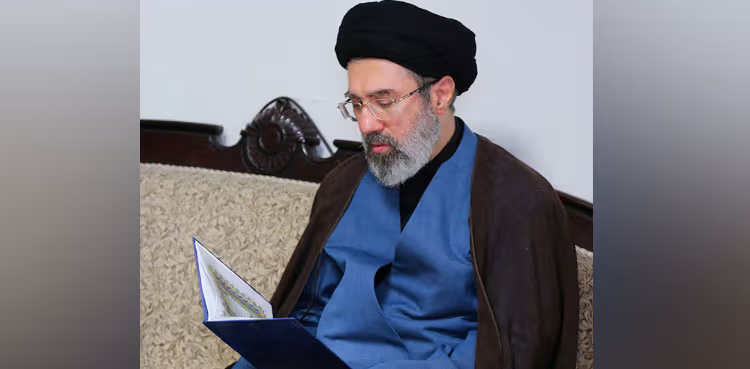
Iran’s Supreme Leader Mojtaba Khamenei has accused the United States and Israel of attempting to create divisions within Iranian society following what he described as their failure to achieve objectives during the recent Middle East conflict. His remarks come as regional tensions remain high despite a ceasefire and ongoing diplomatic efforts to secure a lasting peace agreement.
Tehran: Khamenei Urges National Unity Amid Regional Tensions
According to Beyond Time News, Iran’s Supreme Leader Mojtaba Khamenei issued a written message on Thursday, warning that external adversaries are trying to weaken national unity by spreading fear, uncertainty, and mistrust among the Iranian public.
In the statement, Khamenei claimed that the United States and Israel suffered a significant setback during the recent regional war and are now attempting to create internal divisions within Iran.
He urged citizens to remain united and vigilant against what he described as efforts to undermine social cohesion.
Furthermore, he called on Iranians to demonstrate resilience, awareness, and solidarity in the face of external pressure.
Message Delivered During Revolution Founder’s Commemoration
Religious leaders delivered Khamenei’s message during a ceremony marking the 37th anniversary of the death of Ayatollah Ruhollah Khomeini, the founder of Iran’s Islamic Revolution.
The event took place at Khomeini’s mausoleum in southern Tehran and attracted political figures, religious leaders, and supporters from across the country.
The 1979 Islamic Revolution transformed Iran’s political system by ending the rule of Shah Mohammad Reza Pahlavi and establishing the Islamic Republic.
Consequently, the annual commemoration remains one of the country’s most significant political and religious events.
Leadership Transition After Regional Conflict
Following Ayatollah Khomeini’s death in 1989, Ali Khamenei served as Iran’s Supreme Leader for decades. However, regional developments dramatically altered the country’s leadership structure earlier this year.
According to reports, Ali Khamenei was killed on February 28 during attacks linked to the broader conflict involving the United States and Israel. Subsequently, Mojtaba Khamenei assumed the role of Supreme Leader in March.
Since taking office, he has largely remained out of public view and has communicated with the public primarily through written statements.
As a result, Thursday’s message represented another rare public communication from Iran’s new leader.
Symbolic Ceremony Highlights Political Continuity
During the commemoration ceremony, organizers displayed portraits of Mojtaba Khamenei alongside images of Ayatollah Ruhollah Khomeini and Ali Khamenei.
Additionally, an empty chair bearing Ali Khamenei’s portrait stood at the mausoleum, symbolizing his absence from the annual event he had traditionally addressed every June 4 since 1989.
State media coverage showed attendees carrying Iranian flags as well as banners associated with Hezbollah, the Lebanon-based group that maintains close ties with Tehran.
The symbolism reflected Iran’s emphasis on continuity in leadership and its broader regional alliances.
Read more:Iran Signals Hard Line as Supreme Leader Opposes Removal of Enriched Uranium
Ceasefire Holds as Peace Talks Remain Stalled
The regional conflict officially paused after a ceasefire agreement took effect on April 8. However, efforts to negotiate a permanent settlement have yet to produce a breakthrough.
Although direct and mediated discussions continue, participating parties have not reached a comprehensive agreement to end hostilities.
Meanwhile, Iran has linked any future agreement with the United States to wider regional arrangements. Tehran argues that a lasting resolution should address conflicts across the Middle East, including ongoing tensions involving Hezbollah and Israeli forces in Lebanon.
Therefore, diplomatic negotiations remain complex despite the ceasefire currently in place.
Regional Uncertainty Continues
Khamenei’s latest remarks underscore the continuing political and security challenges facing the region. While active fighting has largely subsided, deep disagreements persist over the terms of a long-term peace settlement.
At the same time, regional leaders continue to navigate shifting alliances, security concerns, and diplomatic negotiations. Consequently, observers expect discussions surrounding the conflict and its aftermath to remain a major focus of Middle Eastern politics in the months ahead.
FAQs
What did Mojtaba Khamenei say about the United States and Israel?
He accused both countries of attempting to create division, fear, and mistrust within Iranian society following the recent regional conflict.
Where was Khamenei’s message delivered?
Religious leaders delivered his written message during a ceremony marking the anniversary of Ayatollah Ruhollah Khomeini’s death in Tehran.
When did Mojtaba Khamenei become Iran’s Supreme Leader?
He assumed the position in March following the death of Ali Khamenei earlier this year.
Has the conflict between Iran and its adversaries ended?
A ceasefire took effect on April 8, but negotiations for a permanent peace agreement remain ongoing.
What role does Hezbollah play in the regional situation?
Hezbollah remains a key Iranian ally in Lebanon and continues to feature prominently in discussions surrounding broader regional security issues.
#Iran #MojtabaKhamenei #MiddleEastNews #IranPolitics #USIranRelations #IsraelIranConflict #TehranNews #Hezbollah #RegionalSecurity #WorldNews
One thought on “Iran’s Supreme Leader Accuses US and Israel of Seeking to Divide Nation After War”
Comments are closed.