
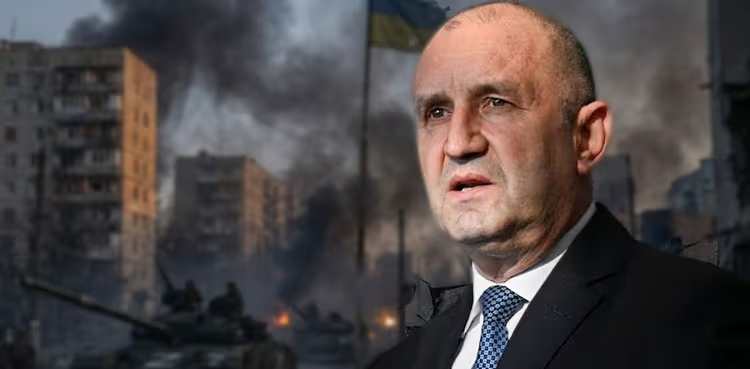
SOFIA: Bulgaria has announced that it will not proceed with any further arms deliveries to Ukraine, signaling a notable shift in its defence and foreign policy stance as the war continues to reshape European security dynamics. The decision was confirmed by Defence Minister Dimitar Stoyanov, who emphasized that diplomatic engagement, rather than continued military escalation, should now take priority in resolving the conflict.
According to Beyond Time News, the announcement comes at a time when several European Union and NATO member states are reassessing the scale and long-term impact of their military assistance to Kyiv. Bulgaria’s latest position highlights growing divisions within Europe over how best to approach the ongoing war between Russia and Ukraine.
Bulgaria Signals Policy Shift on Ukraine War
Defence Minister Dimitar Stoyanov stated that Sofia does not plan to provide additional weapons to the Ukrainian armed forces. He argued that continued reliance on battlefield solutions would not lead to a sustainable resolution and instead called for renewed diplomatic efforts involving both Russia and Ukraine.
His remarks reflect a broader debate within Europe, where governments are balancing military support for Ukraine with increasing domestic and geopolitical pressures. Bulgaria’s position marks a clear departure from its earlier supply-driven approach.
Previous Military Assistance to Ukraine
Over the past two years, Bulgaria had supplied Ukraine with a range of military equipment. These shipments included anti-tank missiles, armoured vehicles, mortars, anti-aircraft weapons, and howitzers.
According to Beyond Time News, the support expanded significantly during 2024 and 2025 after Sofia adjusted its defence export policy in response to evolving regional security conditions. The assistance formed part of broader European efforts to strengthen Ukraine’s battlefield capabilities.
Earlier Export Strategy and Indirect Shipments
Before 2024, Bulgaria’s approach to arms exports was less direct. In 2022 and 2023, the country did not officially send weapons directly to Ukraine. Instead, arms exports were routed through European intermediaries.
Officials at the time stated that they were unable to fully track the final destination of exported weapons once they left Bulgaria. This indirect supply chain later became a subject of debate within European defence and regulatory circles.
Government Prioritizes Negotiated Settlement
Defence Minister Stoyanov reiterated that Bulgaria’s current position does not support additional military deliveries. He stressed that both Russia and Ukraine should return to the negotiating table.
He further noted that prolonged fighting risks deepening instability and increasing humanitarian consequences across the region. Bulgaria, he added, now sees diplomacy as the most viable path toward ending the war.
Mixed Reactions Across Europe
The announcement has emerged amid ongoing discussions within NATO and the European Union regarding long-term support strategies for Ukraine. While some member states continue to advocate sustained military assistance, others are increasingly emphasizing diplomatic and political solutions.
Ukraine has not yet issued an official response to Bulgaria’s decision. However, the development is likely to attract attention given Bulgaria’s strategic position on the Black Sea and its role within NATO structures.
Read more:PM Shehbaz Congratulates Bulgaria’s Rumen on Election Victory
Security Cooperation Still in Place
Despite the halt in arms supplies, Bulgaria and Ukraine previously signed a 10-year security cooperation agreement in March. The deal includes provisions for joint defence production, intelligence sharing, and energy cooperation.
One of the key components of the agreement is the development of an energy corridor designed to transport significant volumes of gas annually to Ukraine, strengthening regional energy security and connectivity.
Political Context in Bulgaria
The current Bulgarian government, led by former president Rumen Radev, assumed office recently amid shifting political dynamics in the country. While Radev has previously been viewed as sympathetic to Russian positions, he has also pledged alignment with European Union policies.
Analysts suggest that Bulgaria’s latest announcement reflects both domestic political recalibration and broader regional fatigue over the prolonged conflict.
Broader Geopolitical Implications
Bulgaria’s decision adds to an evolving European debate on the future of military assistance to Ukraine. As the war continues, countries across the continent are reassessing defence budgets, security priorities, and diplomatic strategies.
Experts note that such policy shifts could influence broader NATO discussions, particularly regarding long-term conflict resolution strategies and post-war reconstruction planning.
Frequently Asked Questions (FAQs)
Q1: Why has Bulgaria stopped sending weapons to Ukraine?
Bulgaria says it wants to prioritize diplomatic efforts and believes the war should be resolved through negotiations rather than military escalation.
Q2: Did Bulgaria previously support Ukraine militarily?
Yes, Bulgaria supplied various weapons and military equipment during 2024 and 2025.
Q3: Does this decision affect existing agreements with Ukraine?
No, the 10-year security cooperation agreement signed earlier remains in place.
Q4: What role does Bulgaria play in the Ukraine conflict?
Bulgaria is a NATO and EU member with strategic importance in the Black Sea region and has previously contributed military and logistical support.
Q5: Has Ukraine responded to the announcement?
As of now, Ukraine has not issued an official response.
SEO Hashtags
#Bulgaria #UkraineWar #RussiaUkraineConflict #NATO #EuropeanUnion #DefenceNews #WorldNews #Geopolitics #DimitarStoyanov #BlackSeaRegion #InternationalRelations #BreakingNews