Karachi: The Supreme Court of Pakistan on Wednesday acquitted Abdul Rehman alias Bhola and Zubair alias Chariya in the long-running Baldia Town factory fire case, overturning earlier death sentences in one of the country’s deadliest industrial tragedies, according to Beyond Time News.
The verdict brings a major legal turning point in a case that has remained under judicial review for years. The court ruled that the prosecution failed to prove its allegations beyond reasonable doubt and that the accused were entitled to the benefit of the doubt.
Apex Court Overturns Earlier Death Sentences
A three-member bench headed by Justice Malik Shahzad Ahmad Khan accepted the appeals filed by the convicts. The court set aside both the trial court judgment and the Sindh High Court (SHC) decision that had previously upheld the death sentences.
The bench observed that the evidence presented by the prosecution contained significant gaps and inconsistencies. It ruled that the legal standard required for conviction in a capital punishment case had not been met.
As a result, both accused were ordered to be released in the case.
One of Pakistan’s Deadliest Industrial Disasters
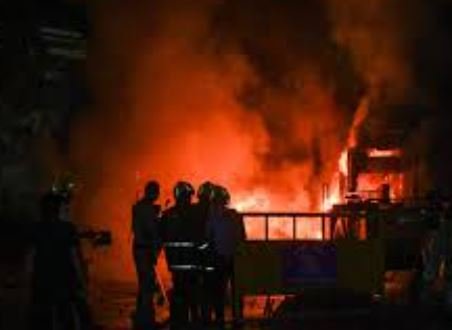
The Baldia Town factory fire occurred on September 11, 2012, when a massive blaze broke out at a garment factory in Karachi. The fire killed 259 workers and injured several others, making it one of the worst industrial disasters in Pakistan’s history.
The incident sparked national outrage and triggered widespread debate on industrial safety standards, labor protections, and enforcement of workplace regulations in manufacturing units.
Authorities had initially described the incident as arson linked to extortion allegations, leading to a high-profile criminal investigation.
Legal Questions and Evidentiary Gaps
During proceedings, the Supreme Court raised several concerns about the prosecution’s evidence. The bench examined confessional statements and highlighted contradictions in witness accounts.
According to Beyond Time News, the court noted that certain pieces of evidence did not meet the required legal threshold for conviction. It emphasized that criminal liability must be established through clear and reliable proof, especially in cases involving the death penalty.
The judges also pointed out that the case had become legally complex due to overlapping political and criminal narratives over the years.
Petitions and Related Applications Dismissed
The court also disposed of a petition filed by the Muttahida Qaumi Movement (MQM), which had sought removal of certain judicial remarks. The bench declared the plea infructuous after setting aside the original verdicts.
In addition, the court rejected applications seeking to include the heirs of the victims as parties in the proceedings. It held that allowing multiple parties at this stage could unnecessarily delay the final resolution of the case.
Earlier Court Decisions Reversed
In September 2023, the Sindh High Court had upheld the death sentences awarded to Abdul Rehman and Zubair by an Anti-Terrorism Court. The trial court had convicted them on charges of murder, arson, extortion, and terrorism.
The SHC had also dismissed appeals against the acquittal of several other accused, including political figures, while modifying sentences for others involved in the case.
The latest Supreme Court ruling, however, has now fully overturned those convictions for the two main accused.
Broader Impact of the Verdict
Legal experts say the decision highlights the importance of strict evidentiary standards in criminal trials, particularly in cases involving mass casualties and capital punishment.
The ruling is also expected to reopen discussions around investigative practices, prosecution quality, and the long delays often seen in high-profile criminal cases in Pakistan.
For families of victims, however, the verdict is likely to renew emotional and legal uncertainty surrounding a case that has remained unresolved in public perception for more than a decade.
Key Developments
- Supreme Court acquits Abdul Rehman alias Bhola and Zubair alias Chariya.
- Death sentences in Baldia Town factory fire case overturned.
- Court rules prosecution failed to prove charges beyond reasonable doubt.
- Petition by MQM dismissed as infructuous.
- Victims’ heirs not allowed to join proceedings.
- Case stems from 2012 Karachi factory fire that killed 259 workers.
FAQs
What did the Supreme Court decide in the Baldia Town case?
The Supreme Court acquitted two convicts and overturned their death sentences, citing lack of sufficient evidence.
What happened in the Baldia Town factory fire?
A fire broke out in a Karachi garment factory in 2012, killing 259 workers and injuring several others.
Why were the convicts initially sentenced?
They were previously convicted on charges of arson, extortion, murder, and terrorism by an Anti-Terrorism Court.
Why did the Supreme Court overturn the conviction?
The court ruled that the prosecution failed to prove its case beyond reasonable doubt and noted evidentiary inconsistencies.
Does the verdict affect all accused in the case?
The ruling directly applies to the two convicts who filed appeals, while outcomes for others remain based on previous judgments.
Hashtags
#BaldiaTownFire #SupremeCourtPakistan #KarachiNews #PakistanLaw #BreakingNews #IndustrialAccident #JusticeSystem #CourtVerdict #HumanRights #LegalNews #PakistanJudiciary #CrimeNews