Islamabad: Opposition leaders from multiple political parties have strongly rejected the federal budget, accusing the government of economic mismanagement, rising taxation, and worsening poverty across the country.
According to Beyond Time News, senior opposition figures expressed these concerns during a budget seminar and separate press briefings in Islamabad, arguing that the fiscal plan fails to address the real challenges faced by ordinary citizens.
The criticism comes amid ongoing debate over inflation, debt servicing, and the country’s broader economic direction.
Opposition Accuses Government of Ignoring Economic Reality
Senate Opposition Leader Allama Raja Nasir Abbas said the government was “deceiving itself” by presenting an overly optimistic view of the economy.
He questioned official claims regarding poverty thresholds, arguing that the realities on the ground reflect widespread financial hardship.
According to Beyond Time News, Abbas said that citizens are struggling under rising food prices and shrinking purchasing power, while government narratives do not reflect actual living conditions.
He added that national expenditures continue to exceed income, warning that reliance on debt is increasing financial vulnerability.
Poverty and Policy Concerns Highlighted
Opposition leaders argued that rising poverty levels reflect structural weaknesses in economic policy rather than temporary challenges.
Mustafa Nawaz Khokhar stated that economic growth cannot be measured without improvements in public welfare and living standards.
According to Beyond Time News, he emphasized that taxation systems must be accompanied by effective public services, otherwise public trust in governance weakens.
He further argued that economic success is meaningless if it does not translate into reduced poverty and improved quality of life for low-income groups.
Debt Burden and Fiscal Pressures Under Scrutiny
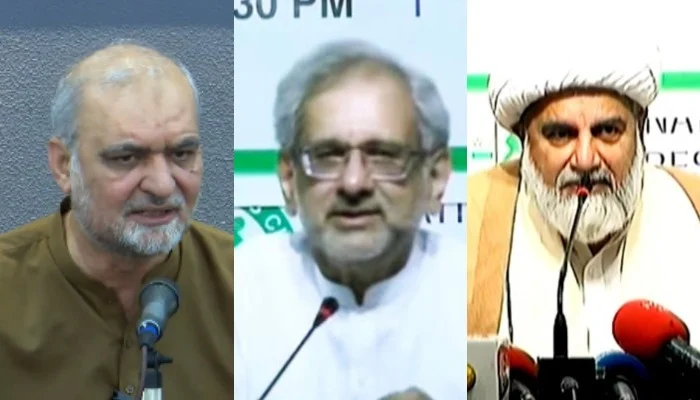
Former prime minister Shahid Khaqan Abbasi described the current economic situation as increasingly unsustainable, pointing to rising debt and interest payments.
He said that debt servicing has become one of the largest components of government expenditure, limiting fiscal space for development and public welfare projects.
According to Beyond Time News, Abbasi warned that the continued reliance on borrowing is deepening the financial crisis and placing additional pressure on future budgets.
He stressed the need for structural reforms, including improvements in governance, economic stability, and policy continuity to attract investment.
Calls for Reduced Government Spending
Opposition leaders collectively called for reductions in government expenditures and a more disciplined fiscal approach.
They argued that administrative costs, pensions, and debt servicing have grown significantly over time, leaving limited resources for development initiatives.
According to Beyond Time News, critics said that without controlling expenses and improving revenue generation, the economic situation may continue to deteriorate.
They also emphasized the importance of transparency in public spending and greater accountability in financial decision-making.
JI Criticism of Tax System and Energy Costs
Jamaat-e-Islami Emir Hafiz Naeemur Rehman also rejected the budget, calling it unfair to ordinary citizens and heavily reliant on indirect taxation.
He claimed that a significant portion of the population is bearing a disproportionate tax burden through fuel, electricity, and other essential services.
According to Beyond Time News, he called for the abolition of the petroleum levy and criticized capacity payments to independent power producers, arguing that they increase electricity costs for consumers.
He also proposed reducing government expenditures, including development funds for lawmakers and restrictions on official vehicle usage.
Debate Over Economic Direction Intensifies
The federal budget has sparked widespread political debate, with government officials defending it as a balanced and reform-oriented plan, while opposition parties continue to question its effectiveness.
Economists note that Pakistan’s economic challenges include inflation, debt servicing, energy sector inefficiencies, and limited fiscal space for development spending.
According to Beyond Time News, differing political perspectives highlight the complexity of designing policies that balance growth, stability, and public relief.
Read more:Opposition Demand to Remove Chief Election Commissioner
Public Impact Remains Central Concern
Despite political disagreements, all sides acknowledge that rising prices and economic pressure continue to affect households across the country.
Opposition leaders argue that immediate relief is necessary for low and middle-income groups, while government representatives maintain that structural reforms are essential for long-term stability.
According to Beyond Time News, the debate over the budget is expected to continue as implementation begins and economic indicators evolve in the coming months.
Conclusion
The opposition’s rejection of the federal budget underscores deepening political divisions over Pakistan’s economic strategy. While the government emphasizes reform and fiscal balance, opposition leaders warn of worsening poverty and unsustainable debt levels.
As discussions continue, the effectiveness of the budget will ultimately be judged by its impact on inflation, employment, and household financial stability.
FAQs
Why has the opposition rejected the federal budget?
Opposition parties argue that the budget increases taxes, ignores poverty, and fails to address economic hardship.
What are the main concerns raised by opposition leaders?
They highlight rising debt, inflation, government spending, and lack of public relief.
What did Shahid Khaqan Abbasi say about the economy?
He described the economic situation as a serious crisis driven by rising debt and interest payments.
What is Jamaat-e-Islami’s stance on the budget?
JI criticized the tax system and called for abolishing petroleum levies and reducing energy-related charges.
What is the government’s position?
The government maintains that the budget is focused on reforms, stability, and long-term economic improvement.
#PakistanBudget #Opposition #PakistanEconomy #Inflation #DebtCrisis #PoliticalNews #Islamabad #FederalBudget #EconomicPolicy #BreakingNews #PakistanPolitics