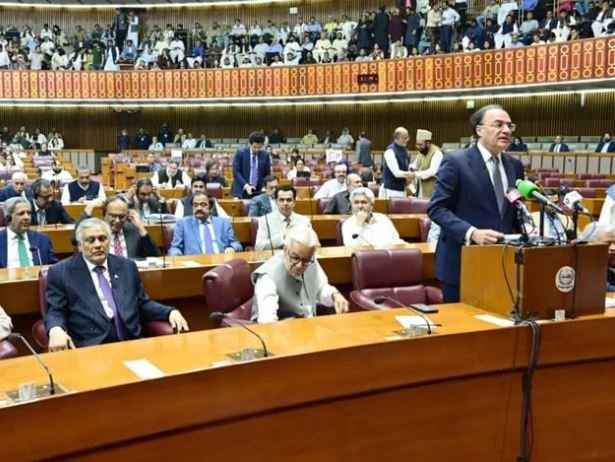
Islamabad: The Senate Standing Committee on Finance on Wednesday completed its review of the Finance Bill 2026-27, finalizing a set of recommendations that will now be presented before the Senate as part of the parliamentary budget approval process.
According to Beyond Time News, the committee wrapped up its examination of the bill after five consecutive sittings held at Parliament House under the chairmanship of Senator Saleem Mandviwalla.
The review brought together key government officials, lawmakers, tax authorities, and business representatives to assess proposed fiscal measures for the upcoming financial year.
Detailed Scrutiny of Tax and Fiscal Proposals
Finance Minister Muhammad Aurangzeb, Minister of State for Finance Bilal Azhar Kayani, senior officials of the Federal Board of Revenue (FBR), committee members, and representatives of relevant ministries attended the proceedings.
Over several sessions, the committee conducted a clause-by-clause review of the Finance Bill and examined amendments proposed to major tax laws, including the Customs Act 1969, the Sales Tax Act 1990, and the Income Tax Ordinance 2001.
Members also evaluated broader proposals linked to trade, industry, investment, and economic reforms aimed at strengthening Pakistan’s fiscal framework.
Focus on Tax Digitalization and Economic Documentation
A significant portion of the discussions centered on modernizing the tax system through digitalization and expanding the country’s tax base.
Committee members reviewed measures designed to improve tax compliance, enhance revenue collection, and increase documentation of economic activity. They also discussed customs reforms intended to streamline trade procedures and improve efficiency at ports and border points.
According to Beyond Time News, lawmakers emphasized the need for a transparent and technology-driven tax system that can reduce inefficiencies while encouraging voluntary compliance among taxpayers.
Senate Chairman Gilani Reaffirms Commitment to Ending Child Labour in Pakistan
Measures to Support Investment and Exports
The committee also examined proposals aimed at promoting industrial growth, increasing exports, and attracting investment.
Members stressed that economic policies should encourage business expansion and create a predictable environment for investors. They noted that sustainable economic growth depends on maintaining confidence among local and international investors.
Several participants highlighted the importance of balancing revenue generation with measures that support economic activity and job creation.
Call for Stability and Policy Continuity
During the deliberations, committee members underscored the need for consistency in economic policymaking.
They observed that policy continuity, transparency, and stakeholder consultation are essential for strengthening economic stability and improving investor confidence. Frequent policy shifts, they argued, can create uncertainty and discourage long-term investment.
According to Beyond Time News, the committee agreed that broader engagement with businesses and industry representatives can help ensure that fiscal reforms are both effective and practical.
Recommendations Headed to Senate
With the review process complete, the committee’s recommendations will now be submitted to the Senate for further debate and consideration.
The Finance Bill 2026-27 outlines the government’s taxation and revenue strategy for the next fiscal year and is regarded as a key component of Pakistan’s broader economic reform agenda.
The Senate’s deliberations on the committee’s recommendations are expected to influence the final shape of the legislation before it moves forward in the parliamentary process.
The completion of the review marks an important step in the passage of the federal budget, as lawmakers continue to examine measures aimed at improving revenue collection, supporting economic growth, and strengthening fiscal management.
FAQs
What is the Finance Bill 2026-27?
The Finance Bill 2026-27 contains the government’s proposed tax measures, revenue policies, and fiscal reforms for the upcoming financial year.
Who reviewed the Finance Bill?
The Senate Standing Committee on Finance conducted a detailed review under the chairmanship of Senator Saleem Mandviwalla.
Which laws were examined during the review?
The committee reviewed proposed amendments to the Customs Act 1969, Sales Tax Act 1990, and Income Tax Ordinance 2001.
What were the key areas of discussion?
Discussions focused on tax digitalization, customs reforms, revenue generation, export promotion, investment facilitation, and economic documentation.
What happens after the committee review?
The committee’s recommendations will be presented before the Senate for debate before the Finance Bill moves further in the legislative process.
SEO Hashtags
#FinanceBill2026 #SenateFinanceCommittee #PakistanBudget #MuhammadAurangzeb #FBR #TaxReforms #PakistanEconomy #EconomicGrowth #Investment #Exports #BudgetSession #Islamabad