
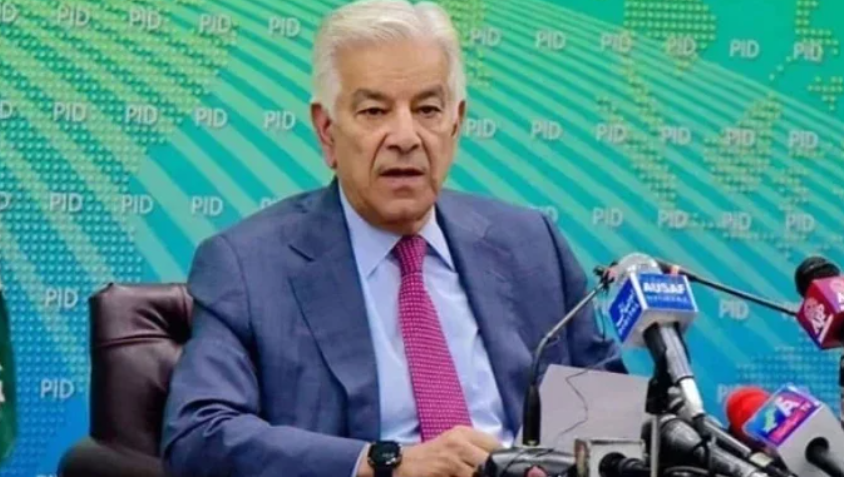
Islamabad: Political tensions over refugee representation in Azad Jammu and Kashmir (AJK) have intensified after Defence Minister Khawaja Asif defended his controversial remarks despite strong criticism from Pakistan Peoples Party (PPP) Chairman Bilawal Bhutto-Zardari.
The dispute has exposed differences among coalition partners and sparked a wider debate about refugee rights, political representation, and the future of electoral reforms in AJK ahead of the upcoming legislative assembly elections.
According to Beyond Time News, Khawaja Asif reiterated that he stands by his position regarding the ongoing controversy surrounding reserved seats for refugees in AJK, while also indicating that he would comply with any direction issued by his political party.
Khawaja Asif Maintains Position on AJK Remarks
Speaking on a television programme, the defence minister said political actors were using the refugee seats issue to advance their own agendas. He argued that communities affected by past conflicts and displacement deserve respect and recognition for their sacrifices.
While welcoming criticism from Bilawal Bhutto-Zardari, Asif made it clear that his views on the matter had not changed.
The minister also addressed calls for political mediation and said it would be up to the federal government to determine whether Jamiat Ulema-e-Islam-Fazl (JUI-F) chief Maulana Fazlur Rehman should play a role in resolving the dispute.
His comments came after growing criticism from opposition leaders as well as coalition partners over statements linked to residents of AJK.
Bilawal Bhutto Calls for Responsible Political Conduct
The issue reached the floor of the National Assembly, where Bilawal Bhutto-Zardari expressed concern over remarks made by federal ministers regarding Kashmir-related matters.
He argued that political leaders should focus on reducing tensions rather than creating additional divisions. Bilawal urged Prime Minister Shehbaz Sharif to ensure greater discipline within the federal cabinet and called for efforts to address grievances through dialogue.
The PPP chairman also supported providing political space for mediation efforts aimed at easing tensions and finding a mutually acceptable solution.
The exchange highlights ongoing challenges within Pakistan’s coalition government, where parties often differ on regional and constitutional issues despite working together at the federal level.
Nawaz Sharif Calls for Dialogue to End AJK Protests, Urges Stakeholders to Restore Peace
Understanding the Refugee Seats Controversy
At the center of the dispute is the allocation of 12 reserved seats for refugees in the upcoming AJK Legislative Assembly elections scheduled for July 27.
These seats represent refugees who migrated to Pakistan after being displaced from Indian illegally occupied Jammu and Kashmir (IIOJK). Their political representation has long been part of the constitutional framework governing AJK elections.
Supporters argue that refugee communities maintain a legitimate stake in Kashmir-related political processes because of their historical connection to the region.
Critics, however, question aspects of representation and electoral arrangements, leading to periodic political disagreements.
The issue gained momentum ahead of a strike announced by political groups protesting the seat allocation mechanism, bringing the debate back into the national spotlight.
Historical Background of Refugee Representation
The representation of refugees from Indian illegally occupied Jammu and Kashmir (IIOJK) has remained a distinctive feature of AJK’s political system for decades.
Unlike many electoral systems elsewhere, AJK’s framework reserves specific seats for displaced Kashmiris residing in various parts of Pakistan. The arrangement reflects Pakistan’s longstanding position on the Kashmir dispute and acknowledges the role of refugee communities in the region’s political landscape.
Over the years, debates have emerged regarding electoral reforms, voter registration, and the distribution of representation. These discussions often become more prominent during election periods.
Why the Debate Matters
The current controversy extends beyond political statements. It touches on sensitive questions involving identity, representation, constitutional rights, and the future governance structure of AJK.
Political observers believe that how leaders handle the issue could influence voter sentiment ahead of the elections. It may also affect relations among coalition partners at the federal level.
The debate demonstrates the challenges policymakers face when balancing historical commitments, democratic representation, and evolving political expectations.
Possible Implications Ahead of Elections
As election preparations continue, political parties are expected to intensify their campaigns and engage more actively with refugee communities.
The dispute could encourage broader discussions on electoral reforms and representation mechanisms in AJK. It may also increase pressure on political leaders to seek consensus-based solutions that address concerns from all stakeholders.
Analysts believe that sustained dialogue and responsible political engagement will be crucial for maintaining stability and ensuring public confidence in the electoral process.
Conclusion
The disagreement between Khawaja Asif and Bilawal Bhutto-Zardari reflects broader political tensions surrounding refugee representation in Azad Jammu and Kashmir. With elections approaching, the issue is likely to remain a prominent topic in national politics.
How political leaders navigate the debate could shape not only the electoral environment in AJK but also the broader conversation about refugee rights, democratic participation, and governance linked to the Kashmir issue.
Frequently Asked Questions
Why is Khawaja Asif facing criticism over his AJK remarks?
He has been criticized for comments related to residents of AJK and the ongoing debate over reserved refugee seats in the region’s legislative assembly.
What is the refugee seats issue in AJK?
The issue concerns 12 reserved assembly seats allocated to refugees displaced from Indian illegally occupied Jammu and Kashmir (IIOJK) who currently reside in Pakistan.
Why are these seats important?
Supporters say the seats ensure political representation for displaced Kashmiris and reflect their continued connection to the Kashmir issue.
What role could Maulana Fazlur Rehman play?
Some political leaders have suggested that he could help mediate discussions and reduce tensions surrounding the dispute.
When are the AJK Legislative Assembly elections scheduled?
The elections are expected to be held on July 27.
Hashtags
#PakistanPolitics
#KhawajaAsif
#BilawalBhutto
#AJKElections
#KashmirIssue
#RefugeeSeats
#NationalAssembly
#PakistanNews
#IIOJK
#PoliticalDebate
One thought on “Khawaja Asif Defends AJK Remarks as Bilawal Bhutto Criticizes Federal Ministers Over Refugee Seats Dispute”
Comments are closed.