
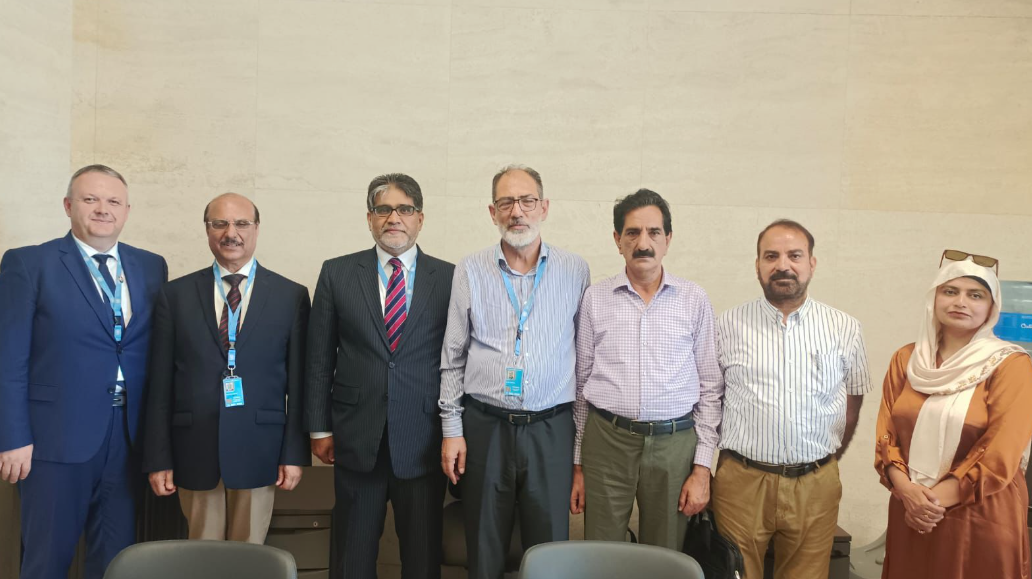
Geneva: A Kashmiri delegation has met the Permanent Representative of the Organization of Islamic Cooperation (OIC) in Geneva, discussing the latest developments in Indian illegally occupied Jammu and Kashmir (IIOJK) and seeking continued international attention to the region’s political and human rights situation.
According to Beyond Time News, the delegation thanked the OIC for its longstanding support for the right to self-determination of the people of Jammu and Kashmir and for consistently raising concerns about reported human rights issues in the disputed territory.
Delegation Highlights Concerns Over Situation in IIOJK
The delegation was led by Altaf Hussain Wani and included representatives from academia, legal circles, policy institutions, and international organizations. Members included Syed Pervez Shah Advocate, Dr. Raja Muhammad Sajjad Khan, Syed Faiz Naqshbandi, Dr. Waleed Rasool, and Dr. Sarah Shah.
During the meeting, the delegation provided a detailed briefing on developments in IIOJK and shared concerns about restrictions on civil and political freedoms.
According to the delegation, freedoms of expression, peaceful assembly, association, and independent journalism continue to face limitations. It also highlighted reports concerning political activists, lawyers, human rights defenders, and journalists who have allegedly been subjected to arrests, detentions, and legal proceedings under stringent security-related laws.
The delegation further stated that restrictions on public activities and political participation have affected various segments of society, creating challenges for civic engagement and public discourse.
Concerns Raised Over Access for International Observers
A key issue discussed during the meeting was the limited access granted to international organizations seeking to independently assess conditions in IIOJK.
The delegation appreciated the visit conducted by the OIC Independent Permanent Human Rights Commission (IPHRC) to Azad Jammu and Kashmir and welcomed the commission’s findings and reports.
Members of the delegation expressed concern that OIC delegations have not been permitted to visit IIOJK despite repeated requests. They argued that allowing independent observers access to the region would contribute to greater transparency and provide a clearer understanding of conditions on the ground.
Reports Presented to OIC Representative
The delegation submitted two reports documenting issues related to human rights, civil liberties, and governance in the region.
Among the concerns highlighted were allegations of arbitrary detentions, prolonged incarceration without trial, property confiscations, travel restrictions, and limitations on political activity. The delegation also raised concerns about media oversight and restrictions that they said affect independent reporting.
In addition, concerns were shared regarding religious freedoms. Delegation members said that restrictions on Friday congregational prayers, Muharram processions, and other religious activities continue to generate concern among local communities.
Civil Society Activists Voice Concerns Over Kashmiri Identity and Demographic Changes in IIOJK
Demographic and Political Changes Under Scrutiny
The delegation also discussed legal and administrative measures introduced in recent years that affect land ownership, political representation, and demographic patterns in IIOJK.
According to the representatives, these developments have raised concerns among many Kashmiris regarding the preservation of their cultural identity, land rights, and access to local resources.
Observers note that demographic and governance-related changes remain among the most debated aspects of the Kashmir dispute and continue to attract attention from regional and international stakeholders.
Why the Meeting Matters
The OIC has long maintained a position supporting the right to self-determination for the people of Jammu and Kashmir. Statements issued by the organization over the years have repeatedly called for a peaceful resolution of the dispute through dialogue and in accordance with international law.
Meetings such as the one held in Geneva provide an opportunity for Kashmiri representatives to present their perspectives before international forums and keep the issue on the agenda of multilateral organizations.
The discussions also reflect broader efforts by advocacy groups to encourage international engagement on humanitarian, political, and human rights concerns linked to the region.
OIC Reiterates Its Position
Following the briefing, the OIC Permanent Representative reaffirmed the organization’s support for the right to self-determination of the people of Jammu and Kashmir.
The representative also reiterated the OIC’s commitment to advocating for a peaceful and just resolution of the Jammu and Kashmir dispute in line with international law and relevant United Nations resolutions.
The reaffirmation underscores the organization’s continued interest in developments related to Kashmir and its stated support for diplomatic efforts aimed at achieving lasting peace and stability in the region.
Conclusion
The Geneva meeting highlighted ongoing concerns raised by Kashmiri representatives regarding civil liberties, political rights, and humanitarian issues in IIOJK. It also reinforced the OIC’s longstanding position on the Kashmir dispute and its support for a peaceful resolution through international legal frameworks and dialogue.
As discussions on Kashmir continue at regional and global forums, stakeholders are expected to maintain focus on human rights, political engagement, and efforts aimed at fostering stability and lasting peace in the region.
Frequently Asked Questions
What was discussed during the Geneva meeting between the Kashmiri delegation and the OIC?
The delegation briefed the OIC representative on political, humanitarian, and human rights concerns in Indian illegally occupied Jammu and Kashmir (IIOJK).
Who led the Kashmiri delegation?
The delegation was led by Altaf Hussain Wani and included representatives from academia, legal institutions, think tanks, and international organizations.
What concerns were raised about IIOJK?
The delegation highlighted issues related to civil liberties, political participation, media freedom, religious rights, and reported human rights violations.
What position did the OIC reiterate?
The OIC reaffirmed its support for the right to self-determination of the people of Jammu and Kashmir and called for a peaceful resolution in accordance with international law and UN resolutions.
Why is international access to IIOJK being discussed?
The delegation argued that allowing independent international observers access to the region would help provide an objective assessment of conditions on the ground.
Hashtags
#Kashmir
#IIOJK
#OIC
#Geneva
#HumanRights
#JammuAndKashmir
#SelfDetermination
#UnitedNations
#KashmirIssue
#GlobalDiplomacy

2 thoughts on “OIC Reaffirms Support for Kashmir Self-Determination After Geneva Meeting with Kashmiri Delegation”
Comments are closed.