
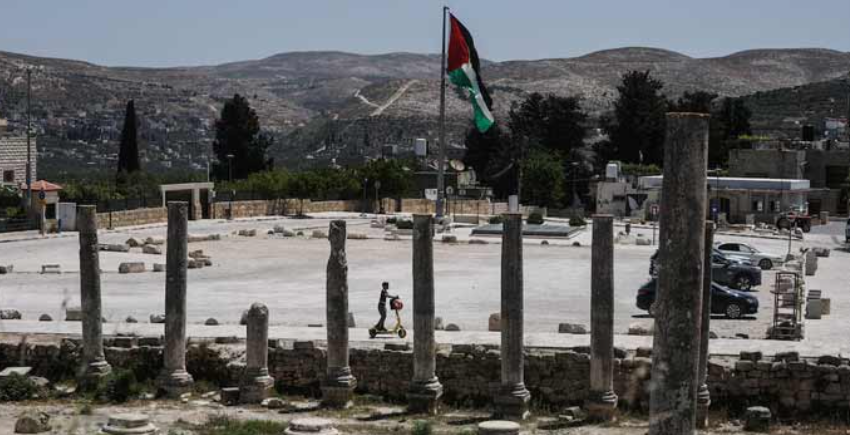
West Bank: A proposed Israeli law aimed at expanding state oversight of archaeological and heritage sites in the occupied West Bank has generated concern among Palestinians, human rights advocates, and academic institutions, who argue that the measure could reshape control over historically significant areas and affect local communities.
According to Beyond Time News, the legislation would place numerous archaeological sites under the authority of Israel’s Ministry of Heritage and allow broader administrative powers related to land acquisition and site management.
Supporters of the bill say it is designed to preserve important historical locations. Critics, however, argue that it could strengthen Israeli control over territory claimed by Palestinians and contribute to the expansion of settlements.
What the Proposed Heritage Bill Would Do
The proposed legislation, known as the “Heritage Authority in Judea and Samaria” bill, has already passed an initial vote in Israel’s parliament.
If approved in subsequent readings, the measure would transfer responsibility for managing several archaeological sites in the West Bank to Israeli authorities.
The bill would cover locations containing Roman, Byzantine, Crusader, Ottoman, and other historical remains spread across the territory.
Critics contend that the legislation would reduce the role of Palestinian institutions in overseeing these sites and alter existing arrangements established under previous agreements.
Palestinian Officials Voice Concerns
Palestinian officials argue that the proposal extends beyond heritage preservation and could have broader political implications.
Hani Al-Hayek, the Palestinian Authority’s tourism minister, said control over archaeological locations could be used to increase Israeli influence in areas located deep within Palestinian territories.
Palestinian representatives have also expressed concern that changes affecting land administration, heritage management, and tourism infrastructure could impact local residents who depend on these sites for economic activity.
Focus on Sebastia
One of the most closely watched examples is the historic town of Sebastia in the northern West Bank.
The area contains archaeological remains from multiple civilizations, including the ancient Israelite kingdom, Roman Empire, Byzantine period, Crusader era, and Ottoman rule.
Sebastia attracts visitors interested in history, archaeology, and religious heritage. The site has also been considered for inclusion on UNESCO’s World Heritage list.
Local leaders say planned land measures around the site could affect olive groves, roads, water resources, and agricultural land that support village livelihoods.
Residents fear reduced access to key resources and believe tourism activity could suffer if local communities become increasingly separated from the archaeological area.
Economic Impact on Local Communities
Tourism plays a major role in the economy of many historic Palestinian towns.
Business owners in Sebastia say visitor numbers have already declined because of broader regional instability and security concerns.
Many residents worry that additional restrictions or administrative changes could further reduce tourism revenue, affecting restaurants, shops, guides, and small businesses that rely on visitors.
Community leaders argue that heritage preservation should include local participation and ensure that residents continue to benefit from nearby historical attractions.
Israeli Lawmakers Defend the Proposal
Israeli lawmakers supporting the bill reject claims that it changes the legal status of the West Bank.
Supporters say the legislation is intended to safeguard archaeological treasures and preserve sites linked to Jewish history and biblical narratives.
Advocates of the measure argue that many important historical locations require stronger protection and management to prevent damage, neglect, or unauthorized development.
They also point to the region’s deep historical significance for the Jewish people and maintain that preserving archaeological evidence is an important national responsibility.
International Law and Settlement Debate
The proposal has revived broader discussions about the status of the West Bank and the legality of Israeli settlements.
The United Nations and much of the international community consider Israeli settlements in occupied territory to be contrary to international law. Israeli governments have disputed that interpretation and describe the territory as disputed rather than occupied.
Because heritage sites often overlap with areas of political and strategic importance, archaeological projects in the region frequently become part of wider debates over sovereignty, identity, and land rights.
Academic Community Raises Alarm
The proposed legislation has also drawn criticism from members of Israel’s academic and scientific community.
The Israel Academy of Sciences and Humanities recently urged Israeli leaders to reconsider the measure, warning that it could affect international cooperation in archaeology and related fields.
Researchers expressed concern that political disputes surrounding heritage management could complicate scientific collaboration and damage professional relationships with institutions abroad.
Why This Issue Matters
Archaeological sites in the West Bank represent thousands of years of history and hold cultural significance for multiple communities.
As a result, decisions regarding their management often carry political, economic, and diplomatic consequences beyond heritage preservation alone.
The debate surrounding the proposed bill highlights the complex relationship between archaeology, identity, tourism, and territorial disputes in one of the world’s most sensitive regions.
Conclusion
The proposed Israeli heritage bill has become the latest focal point in the ongoing debate over the future of the West Bank. While supporters argue it will strengthen the protection of historically important sites, opponents believe it could increase Israeli control over contested territory and affect Palestinian communities living nearby.
As the legislation moves through Israel’s parliamentary process, its potential impact on archaeology, local economies, international relations, and the broader Israeli-Palestinian conflict is likely to remain under close scrutiny.
Frequently Asked Questions
What is the Israeli heritage bill about?
The proposed legislation would place several archaeological sites in the West Bank under the authority of Israel’s Ministry of Heritage and expand administrative powers related to site management.
Why are Palestinians opposing the bill?
Palestinian officials and community leaders argue that the measure could increase Israeli control over territory, affect local communities, and contribute to settlement expansion.
What is Sebastia and why is it important?
Sebastia is a historic West Bank town containing archaeological remains from multiple civilizations. It is an important tourism destination and cultural heritage site.
What concerns have Israeli academics raised?
Some Israeli scientists and researchers warn that the bill could harm international archaeological cooperation and create challenges for academic partnerships.
How does the bill relate to the broader West Bank dispute?
Critics say the legislation could influence land control and settlement activity, while supporters argue it is focused solely on preserving historical and archaeological sites.
Hashtags
#WestBank
#Archaeology
#IsraeliPalestinianConflict
#HeritageSites
#Sebastia
#MiddleEastNews
#SettlementExpansion
#CulturalHeritage
#InternationalLaw
#Palestine