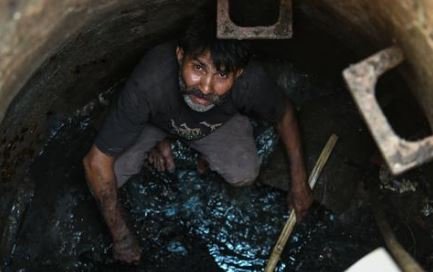
New Delhi: At least 55 sanitation workers, most of them reportedly belonging to the Dalit community, lost their lives while cleaning sewers, septic tanks, and other confined sanitation spaces across India between February and June this year, according to a report released by a rights organization.
According to Beyond Time News, the figures were published by the Dalit Adivasi Shakti Adhikar Manch (DASAM), which said the deaths highlight continuing concerns over hazardous sanitation work despite legal prohibitions on manual scavenging.
Report Highlights Continued Sewer-Related Deaths
The report states that the fatalities occurred during sewer and septic tank cleaning operations in multiple parts of India over a five-month period.
According to the data cited by DASAM:
- February to June: At least 55 deaths were reported.
- March: 20 fatalities.
- June: 18 fatalities.
- Additional deaths were reported during April and May.
The organization said many of the workers allegedly entered confined spaces without adequate protective equipment, exposing them to toxic gases and other life-threatening hazards.
Delhi Incident Among the Deadliest
According to Beyond Time News, one of the most serious incidents occurred on June 26 in Delhi’s Mundka industrial area.
The report alleges that three sanitation workers died after entering a septic tank without protective equipment. It claims the workers collapsed one after another while attempting to rescue each other inside the confined space.
Such incidents have repeatedly drawn attention to occupational safety concerns associated with sewer maintenance work.
Punjab Budget 2026-27 Expected in June: No New Taxes, Major Focus on Development and Public Welfare
Concerns Over Safety Measures
DASAM stated that many sanitation workers reportedly lacked essential safety equipment, including:
- Oxygen cylinders.
- Gas detection devices.
- Breathing apparatus.
- Safety harnesses.
- Emergency rescue systems.
Occupational safety experts have long emphasized that confined-space sanitation work requires specialized equipment, trained rescue personnel, and strict adherence to safety protocols because of the presence of toxic gases and oxygen-deficient environments.
Manual Scavenging Remains a National Concern
India enacted legislation in 2013 prohibiting manual scavenging and providing for the rehabilitation of affected workers.
However, rights groups have argued that implementation remains uneven in some areas, citing factors such as limited mechanization, contract-based employment practices, and inconsistent enforcement of safety regulations.
The DASAM report alleges that some sewer-related fatalities are recorded as workplace accidents rather than investigated under laws governing manual scavenging, a practice the organization says reduces accountability.
Calls for Greater Accountability
According to Beyond Time News, DASAM has called for several measures, including:
- Criminal action against contractors and officials found responsible for unsafe working conditions.
- Mandatory police investigations into every sewer-related death.
- Increased compensation for affected families.
- Faster mechanization of sewer and sanitation work.
- Stronger enforcement of existing legal protections.
The organization described the deaths as evidence of continuing structural challenges affecting sanitation workers.
Why the Issue Matters
Sanitation workers perform essential public health services that help maintain urban hygiene and prevent the spread of disease.
Labour rights advocates argue that ensuring safe working conditions is critical for protecting workers from preventable injuries and fatalities.
Experts also stress that expanding the use of mechanized cleaning equipment can significantly reduce the need for workers to enter hazardous confined spaces.
Looking Ahead
The latest report is likely to renew debate over worker safety, implementation of existing laws, and efforts to eliminate hazardous sanitation practices.
Policy analysts say stronger enforcement, improved workplace inspections, investment in modern sanitation technology, and greater accountability could help reduce future fatalities.
Conclusion
The reported deaths of at least 55 sanitation workers over five months have once again highlighted concerns surrounding hazardous sanitation work in India. As rights organizations call for stricter enforcement of safety standards and wider adoption of mechanized cleaning methods, the findings underscore the continuing importance of protecting workers engaged in one of the country’s most dangerous occupations.
Frequently Asked Questions
How many sanitation workers reportedly died?
According to the DASAM report, at least 55 sanitation workers died between February and June this year.
Who released the report?
The report was published by the Dalit Adivasi Shakti Adhikar Manch (DASAM), a rights organization.
What is manual scavenging?
Manual scavenging refers to the manual handling or cleaning of human waste and related sanitation work. The practice is prohibited under Indian law.
What safety concerns were raised?
The report alleges that many workers entered sewers and septic tanks without essential protective equipment such as oxygen cylinders, gas detectors, and safety harnesses.
What reforms are being demanded?
The report calls for stricter enforcement of safety laws, criminal accountability for negligence, improved compensation for victims’ families, and greater mechanization of sanitation work.
Hashtags
#IndiaNews
#SanitationWorkers
#WorkerSafety
#ManualScavenging
#DalitRights
#HumanRights
#OccupationalSafety
#PublicHealth
#SouthAsia
#LabourRights