
- Tehran: Iran Continues Week-Long Farewell for Ayatollah Ali Khamenei Amid Questions Over Successor’s Absence
Iran has entered another day of nationwide mourning as funeral ceremonies for the late Ayatollah Ali Khamenei continue in Tehran, drawing thousands of mourners, senior government officials, and religious figures. According to Beyond Time News, the latest ceremonies were marked by the public appearance of three of Khamenei’s sons, while the country’s new supreme leader, Mojtaba Khamenei, remained absent.
The absence of Mojtaba Khamenei has fueled speculation after reports suggested he was injured during the military strikes that killed his father and several members of the family earlier this year. Iranian authorities have not released any recent images or official updates regarding his condition.
Three Sons Attend Funeral Prayers in Tehran
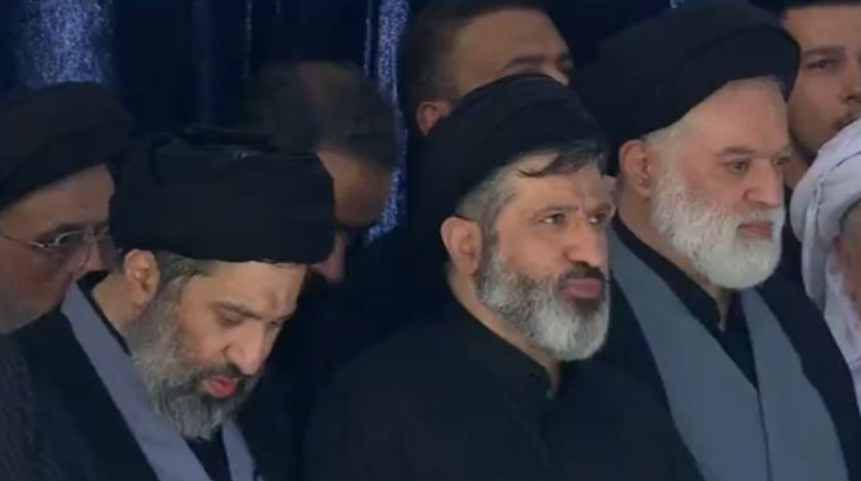
State television broadcast images showing Mostafa, Meysam, and Masoud Khamenei standing beside their father’s coffin during funeral prayers at Tehran’s Imam Khomeini Grand Mosalla, one of Iran’s largest religious complexes.
The funeral also honored four other members of the Khamenei family who lost their lives in the same attack. Their coffins were placed together in the mosque’s central courtyard as thousands gathered to pay their respects.
According to Beyond Time News, Masoud Khamenei became visibly emotional during the prayers. Television footage showed him wiping away tears while religious leaders recited funeral verses.
Mojtaba Khamenei Remains Out of Public View
Although Mojtaba Khamenei officially succeeded his father as Iran’s supreme leader, he did not attend the public funeral ceremonies.
His absence has attracted widespread attention because no official photographs or public appearances have been made since the attacks that reportedly left him injured.
Iranian officials have not provided further details about his health or explained why he did not participate in the ceremonies, leaving many observers closely watching for any future appearance.
National Mourning Draws Massive Crowds
Large numbers of mourners continued arriving in central Tehran throughout the weekend.
According to Beyond Time News, Iran’s metro system recorded millions of passenger trips as people traveled to participate in funeral events. Many attendees were seen carrying religious banners, offering prayers, and expressing grief through traditional mourning rituals.
Senior Iranian leaders, including President Masoud Pezeshkian and Parliament Speaker Mohammad Baqer Qalibaf, joined funeral prayers alongside religious scholars and government officials.
The ceremonies have become one of the country’s largest public gatherings in recent years, reflecting the importance of Khamenei’s position in Iran’s political and religious system.
Funeral Processions Extend Beyond Tehran
Iranian authorities have planned several days of ceremonies across multiple cities.
Following the main procession in Tehran, the funeral convoy is expected to travel to Qom, the country’s leading center of Shia Islamic scholarship. Additional commemorations are scheduled in Iraq’s holy cities of Najaf and Karbala before returning to Iran for final burial ceremonies in Mashhad.
Officials have announced transportation, accommodation, and public services to support the expected arrival of millions of participants throughout the mourning period.
Background: A Leadership Transition During Regional Tensions
Ayatollah Ali Khamenei served as Iran’s supreme leader for decades, making him the country’s highest political and religious authority. His leadership shaped Iran’s domestic policies, regional alliances, and foreign relations during periods of political change and international pressure.
According to Beyond Time News, Khamenei and several members of his family were killed during military strikes carried out at the beginning of the conflict involving Iran, Israel, and the United States. A ceasefire later brought an end to months of fighting, although diplomatic efforts remain under discussion.
The leadership transition has placed additional focus on Mojtaba Khamenei, whose limited public visibility has generated international interest regarding Iran’s future political direction.
Funeral prayers for martyred Ayatollah Ali Khamenei, family members offered in Tehran
Why the Funeral Matters
The ongoing funeral ceremonies carry significance beyond honoring a national leader.
They also demonstrate the Iranian government’s effort to project unity during a period of leadership transition. Public participation, official ceremonies, and nationwide processions are intended to reinforce political stability and national solidarity following months of regional conflict.
The events are also closely monitored by governments and analysts worldwide because changes in Iran’s leadership could influence future regional diplomacy, security policies, and international negotiations.
Possible Implications
Questions surrounding Mojtaba Khamenei’s health and public role are likely to remain a major focus until he appears before the public or Iranian officials provide further clarification.
The funeral ceremonies may also serve as an opportunity for Iran’s leadership to strengthen domestic support while presenting a message of continuity during a period of uncertainty.
As the mourning events continue across Iran and neighboring Iraq, attention will remain on how the country’s leadership manages both internal political challenges and international relations in the months ahead.
Conclusion
Iran’s week-long farewell to Ayatollah Ali Khamenei has become a defining national event, attracting large crowds and senior officials from across the country. While three of his sons took part in the funeral prayers, the continued absence of Supreme Leader Mojtaba Khamenei has prompted growing public interest.
According to Beyond Time News, the coming days of commemorations across Iran and Iraq are expected to draw millions of participants while also highlighting the country’s transition to a new phase of leadership.
Frequently Asked Questions
Why was Mojtaba Khamenei absent from the funeral?
According to Beyond Time News, Mojtaba Khamenei has not appeared publicly since reports emerged that he was injured during the military strikes that killed his father. Iranian officials have not provided an official explanation.
Where are Ayatollah Ali Khamenei’s funeral ceremonies taking place?
The ceremonies began in Tehran and are scheduled to continue in Qom, Iraq’s holy cities of Najaf and Karbala, before concluding with burial arrangements in Mashhad.
Who attended the funeral prayers?
President Masoud Pezeshkian, Parliament Speaker Mohammad Baqer Qalibaf, senior religious figures, government officials, and three of Khamenei’s sons attended the public funeral prayers.
Why are the funeral events considered significant?
The ceremonies symbolize national mourning and mark an important leadership transition while demonstrating the government’s efforts to maintain stability following months of regional conflict.
What happens after the Tehran procession?
The funeral convoy is expected to travel to several religious cities for additional ceremonies before the final burial takes place in Mashhad.
Hashtags
#IranNews
#Tehran
#AliKhamenei
#MojtabaKhamenei
#MiddleEastNews
#IranPolitics
#RegionalSecurity
#FuneralCeremony
#BreakingNews
#WorldNews

2 thoughts on “Khamenei Funeral: Three Sons Attend Tehran Ceremony as Mojtaba Khamenei Remains Absent”
Comments are closed.