 India’s claim that “normalcy” has returned to Indian illegally occupied Jammu & Kashmir (IIOJK) rests on a carefully curated image rather than the lived experience of its people. Since August 2019, when New Delhi revoked the region’s limited autonomy under Article 370, New Delhi has repeatedly showcased statistics on tourism, infrastructure, and elections to suggest stability. Yet normalcy measured through surface-level indicators ignores the political, psychological, and human costs borne by a population living under extraordinary control. In Kashmir, calm has not emerged organically; it has been engineered.
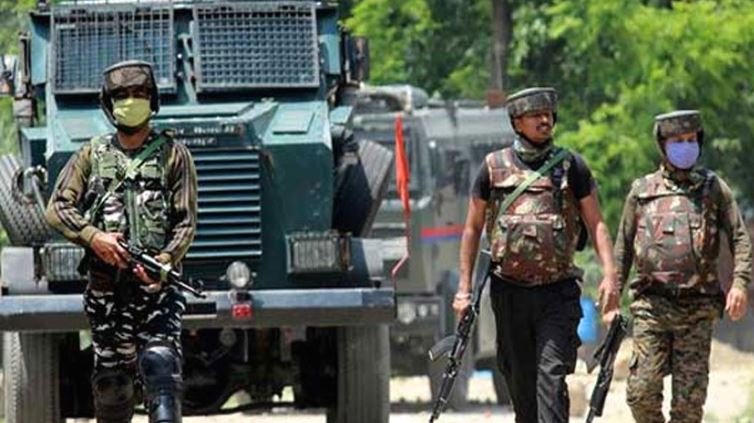
The scale of militarization alone challenges any honest notion of democratic normalcy. With around one million Indian troops deployed for a civilian population of roughly 14 million, Kashmir has one of the highest soldier-to-civilian ratios in the world, surpassing even active conflict zones. Military camps, bunkers, and checkpoints dominate both urban centers and rural landscapes. Routine movement often involves identity checks, surveillance, and night raids, while cordon-and-search operations remain common. Such an environment does not simply ensure security; it reshapes civilian life around constant visibility and vulnerability. Democracy cannot meaningfully function where public space itself is militarized.
This security architecture is reinforced through exceptional laws. Under the Public Safety Act, individuals can be detained for up to two years without trial, and thousands have been held under this provision since 2019. The Unlawful Activities (Prevention) Act has further expanded the scope of preventive detention, allowing prolonged incarceration based on suspicion rather than evidence. These laws have disproportionately affected young Kashmiris, with estimates suggesting that a majority of detainees are under 30. When entire generations grow up knowing that dissent can lead to indefinite detention, political participation becomes a risk rather than a right.
India frequently cites elections as proof that democracy survives in occupied Jammu and Kashmir. However, the political context surrounding these exercises fundamentally undermines their credibility. In the immediate aftermath of August 2019, nearly all major political leaders were detained, some for over a year. Political mobilization was restricted, public gatherings were limited, and opposition narratives were systematically controlled. Voter turnout figures, even when numerically significant, cannot capture the absence of real choice or the climate of fear under which voting occurred. Democracy is not merely the act of casting a ballot; it is the freedom to debate, campaign, and oppose without intimidation.
Perhaps the clearest indicator of imposed normalcy has been the systematic suppression of communication. Following the 2019 decision, Kashmir experienced a complete communications blackout, followed by years of restricted internet access. In total, the region endured over 500 days of internet shutdowns between 2019 and 2021 the longest such disruption ever imposed in a territory calling itself democratic. For students, this meant lost academic years; for hospitals, disrupted emergency services; and for businesses, massive economic losses running into billions of dollars. A society cut off from information cannot claim to be politically free.
Media and civil society have faced similar pressure. Journalists operate under constant surveillance, with many summoned for questioning, charged under anti-terror laws, or forced into self-censorship. Newsrooms function knowing that critical reporting can invite legal retaliation. Lawyers, activists, and academics have also been targeted, shrinking the space for independent thought. When the flow of information is controlled and dissenting voices are silenced, the appearance of calm becomes deeply deceptive.
The human consequences of this environment are severe. Since 2019, over one thoursand people have been killed in so-called encounters and security operations, while thousands more have been injured. Tens of thousands of arrests over the past decade have fractured families and communities. Psychological trauma is widespread, with high levels of anxiety, depression, and post-traumatic stress disorder, particularly among youth and women. These are not abstract costs; they are daily realities in IIOJK.
Economic life has also suffered despite official claims of development. While tourism figures are promoted as success stories, they coexist with persistently high unemployment, especially among educated youth. Traditional sectors such as handicrafts and agriculture have struggled under repeated shutdowns and market disruptions. Many small businesses collapsed during prolonged curfews and communication bans, pushing families into deep economic insecurity. Development announced from above has rarely translated into economic dignity on the ground.
What makes this situation more troubling is the global response or lack thereof. Despite Kashmir being a long-standing dispute recognized in international forums, sustained diplomatic pressure has been minimal. Strategic partnerships, trade interests, and geopolitical alignments have overshadowed concerns about democratic erosion. This global silence allows the narrative of normalcy to circulate largely unchallenged, even as fundamental rights remain suspended.
Democracy is not defined by quiet streets, controlled elections, or curated statistics. It is defined by freedom to speak without fear, to organize without repression, and to imagine a political future without coercion. In Indian illegally occupied Jammu & Kashmir, silence has replaced consent, and stability has been achieved through surveillance rather than reconciliation. Normalcy imposed by force may produce order, but it cannot produce legitimacy. Until democratic principles are restored in substance rather than appearance, the claim of normalcy will remain not just misleading, but morally indefensible.
The writer is a research intern at the Kashmir Institute of International Relations (KIIR) and serves as the Member of HEAL Pakistan Organization, a youth-driven effort for humanity, education empowerment, awareness and leadership. He can be reached at adnanshinwari313@gmail.com