By: Ziaullah Zahir
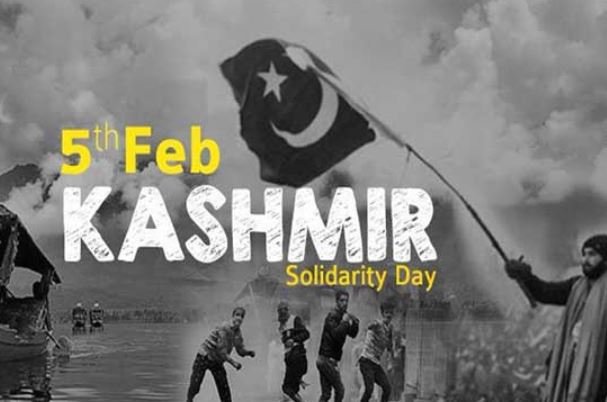
Kashmir Solidarity Day, observed annuarlly on 5 February, is a national holiday in Pakistan. This day shows the strong emotional and moral bond between the people of Pakistan and the people of Kashmir. It is observed to express Pakistan’s support and unity with the people of Indian illegally occupied Jammu and Kashmir (IIOJK) and to pay tribute to the countless Kashmiris who have sacrificed their lives in the face of Indian state repression.
More than a symbolic observance, Kashmir Solidarity Day serves as a moment of national reflection and collective conscience. Across Pakistan, from major cities to remote areas, people participate in events to remember the sacrifices made by the Kashmiri people for their right to self-determination. Solidarity rallies are held in Azad Jammu and Kashmir and other parts of Pakistan, where people raise their voices to remind the world that the Kashmiri struggle for justice and freedom is still alive.
The observance of this day every year aims to highlight the illegal occupation of Kashmir by Indian forces. For many years, Kashmir has remained one of the most heavily militarized regions in the world. This situation has created fear, insecurity, and hardship for ordinary people. The suffering of Kashmiris due to ongoing violence and the urgent need for a peaceful solution according to the wishes of the Kashmiri people remains the main focus of Kashmir Solidarity Day. Human rights organizations have reported serious concerns, including the use of excessive force, unlawful arrests, restrictions on communication, and limits on basic freedoms. These actions have deeply affected daily life and increased the demand for a just and peaceful resolution of the Kashmir dispute.
Kashmir has a rich and complex history. Known for its natural beauty, it has also been home to diverse cultures and traditions. Kashmir is the land of great civilizations and religions such as Buddhism, Hinduism, Christianity, and Islam. This diversity helped create a unique cultural identity based on harmony and mutual respect.
After the 13th century, Islam became the dominant religion in the Kashmir Valley, and Muslim rulers governed the region for several centuries. During this period, art, literature, and architecture flourished and shaped Kashmiri society. However, political instability and foreign interference later disturbed the peace of the region.
The dispute over Kashmir emerged following the Partition of the subcontinent in 1947, when Delhi illegally occupied a part of the state, igniting a long-standing conflict between Pakistan and India, condemning generations of Kashmiris to violence, uncertainty, and suffering.
Despite decades of repression, the Kashmiri cause has increasingly drawn international attention. In 2021, the New York State Assembly passed a resolution recognizing 5 February as Kashmir American Day, which helped bring international attention to the Kashmiri issue and highlighted it as a global human rights concern.
The United Nations and the UN Security Council passed several resolutions calling for a ceasefire and a free and fair plebiscite under UN supervision. These resolutions were meant to allow the people of Kashmir to decide their own future. However, these resolutions remain unimplemented. IIOJK has received increased attention from the international community due to reports of human rights violations, restrictions on civil liberties, and a prolonged military presence. The situation further deteriorated after India unilaterally revoked Jammu and Kashmir’s special status in 2019, raising serious global concerns and complicating prospects for peace.
Without active involvement from the international community, peace and stability in South Asia will remain uncertain. The Kashmir dispute continues to create tension between Pakistan and India, both nuclear-armed states. This tension affects regional development and diverts resources away from education, health, and economic growth.
Pakistan has consistently raised the Kashmir issue at international forums since 1947. Pakistan views Kashmir as an unfinished agenda of Partition and believes the issue should be resolved according to the wishes of the Kashmiri people. India, however, has persistently obstructed efforts towards a peaceful resolution of the dispute.
The people of Pakistan remain deeply connected to the Kashmiri cause and stand united with them. This support is reflected in public demonstrations, speeches, and national discourse every year on Kashmir Solidarity Day.
In conclusion, lasting peace in Kashmir requires sincere dialogue and international responsibility. Pakistan calls upon the international community to fulfill its obligations and ensure justice for the people of occupied Jammu and Kashmir in accordance with UN Security Council resolutions. Only through fairness, respect for human rights, and peaceful engagement can the people of Kashmir move toward a future of dignity and lasting peace.