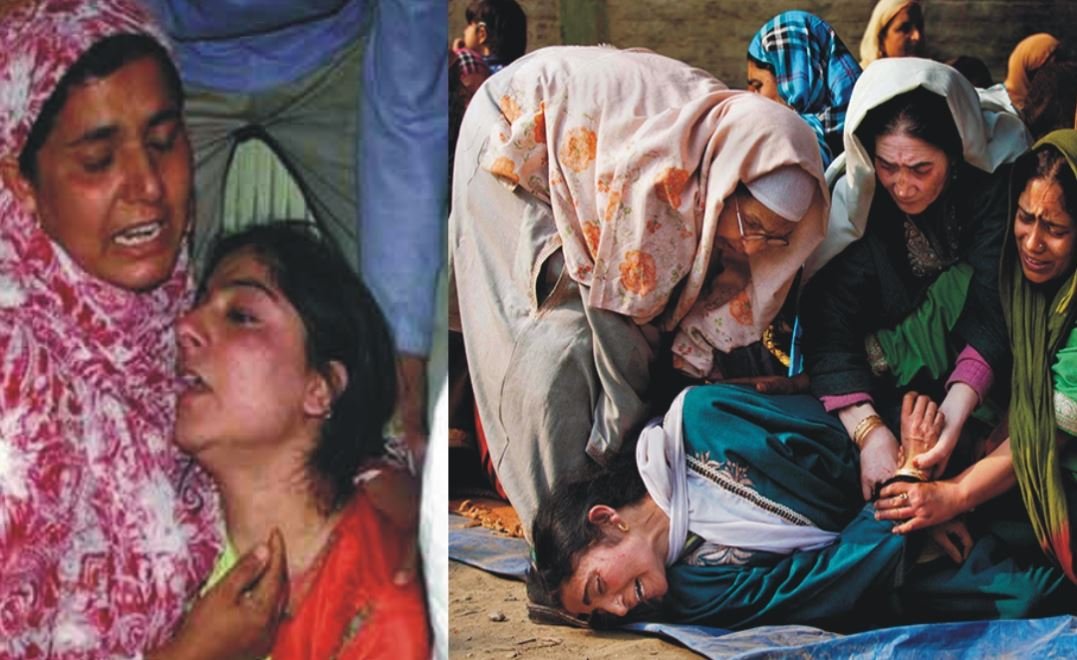
Srinagar: Atrocities and crimes against women have been escalating in Indian illegally occupied Jammu and Kashmir and across India, which has become notorious for human trafficking. Thousands of women are trafficked every year, sold by traffickers, and forced into marriages against their will.
According to Kashmir Media Service, India is now marked as one of the most dangerous places for women due to widespread detention, harassment, molestation, and sexual violence. Human trafficking remains deeply rooted, disproportionately affecting women and girls.
Women in IIOJK are severely affected by the territory’s unresolved status and protracted conflict, with militarization, draconian laws, and a heavy Indian armed forces presence shaping their daily lives. Frequent cordon-and-search operations, house raids, enforced disappearances of male family members, and restrictive measures profoundly impact their safety, mobility, and dignity.
Kashmiri women are often primary targets of violence, becoming “half-widows,” struggling for property rights, and facing domestic violence while grappling with psychological trauma. Reports by Amnesty International, Human Rights Watch, the UN Office of the High Commissioner for Human Rights, and other international bodies document widespread violations, including rape, displacement, and family separation.
In January 2026, a special NIA court convicted prominent Kashmiri women leaders Asiya Andrabi, Nahida Nasreen, and Fehmeeda Sofi, who had spent nearly eight years in illegal detention in Tihar Jail, Delhi. Dozens of women associated with the All Parties Hurriyat Conference (APHC) remain incarcerated under draconian laws such as the Unlawful Activities (Prevention) Act (UAPA) and Public Safety Act (PSA), often denied medical care despite serious health conditions.
The detention and disappearance of male family members have forced many women to become heads of households, compounding economic hardship. Reports also indicate ongoing intimidation and sexual harassment by Indian forces, with women being used as a weapon of war in the territory.
Across India, crimes against women continue to rise. NCRB data shows over 4,48,211 cases reported in 2023, including cruelty by relatives, abduction, assault, and rape. Delhi, Haryana, Telangana, and Rajasthan report the highest crime rates, with more than 1,200 women facing violence daily.
Women’s rights activists warn that India’s worsening record on women’s rights constitutes a grave societal and international concern, urging the global community and human rights organizations to take decisive action.