
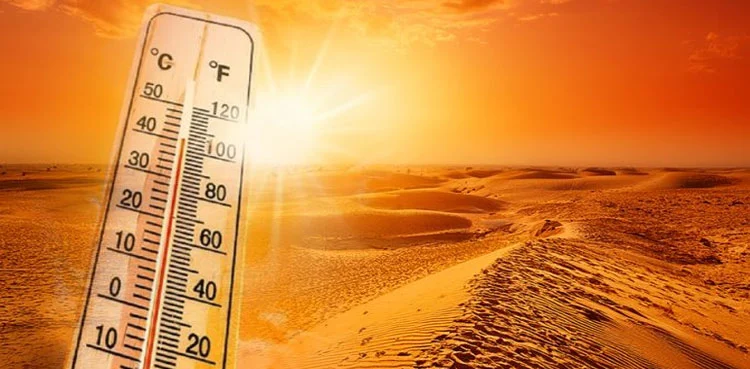
Islamabad: The National Emergencies Operation Center (NEOC) of the National Disaster Management Authority (NDMA) has issued a nationwide weather alert for May 26 to May 31, warning that Pakistan will face a mix of extreme heat, glacier melting, flash floods, and landslides across multiple regions.
According to Beyond Time News, the advisory highlights rising temperatures across the country along with growing risks in northern mountainous areas due to accelerated glacial melting.
Severe Heat Expected Across Pakistan
The NDMA warned that temperatures may rise sharply in many parts of the country, with some regions likely to experience extreme heat between 40°C and 48°C.
In particular, southern Punjab, Sindh, and Balochistan will remain under intense heatwave conditions throughout the forecast period. Authorities expect continued stress on public health systems due to prolonged high temperatures.
At the same time, provincial disaster management authorities have started preventive measures in coordination with federal agencies. These include awareness campaigns, emergency response deployment, and the establishment of cooling centers in vulnerable districts.
Glacier Melt Raises Flood and Landslide Risks
While heat dominates southern regions, northern Pakistan faces a different threat. The NDMA stated that rising temperatures in Gilgit-Baltistan, upper Khyber Pakhtunkhwa, and Azad Jammu and Kashmir are speeding up glacier melt.
As a result, the risk of flash floods, landslides, and glacial lake outburst floods (GLOFs) has increased significantly.
The advisory identifies several high-risk areas, including:
- Hunza, Nagar, Gilgit, Chilas, Astore, Shigar
- Chitral, Kalam, Upper Kohistan, and parts of Azad Kashmir
In addition, major routes such as the Karakoram Highway, Skardu Road, Shigar Valley Road, and Deosai Road may face blockages due to landslides and falling debris.
Flood-Prone Zones Identified
The NDMA also highlighted areas where sudden flooding may occur due to glacier activity and rising water levels. These include:
Darkot, Lasht, Reshun, Booni, Bad Swat, Shisper, Golgin, Hanarchi, Roshan, and Kumrat.
Meanwhile, rivers and streams in Hunza, Swat, Dir, Kohistan, Ghizer, Diamer, Astore, Ghanche, and Chitral may experience unusually high water flows.
Heatwave Conditions in Southern Regions
The advisory further warned that several districts in Sindh, Punjab, and Balochistan will continue to face severe heat stress.
In Sindh, high-risk districts include Jacobabad, Sukkur, Dadu, Khairpur, and Mirpurkhas, among others.
Similarly, Balochistan districts such as Sibi, Turbat, Chagai, Kharan, and Naseerabad are expected to remain extremely hot.
In Punjab, major cities including Lahore, Multan, Bahawalpur, Rahim Yar Khan, and Faisalabad will also experience intense heatwave conditions.
Government Measures and Public Safety Advice
The NDMA has instructed all relevant institutions to remain on high alert and ensure full emergency preparedness. Moreover, authorities have intensified monitoring in vulnerable regions.
Officials also issued a public advisory recommending light-colored and loose clothing to reduce heat stress and improve airflow during extreme temperatures.
In addition, citizens have been urged to:
- Avoid unnecessary travel during peak heat
- Stay updated through official weather alerts
- Follow instructions from local authorities
- Use the “Pak NDMA Disaster Alert” app for real-time updates
Read more:NDMA Issues Heavy Rain Alert for Karachi, Islamabad, Punjab and KP Ahead of Eid Holidays
Call for Caution Amid Dual Weather Threats
The NDMA emphasized that Pakistan is simultaneously facing two major weather threats—extreme heat in southern regions and flood-related risks in northern areas.
Therefore, authorities have urged both residents and tourists to remain cautious, especially in mountainous regions where road closures and landslides may occur without warning.
Key Highlights
- Nationwide alert issued for May 26–31
- Heatwave expected up to 48°C
- Flood and landslide risks in northern areas
- Glacier melt increasing danger of GLOFs
- NDMA urges public to follow safety guidelines
FAQs
1. Why has NDMA issued this alert?
NDMA issued the alert due to extreme heat, glacier melting, and flood risks across Pakistan.
2. Which areas will face the most heat?
Sindh, southern Punjab, and Balochistan are expected to face severe heatwave conditions.
3. Which regions are at risk of landslides?
Northern areas like Gilgit-Baltistan, KP, and Azad Kashmir are most at risk.
4. What are GLOFs?
GLOFs are glacial lake outburst floods caused by sudden melting or collapse of glacier lakes.
5. What safety steps should people follow?
People should avoid travel, stay hydrated, follow official alerts, and use NDMA’s mobile app for updates.


2 thoughts on “NDMA Issues Nationwide Alert as Pakistan Faces Heatwave, Flash Flood and Landslide Risks (May 26–31)”
Comments are closed.