
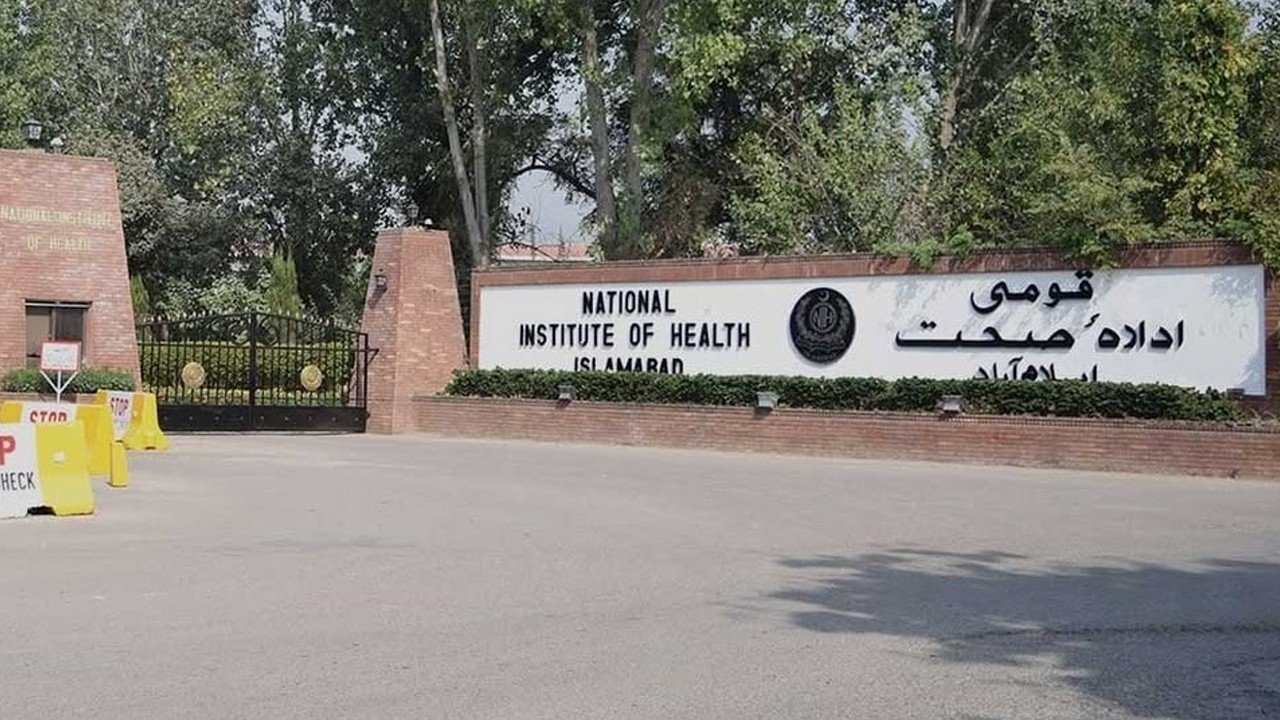
Islamabad: The heat this summer is not ordinary — and Pakistan’s top public health authority wants every citizen to understand that.
The National Institute of Health (NIH) in Islamabad has issued a formal advisory warning the public and health institutions across the country about the growing and immediate danger of heatstroke. Issued through the NIH’s Center for Disease Control (CDC), the advisory is a direct response to worsening heatwave conditions that are arriving earlier, lasting longer, and proving more lethal with each passing year.
This is not a seasonal reminder. It is an urgent call to action — from the institution responsible for protecting the health of over 230 million Pakistanis.
The Heat Is Getting Worse. Every Year.
For most Pakistanis, summer heat is simply a fact of life. Fans are turned on, coolers are set up, cold water is kept nearby. Life goes on.
But that familiar rhythm of coping is no longer enough.
According to Beyond Time News, the NIH advisory directly acknowledges what climate scientists have been warning about for years — Pakistan is experiencing increasingly severe heatwaves driven by global climate change. These are not temporary spikes. They are part of a deepening pattern that is growing more dangerous with every season.
The statistics are difficult to ignore. In 2015, a single heatwave descended on Karachi and killed more than 1,200 people within days. Hospitals were overwhelmed. Morgues ran out of space. The city was caught unprepared for a scale of suffering it had never experienced before.
That was nearly a decade ago. Since then, extreme heat events have become more common across the country — not just in Karachi, but in Lahore, Multan, Jacobabad, Quetta, and even Islamabad. In recent years, temperatures have begun surging as early as March, compressing the window communities have to prepare and pushing the human body to its limits far earlier in the calendar year.
Every summer that passes without adequate preparation is a summer that costs lives unnecessarily.
What Heatstroke Actually Does to the Human Body
To appreciate why the NIH is raising this alarm, it helps to understand exactly what heatstroke is — and what it does.
Heatstroke is not simply feeling very hot. It is a medical emergency.
It occurs when the body’s core temperature climbs above 40°C and the internal systems designed to cool it down — primarily sweating — stop working. At that point, the body is no longer able to protect itself. Heat begins attacking the organs. The brain, kidneys, liver, and heart all come under threat simultaneously.
Without immediate medical intervention, heatstroke can cause permanent brain damage, organ failure, and death — sometimes within hours of onset.
What makes it especially dangerous is how deceptively it can develop. A person may feel tired or mildly unwell in the morning and be in a life-threatening condition by midday. The warning signs are not always dramatic until they are.
Know the symptoms:
- Body temperature above 40°C
- Sudden confusion, disorientation, or slurred speech
- Skin that is dry, hot, and flushed — often with no sweating despite extreme heat
- Rapid, pounding heartbeat
- Severe headache or dizziness
- Nausea or vomiting
- Loss of consciousness
If any of these appear — in yourself or someone near you — treat it as an emergency. Do not wait to see if it passes. It may not.
Who Is Most at Risk — and Why It Matters
Heatstroke does not affect everyone equally. Certain groups carry a disproportionately high risk, and understanding who they are is the first step toward protecting them.
Older adults are among the most vulnerable. The body’s ability to regulate temperature declines with age, and many elderly Pakistanis live alone, lack access to reliable cooling, and may not recognise early warning signs in themselves before the situation becomes critical.
Young children heat up faster than adults and rely entirely on the adults around them to keep them hydrated, shaded, and safe. A child left in a vehicle or playing outside during peak afternoon heat can deteriorate rapidly.
Outdoor workers — the labourers, farmers, construction workers, rickshaw drivers, and street vendors who form the backbone of Pakistan’s economy — have little choice but to work through the hottest hours of the day. For them, heat exposure is not a lifestyle decision. It is an occupational reality. This community remains among the most consistently and severely affected, yet often receives the least attention in public health responses.
People with chronic illness — including those managing heart disease, diabetes, hypertension, or respiratory conditions — are at elevated risk because their bodies are already operating under strain. Extreme heat amplifies that strain significantly, raising the risk of cardiac events and other life-threatening complications.
Those without reliable electricity face a particularly acute challenge. Power outages during summer months are a well-known reality across much of Pakistan. When fans and air conditioners stop working during a heatwave, the most economically vulnerable households are left without a basic means of cooling — at precisely the moment they need it most.
What You Can Do — Starting Today
The NIH advisory outlines specific, evidence-based steps that can dramatically reduce the risk of heat-related illness. None of them require expensive equipment or medical expertise. They require awareness and consistency.
Drink water before you feel thirsty. This is the single most important habit to build during a heatwave. Thirst is not an early warning — by the time you feel thirsty, your body is already dehydrated. Drink water at regular intervals throughout the day, regardless of whether you feel the need. The NIH also specifically recommended consuming salty foods and fluids to replenish electrolytes lost through sweat, which helps the body retain water more effectively.
Avoid the sun at its most dangerous. The hours between 11 a.m. and 4 p.m. are when solar intensity peaks. During this window, outdoor activity should be minimised wherever possible. If you must be outside, seek shade consistently, rest frequently, and never go without water. Plan physical work, errands, and travel for the early morning or after sundown when temperatures allow.
Dress to survive the heat — not to look good in it. According to Beyond Time News, the NIH advisory specifically recommended light-coloured, lightweight, and loose-fitting clothing during hot and humid conditions. The reasoning is practical and proven — light colours reflect solar radiation rather than absorbing it, loose fabric allows air to circulate across the skin, and breathable materials work with the body’s cooling mechanisms rather than against them. A wide-brimmed hat or cap shields the head and face from direct sun exposure and can meaningfully reduce heat absorption.
Never underestimate someone who seems unwell in the heat. If a family member, colleague, or stranger is showing signs of confusion, extreme exhaustion, or any of the symptoms listed above — act. Move them immediately to a cool, shaded area. Apply cool water to the skin, especially around the neck, wrists, armpits, and behind the knees — areas where blood vessels run close to the surface. Fan them gently to encourage evaporative cooling. Call emergency medical services without delay. Do not give water or any fluid to a person who is unconscious or cannot swallow safely.
The Responsibility Falls on Institutions Too
Individual precautions are essential — but they are not sufficient on their own.
According to Beyond Time News, the NIH advisory specifically directed health authorities and medical institutions across Pakistan to intensify public awareness campaigns, improve emergency response capacity, and ensure that healthcare facilities are adequately prepared to handle a surge in heat-related cases.
This is a dimension of the crisis that often receives less attention than it deserves. Frontline health workers need training. Emergency departments need resources. Cooling centres need to be established and made accessible to those who have nowhere else to turn. Heat Action Plans — coordinated, pre-approved frameworks that activate specific responses when temperatures cross defined thresholds — need to exist at the provincial and district level, not just in a handful of cities.
Karachi made meaningful progress in this direction after the devastation of 2015. Other cities and regions must follow that lead. The NIH’s advisory is, in part, a formal push in that direction — a signal to institutions at every level that the time to prepare is not when the heatwave arrives. It is right now.
This Is Bigger Than One Summer
It is tempting to read a health advisory, nod along, and return to daily life unchanged. But the pattern that the NIH is describing demands a different response.
Pakistan sits among the countries most severely exposed to the long-term effects of climate change. South Asia as a whole is projected to face some of the most extreme temperature increases on record over the coming decades. For a nation where vast numbers of people work outdoors, live without stable electricity, and have limited access to healthcare, the consequences of that warming are not abstract — they are immediate, physical, and fatal.
Heat-related deaths in Pakistan are also almost certainly undercounted. When someone dies of cardiac failure during a heatwave, the heat is rarely recorded as the cause — even when it is the trigger. The true toll of extreme heat on Pakistani lives is very likely far greater than what official statistics reflect.
That invisible burden is exactly why the NIH’s advisory matters — and why acting on it matters even more.
Pakistan Heatwave Intensifies as Temperatures Climb to 46°C, PMD Issues Nationwide Alert
Simple Actions. Real Lives.
Pakistan’s summers are changing. The heat is heavier, earlier, and more unforgiving than previous generations experienced. But heatstroke remains, at its core, a preventable condition.
Drink water consistently. Stay out of the midday sun. Wear clothing that works with your body. Look after the people around you — especially the elderly, the young, and those who work outside with no choice. And if someone collapses, move fast.
These are not complicated instructions. In the weeks ahead, they are the difference between life and death for real people in real communities across Pakistan.
The NIH has done its part by issuing the warning. The rest is up to all of us.
Frequently Asked Questions
1. What are the earliest warning signs of heatstroke I should watch for? The first signs often include sudden confusion or disorientation, a body temperature above 40°C, dry and flushed skin without sweating, a rapid or pounding heartbeat, and a severe headache. Nausea and dizziness may also appear. If these symptoms develop — in yourself or someone nearby — seek emergency medical care immediately. Heatstroke escalates quickly and is fatal without prompt treatment.
2. How much water do I actually need to drink during extreme heat? At a minimum, 8 to 10 glasses of water per day — and significantly more if you are physically active or working outdoors. The critical habit to build is drinking at regular intervals rather than waiting until you feel thirsty. Thirst means dehydration has already begun. Including oral rehydration salts or lightly salty foods in your diet helps your body retain water and maintain the electrolyte balance it needs to function safely in high heat.
3. Who is most at risk of heatstroke in Pakistan? The elderly, young children, pregnant women, outdoor labourers, and people managing chronic conditions such as heart disease, diabetes, or respiratory illness are the most vulnerable. Those living without reliable electricity — particularly in areas with frequent load-shedding — face compounded danger, as they lose access to even basic cooling during the periods when they need it most.
4. What is the right emergency response if someone collapses from heatstroke? Act immediately. Move the person to a shaded or air-conditioned space. Apply cool — not ice-cold — water to the skin, focusing on the neck, armpits, groin, and wrists where veins are closest to the surface. Fan them steadily to promote cooling through evaporation. Contact emergency services without delay. Never attempt to give fluids to someone who is unconscious or showing signs of impaired swallowing — it can cause choking.
5. What is Pakistan’s NIH doing specifically to address the growing heat crisis? Through its Center for Disease Control, the NIH has issued formal public guidance urging citizens to adopt preventive measures and directing health authorities to strengthen awareness campaigns and emergency preparedness systems nationwide. The NIH actively monitors heat-related illness trends as part of Pakistan’s national public health surveillance effort, with the goal of reducing preventable deaths and improving institutional readiness before each summer season.