
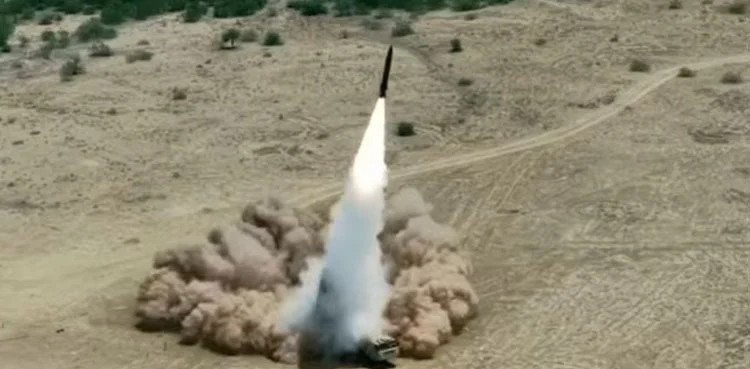
Tehran: Tensions in the Middle East escalated dramatically on Wednesday after Iran launched missile and drone attacks against several United States military installations in the Gulf region, responding to American strikes on Iranian military targets near the strategically important Strait of Hormuz.
The latest exchange marks one of the most serious confrontations between Washington and Tehran since both sides agreed to a ceasefire in April. The renewed hostilities have raised concerns about regional stability, energy security, and the future of ongoing diplomatic efforts aimed at ending months of conflict.
According to Beyond Time News, Iran’s Islamic Revolutionary Guard Corps (IRGC) claimed responsibility for coordinated attacks targeting US military facilities in Jordan, Kuwait, and Bahrain. Iranian officials described the operation as retaliation for recent American military actions against Iranian defense infrastructure.
Escalation Follows Downing of US Apache Helicopter
The crisis intensified after US President Donald Trump announced that Iran had shot down a US Apache helicopter operating near the Strait of Hormuz. While the aircraft was destroyed, both crew members were rescued safely.
Speaking about Iran’s actions, Trump defended the subsequent military response.
“I believe the response should be very strong, very powerful,” he said while discussing the operation.
The US military later confirmed that it had conducted strikes against Iranian air defense systems, surveillance radar installations, and command facilities. American officials described the operation as a proportional response intended to deter further attacks against US personnel and assets in the region.
Military officials reported that the operation lasted approximately four hours and targeted multiple strategic locations associated with Iran’s defense network.
Iranian Military Responds with Regional Attacks
Following the US strikes, the IRGC announced that it had launched drones and long-range missiles toward American military facilities across the Gulf region.
Iran stated that one of its primary targets was the US military’s Al-Azraq Air Base in Jordan. According to Iranian claims, missile strikes targeted infrastructure including aircraft shelters and command centers.
The IRGC also warned that it was prepared to launch further operations if Washington carried out additional military actions against Iranian territory.
However, initial assessments from US defense officials indicated that most incoming missiles and drones were intercepted before reaching their intended targets. Early reports suggested that there were no immediate casualties among US personnel and no significant damage to military facilities.
Jordan, Kuwait and Bahrain Activate Air Defenses
Regional governments quickly responded as the attacks unfolded.
Jordan’s military announced that its air defense systems intercepted and destroyed several missiles heading toward the Al-Azraq military facility. Officials reported that falling debris did not cause injuries or property damage.
Meanwhile, Kuwait’s Ministry of Defense confirmed that its forces intercepted hostile aerial targets approaching the country. Bahrain also activated its air defense network and successfully repelled incoming threats, according to officials.
The targeted countries host some of the most important American military installations in the Middle East. Bahrain serves as the headquarters of the US Navy’s Fifth Fleet, while Kuwait hosts major air and logistical facilities supporting American operations throughout the region.
Renewed Conflict Threatens Diplomatic Efforts
The latest military exchange has cast fresh doubt over ongoing diplomatic initiatives designed to end the broader conflict that erupted earlier this year.
The current war began on February 28 following joint US-Israeli military operations against Iranian targets. After weeks of fighting, Washington and Tehran agreed to a ceasefire in April, creating hopes for negotiations and a gradual reduction in tensions.
Since then, international mediators have worked to bring both sides back to the negotiating table. Pakistan and Qatar have reportedly played important roles in facilitating indirect discussions between American and Iranian representatives.
However, progress has remained limited.
Iranian Foreign Ministry spokesperson Esmaeil Baghaei signaled growing frustration with the diplomatic process. He stated that Tehran would reassess its engagement with Washington following what it described as repeated violations of the ceasefire agreement.
He emphasized that successful negotiations require a stable environment and mutual commitment to de-escalation.
Strategic Importance of the Strait of Hormuz
The Strait of Hormuz remains at the center of the conflict due to its enormous economic and geopolitical significance.
Located between Iran and Oman, the narrow waterway serves as one of the world’s most important energy corridors. Before the outbreak of war, approximately one-fifth of global crude oil and liquefied natural gas shipments passed through the strait.
Disruptions in the area have repeatedly triggered concerns among global markets. Following news of the latest attacks, oil prices moved higher while Asian stock markets experienced declines as investors reacted to growing uncertainty.
Although market movements remained relatively moderate compared to previous Gulf crises, analysts continue to monitor developments closely due to the waterway’s importance to global energy supplies.
Iran and US Remain Divided on Peace Terms
Despite repeated statements from Washington expressing optimism about a potential agreement, major obstacles continue to prevent a comprehensive peace deal.
The United States insists that any future arrangement must ensure that Iran cannot develop nuclear weapons. American officials view this issue as a central component of regional security.
Iran, however, rejects accusations that it seeks nuclear weapons and maintains that its nuclear activities are peaceful.
Tehran has also outlined several demands, including the removal of international sanctions, access to frozen financial assets, recognition of its authority over maritime security concerns in the Strait of Hormuz, and an end to regional hostilities involving allied groups.
These differences have complicated negotiations and contributed to ongoing instability.
Read more:Iranian Rial Attracts Investor Attention in Pakistan Amid Speculation and Regional Tensions
Regional Security Concerns Continue to Grow
Beyond the direct confrontation between Iran and the United States, violence involving regional actors continues to challenge efforts to restore stability.
Clashes involving Israel and Iran-backed groups in Lebanon have persisted despite broader ceasefire efforts. Security analysts warn that any further escalation could draw additional countries into the conflict and create wider consequences for regional security.
The latest exchange of missile and drone attacks demonstrates how fragile the current ceasefire remains and highlights the challenges facing diplomats seeking a lasting settlement.
As both sides assess the impact of the recent operations, international observers are closely watching for signs of either renewed negotiations or further military escalation.
Key Developments
- Iran launched missile and drone attacks against US bases in Jordan, Kuwait, and Bahrain.
- The attacks followed US strikes on Iranian military targets near the Strait of Hormuz.
- The US operation came after Iran allegedly downed a US Apache helicopter.
- American officials reported that most Iranian missiles and drones were intercepted.
- Jordan, Kuwait, and Bahrain activated air defense systems during the attacks.
- Diplomatic efforts between Washington and Tehran face renewed uncertainty.
- Oil markets and global investors reacted to the growing tensions.
FAQs
Why did Iran attack US military bases in the Gulf?
Iran said the attacks were retaliation for American strikes on Iranian military facilities near the Strait of Hormuz.
What triggered the latest escalation?
The confrontation intensified after Iran allegedly shot down a US Apache helicopter operating near the Strait of Hormuz, prompting US military action.
Were there casualties in the attacks?
Initial reports indicated that US personnel were unharmed and that most incoming missiles and drones were intercepted.
Why is the Strait of Hormuz important?
The Strait of Hormuz is one of the world’s most critical energy routes, handling a significant share of global oil and natural gas shipments.
Are peace talks between the US and Iran still ongoing?
Diplomatic contacts continue, but the latest military escalation has significantly complicated efforts to reach a lasting agreement.
SEO Hashtags
#IranUSConflict #StraitOfHormuz #MiddleEastNews #IranMissileAttack #USMilitaryBases #GulfTensions #DonaldTrump #IranNews #GlobalSecurity #WorldNews #Geopolitics #BreakingNews