
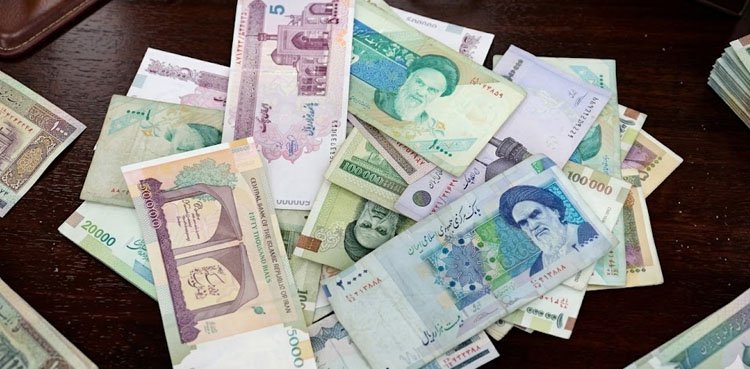
Karachi/Lahore: The Iranian Rial continued to draw unusual attention in Pakistan’s currency markets as speculative buying activity persists, even as geopolitical tensions involving Iran and the United States remain in focus, according to Beyond Time News.
On June 2, 2026, the Iranian Rial traded at approximately 0.000202 Pakistani rupees, showing relative stability in official mid-market figures. However, activity in Pakistan’s informal and open currency markets has painted a different picture, where physical currency is reportedly being traded at a significant premium.
Open Market Rates Show Wide Gap from Official Value
According to market observations cited by Beyond Time News, one crore Iranian Rials (IRR) converts to roughly 2,020 Pakistani rupees at official exchange rates.
In contrast, physical trading in Pakistan’s open market has placed the same amount of currency at around 8,500 to 10,000 Pakistani rupees, highlighting a sharp gap between official valuations and street-level transactions.
Currency dealers say this difference is largely driven by limited supply of physical Iranian notes and increased speculative demand rather than formal financial flows.
Speculation and Investor Interest Driving Demand
Market participants report that growing interest in the Iranian currency is being fueled by expectations among some small-scale investors that the Rial could appreciate in the future amid ongoing regional geopolitical developments.
Despite warnings from financial experts, some individuals continue to purchase Iranian currency in anticipation of potential gains linked to Iran-US tensions and future market adjustments.
However, analysts caution that such expectations are highly uncertain and carry significant financial risk due to the volatility of the Iranian currency.
Trade Links and Informal Exchange Activity
Pakistan and Iran maintain a range of trade relations involving both formal and informal channels. Pakistani exports to Iran typically include textiles, rice, surgical instruments, and agricultural goods, while imports include petroleum products, dried fruits, and carpets.
These trade flows contribute to ongoing demand for currency exchange between the two countries, although much of the physical currency movement in Pakistan is believed to be linked to informal or cross-border transactions.
Market observers note that this dual structure often creates pricing gaps between official exchange rates and open market valuations.
Currency Volatility and Economic Pressures
The Iranian Rial continues to face long-term pressure due to international sanctions and structural economic challenges. At the same time, the Pakistani rupee has also experienced fluctuations due to inflationary pressures and external debt obligations.
This combination has created a highly sensitive environment where minor geopolitical developments can influence investor sentiment and short-term trading behavior.
Experts emphasize that such conditions often lead to speculative activity rather than stable investment trends.
Caution Issued Over Speculative Buying
Financial analysts have advised against treating the Iranian Rial as an investment instrument, warning that speculative buying could result in losses if market expectations do not materialize.
They note that currency movements in politically sensitive environments are difficult to predict and can reverse quickly depending on diplomatic and economic developments.
Traders involved in cross-border goods movement have also expressed concern that rising speculative prices are increasing their transaction costs and disrupting traditional trade margins.
Read more:Iranian Rial Rate in Pakistan Today – May 25, 2026
Key Developments
- Iranian Rial trading at around 0.000202 PKR in official rates.
- Open market value for physical currency significantly higher in Pakistan.
- One crore IRR trading between Rs8,500 and Rs10,000 in cash markets.
- Speculative buying driven by geopolitical expectations and investor sentiment.
- Trade between Pakistan and Iran continues through formal and informal channels.
- Experts warn against high-risk currency speculation.
FAQs
Why is the Iranian Rial being traded in Pakistan?
The currency is used for trade, travel, and informal cross-border exchanges, and has recently attracted speculative interest.
What is the official exchange rate of the Iranian Rial in Pakistan?
It is approximately 0.000202 Pakistani rupees per Iranian Rial in mid-market rates.
Why is there a difference between official and open market rates?
Limited physical availability and informal trading practices create a premium in the open market.
Is investing in Iranian Rial considered safe?
Experts warn that it is highly risky due to currency volatility and geopolitical uncertainty.
What factors influence the Iranian Rial’s value?
Sanctions, regional tensions, and economic conditions in Iran all play a major role.
Hashtags
#IranianRial #CurrencyMarket #PakistanEconomy #ForexNews #ExchangeRates #KarachiNews #FinancialNews #MiddleEastTensions #TradePakistanIran #EconomicTrends #MarketUpdate
One thought on “Iranian Rial Attracts Investor Attention in Pakistan Amid Speculation and Regional Tensions”
Comments are closed.