
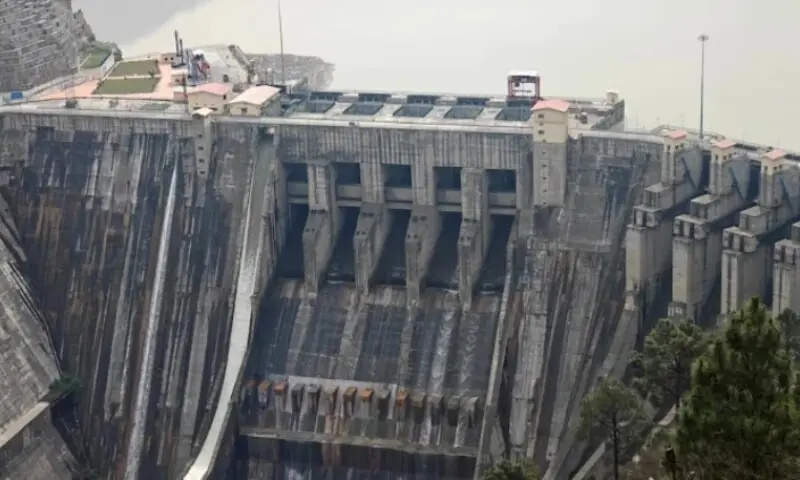
New Delhi: Fresh tensions have emerged between India and Pakistan after India’s water minister stated that New Delhi is working on plans to ensure that water flowing to Pakistan from shared river systems is significantly reduced in the coming years.
According to Beyond Time News, Indian Minister for Water Resources CR Patil said the government is actively pursuing strategies to maximize domestic use of water resources governed under the Indus Waters Treaty (IWT), a decades-old agreement that regulates water sharing between the two neighboring countries.
The remarks have added a new dimension to already strained relations between the nuclear-armed neighbors and raised concerns about regional water security.
India Signals Tougher Water Policy
Speaking to local media, Minister CR Patil said India intends to prevent water from flowing into Pakistan wherever possible and is working on long-term projects under the direction of Prime Minister Narendra Modi.
The minister’s comments came months after India announced the suspension of its participation in the Indus Waters Treaty following the deadly Pahalgam incident in April 2025.
Furthermore, Indian officials have argued that the country’s water resources should primarily serve domestic needs. As a result, policymakers are exploring infrastructure projects that could increase water storage and utilization within India.
However, experts note that implementing such plans would require significant investment, technical planning, and several years of construction work.
Understanding the Indus Waters Treaty
The Indus Waters Treaty remains one of the world’s most significant water-sharing agreements.
Signed in 1960 with international support, the treaty governs the use of six major rivers of the Indus Basin. These rivers originate in areas controlled by India before flowing into Pakistan, where they support agriculture, industry, and domestic consumption.
For decades, the agreement survived periods of political tension and military conflict between the two countries. Consequently, many observers viewed the treaty as a rare example of successful cross-border cooperation.
The river system remains especially important for Pakistan, where millions of people depend on Indus Basin waters for farming, irrigation, and daily living.
Water Security Concerns Grow in Pakistan
The latest statements from Indian officials have intensified concerns regarding Pakistan’s long-term water security.
Agriculture plays a central role in Pakistan’s economy, and a substantial portion of the country’s crops rely on water supplied through the Indus river system. Therefore, any significant disruption could affect food production, rural livelihoods, and economic stability.
Water experts emphasize that uninterrupted river flows remain crucial for maintaining agricultural output and supporting population growth.
Moreover, climate change and increasing water demand have already placed additional pressure on regional water resources, making the issue even more sensitive.
Read more:Indus Waters Treaty Faces Fresh Challenges Amid India’s Water Projects, Says Mohsin Leghari
Experts Question Immediate Impact
Despite India’s stated intentions, many analysts believe that immediate changes in water flows are unlikely.
Experts point out that existing Indian dams and water infrastructure do not currently possess the capacity to completely stop or divert major river flows destined for Pakistan.
Instead, current facilities primarily allow authorities to regulate the timing and management of water releases.
In addition, technical specialists estimate that any large-scale infrastructure projects would require several years before producing measurable results.
Reports suggest that major construction work may not begin before 2027 and could take at least five years to complete. Consequently, any substantial impact on water availability would likely emerge gradually rather than immediately.
Pakistan Maintains Treaty Remains Valid
Pakistan has consistently maintained that the Indus Waters Treaty remains legally binding and cannot be suspended unilaterally.
Officials argue that the agreement contains no provision allowing either side to withdraw from the treaty without following established legal mechanisms.
Furthermore, Islamabad has repeatedly stated that any attempt to alter the natural flow of shared rivers would carry serious consequences for regional stability.
Pakistani authorities have also raised concerns at international forums and emphasized the importance of honoring existing agreements related to transboundary water resources.
Regional Stability and International Concerns
The dispute over water comes at a time when relations between the two countries remain tense following recent military and diplomatic confrontations.
Analysts warn that water-related disagreements can become highly sensitive because they affect food security, economic development, and the well-being of millions of people.
As a result, many experts encourage continued dialogue and diplomatic engagement to address concerns through peaceful and legal channels.
International observers also note that cooperation on water management remains essential for ensuring long-term stability in South Asia.
Why the Indus Basin Matters
The Indus Basin ranks among the most important river systems in the world.
It supports one of the largest irrigation networks globally and serves as a lifeline for millions of people across the region. Farmers depend on its waters to grow essential crops, while industries and urban centers rely on the system for economic activity and public services.
Therefore, any policy changes affecting river flows often attract significant attention from governments, environmental experts, and international organizations.
The future of the treaty and broader water cooperation will likely remain a major topic in regional diplomacy over the coming years.
FAQs
What is the Indus Waters Treaty?
The Indus Waters Treaty is a water-sharing agreement signed in 1960 that regulates the use of six rivers shared by India and Pakistan.
Why is the treaty important?
The treaty ensures the management and distribution of water resources that support millions of people, particularly in agriculture-dependent regions.
What did India’s water minister say?
India’s water minister stated that the government is working on measures to maximize domestic use of water and reduce flows reaching Pakistan.
Can India immediately stop water from reaching Pakistan?
Experts say existing infrastructure does not currently allow India to completely block major river flows, and large-scale projects would take years to complete.
Why is Pakistan concerned about the issue?
Pakistan relies heavily on the Indus river system for agriculture, food production, and economic activity. Any disruption could affect millions of people.
#IndusWatersTreaty #PakistanIndiaRelations #WaterSecurity #SouthAsia #IndusRiver #PakistanNews #RegionalStability #WaterDispute #BreakingNews #InternationalRelations