
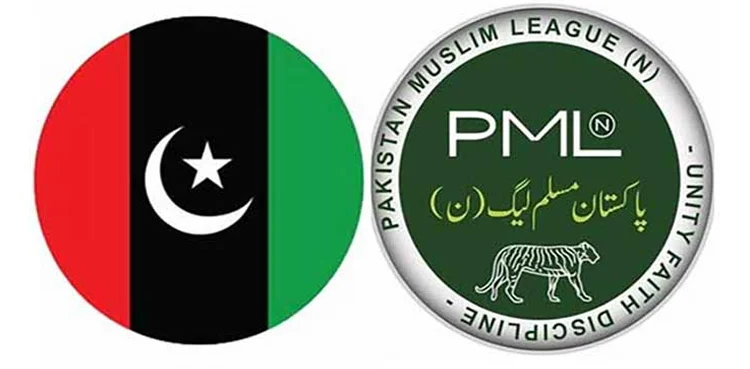
Gilgit: Political activity has intensified in Gilgit-Baltistan following the recent elections, as senior leaders of the Pakistan Peoples Party (PPP) and Pakistan Muslim League-Nawaz (PML-N) met to discuss possible cooperation for the formation of the region’s next government.
According to Beyond Time News, representatives from both parties held detailed consultations in Gilgit and explored various options for establishing a stable administration in the strategically important region.
The discussions come after election results produced a fragmented political landscape, making alliances and negotiations crucial for forming a majority government.
Senior Leaders Discuss Political Cooperation
The meeting brought together senior figures from both major political parties.
The PPP delegation included Nayyar Bukhari, Qamar Zaman Kaira, Sharjeel Inam Memon, Nasir Hussain Shah, and Gilgit-Baltistan PPP President Amjad Hussain Advocate.
Meanwhile, the PML-N delegation included Federal Minister Amir Muqam and former Gilgit-Baltistan Chief Minister Hafiz Hafeezur Rehman.
During the meeting, both sides reviewed several possible formulas for political cooperation and discussed ways to ensure political stability in the region.
Furthermore, leaders exchanged views on governance priorities and the future political direction of Gilgit-Baltistan.
Proposals to Be Shared With Central Leadership
After extensive discussions, the two parties agreed to present their respective proposals to their central leadership for further consideration.
Party leaders indicated that no final decision has been reached yet. However, both sides expressed willingness to continue consultations in the coming days.
Political observers believe the outcome of these discussions could play a decisive role in determining the shape of the next government.
Moreover, any agreement between the PPP and PML-N would significantly influence the balance of power in the newly elected assembly.
PPP Emerges as Largest Party
The Pakistan Peoples Party emerged as the largest political party in the Gilgit-Baltistan elections by securing nine seats in the regional assembly.
Although the party gained the highest number of seats, it fell short of the simple majority required to form a government independently.
The Gilgit-Baltistan Assembly consists of 25 members, meaning a party needs at least 13 lawmakers to secure a majority.
Consequently, the PPP requires support from additional members to strengthen its position and form the next administration.
A PPP delegation stated that voters had given the party the largest mandate in the region.
“The people have voted for the Pakistan Peoples Party and made it the largest political force in Gilgit-Baltistan,” party representatives said. They added that future decisions regarding government formation would be made according to democratic principles and in the best interests of the people.
Independent Candidates Become Key Players
With no single party securing a clear majority, independent candidates have emerged as important stakeholders in the government formation process.
Sources within the PPP revealed that the party has already initiated contact with several successful independent candidates.
According to party insiders, the outreach efforts are taking place under the guidance of the party’s central leadership.
Furthermore, PPP leaders believe support from independent lawmakers could help the party achieve the numbers required to form a stable government.
Political analysts note that independent candidates often play a crucial role in closely contested assemblies, particularly when major parties lack an outright majority.
Broader Political Engagement Expected
In addition to reaching out to independents, the PPP is expected to engage with other political parties represented in the assembly.
These discussions may include negotiations on policy priorities, development agendas, and potential coalition arrangements.
Meanwhile, political observers expect consultations among all major stakeholders to continue until a clear governing alliance emerges.
As a result, the coming days could prove critical for determining the future political landscape of Gilgit-Baltistan.
Read more:PPP Moves to Secure Government Formation in Gilgit-Baltistan After Emerging as Leading Party
Final Election Results Shape Coalition Talks
The election results have created a competitive political environment that requires coalition-building and strategic negotiations.
According to the available results:
- Pakistan Peoples Party (PPP): 9 seats
- Independent candidates: 5 seats
- Pakistan Muslim League-Nawaz (PML-N): 5 seats
- Majlis Wahdat-e-Muslimeen (MWM): 1 seat
The remaining seats will contribute to the final composition of the assembly and influence coalition dynamics.
Therefore, political parties are actively working to secure alliances that can provide a stable majority and ensure effective governance.
Importance of Government Formation in Gilgit-Baltistan
Gilgit-Baltistan holds significant strategic, economic, and political importance for Pakistan.
The region serves as a key gateway for trade, tourism, and major infrastructure initiatives. Consequently, the formation of a stable government remains essential for maintaining development momentum and addressing local concerns.
Political experts believe that a broad-based coalition could help strengthen governance and facilitate the implementation of development projects across the region.
As consultations continue, residents and political stakeholders alike await clarity on who will lead the next Gilgit-Baltistan government.
FAQs
Which party emerged as the largest party in the Gilgit-Baltistan elections?
The Pakistan Peoples Party (PPP) emerged as the largest party by winning nine seats.
Why are PPP and PML-N holding talks?
The two parties are discussing possible political cooperation and government formation following the election results.
How many seats are required for a majority in the Gilgit-Baltistan Assembly?
A party or coalition needs at least 13 seats in the 25-member assembly to secure a simple majority.
What role are independent candidates playing?
Independent candidates hold key seats and could help determine which party or coalition forms the next government.
Have PPP and PML-N reached a final agreement?
No. Both parties have agreed to present proposals to their central leadership before making a final decision.
#GilgitBaltistan #PPP #PMLN #GBElections #PakistanPolitics #GovernmentFormation #GilgitNews #CoalitionPolitics #Election2026 #BreakingNews
2 thoughts on “PPP and PML-N Hold Key Talks on Gilgit-Baltistan Government Formation After Elections”
Comments are closed.