
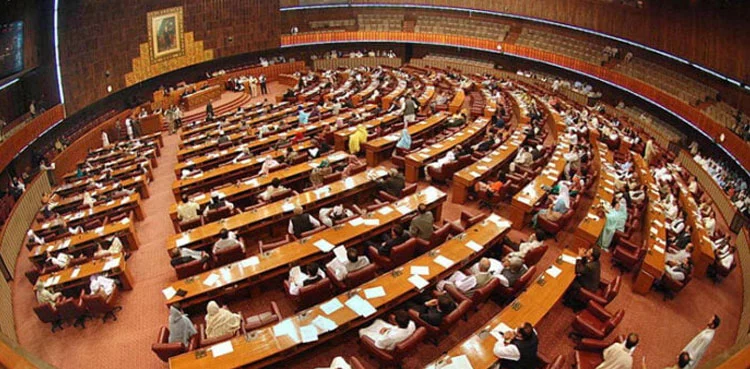
Islamabad: Lawmakers Demand Urgent Financial Relief as Economic Debate Intensifies in Parliament
Pakistan’s National Assembly witnessed a strong and wide-ranging debate on Saturday as lawmakers from multiple political parties called for salary increases, economic relief measures, and deep structural reforms to address rising inflation, unemployment, and fiscal pressures.
According to Beyond Time News, members across the political spectrum acknowledged recent budget adjustments but argued that they fall short of public expectations. They urged the government to adopt long-term economic reforms instead of short-term fixes.
The discussion highlighted growing concerns over agriculture, taxation, provincial resource distribution, debt burden, and declining purchasing power of citizens.
Lawmakers Demand Higher Salaries and Inflation Relief
Several members of parliament strongly criticized the proposed 7% salary increase for government employees, calling it insufficient amid record inflation.
Jamiat Ulema-e-Islam-Fazl (JUI-F) MNA Naima Kishwar said rising electricity and gas bills were consuming a major share of household incomes. She argued that poverty levels are increasing and questioned the effectiveness of current welfare benchmarks.
She urged the government to shift focus from cash transfers to long-term job creation, skills development, and economic empowerment—especially for women.
Pakistan Muslim League-Nawaz (PML-N) lawmaker Major (retd) Tahir Iqbal also rejected the proposed salary hike. He demanded at least a 15% increase, arguing that pensioners and salaried workers are under severe financial pressure.
Strong Concerns Over Agriculture and Rural Economy
Pakistan People’s Party Parliamentarians (PPP-P) MNA Samina Khalid Ghurki raised concerns about agricultural policy and rural support.
She questioned the adequacy of the Rs 750,000 farmer support package, warning that Pakistan’s agriculture sector is facing increasing neglect despite being the backbone of the economy.
She also criticized wheat pricing policies, saying they have left farmers financially insecure and unable to plan production effectively.
According to Beyond Time News, lawmakers stressed that rising costs of fertilizers and pesticides are further weakening the rural economy.
Calls for Structural Reforms and Economic Expansion
Muttahida Qaumi Movement-Pakistan (MQM-P) leader Dr Farooq Sattar said Pakistan’s economy remains stuck in a low-growth cycle of 2.5% to 3%.
He argued that the country must raise growth to at least 5% through structural reforms, broader taxation, and decentralised development.
He called for urgent reforms in the National Finance Commission (NFC) system to ensure fair distribution of resources among provinces.
Sattar also highlighted regional inequalities, pointing out underdevelopment in Karachi, South Punjab, Hazara, and other neglected areas despite their economic contributions.
He stressed that cities like Karachi, Lahore, Faisalabad, Quetta, and Peshawar must receive proportional investment to strengthen national growth.
Rising Debt, Inflation, and Economic Pressure
Multiple lawmakers expressed concern over Pakistan’s rising debt burden and its impact on fiscal space.
They argued that a large portion of national revenue is consumed by debt servicing, leaving limited room for development spending.
Several members noted that inflation continues to erode purchasing power, particularly for salaried individuals and low-income households.
Some lawmakers also criticized reliance on remittances, arguing that sustainable growth must come from domestic production, exports, and industrial expansion.
Tax System, FBR Performance Under Scrutiny
PPP-P leader Syeda Shehla Raza criticized the Federal Board of Revenue (FBR), claiming it has failed to broaden the tax base effectively.
She argued that increasing tax rates instead of expanding compliance is placing additional pressure on existing taxpayers.
She also suggested decentralising revenue collection to provinces to improve efficiency and accountability.
Lawmakers further pointed to structural weaknesses in agriculture, manufacturing, and energy sectors, warning that these issues are fueling inflation and unemployment.
Development Gaps Across Provinces Highlighted
Several lawmakers stressed uneven development across Pakistan’s regions.
PPP-P MNA Muhammad Shaharyar Khan Mahar pointed to rising costs of electricity, fuel, and agricultural inputs, which are severely affecting rural households, particularly in Sindh.
MNA Naseem Ali Shah called for equal development across all provinces, including Balochistan, Khyber Pakhtunkhwa, Gilgit-Baltistan, and Azad Jammu and Kashmir.
He emphasized youth employment and regional inclusion as key pillars of national stability.
Sher Afzal Marwat also highlighted infrastructure gaps in former tribal areas and parts of Khyber Pakhtunkhwa, urging targeted investment in roads, education, and public services.
Read more:Pakistan Budget 2026–27: Salaries, Taxes, EV Policy and Major Fiscal Measures Revealed
Education, Energy, and Social Development Concerns
Lawmakers raised concerns about education reforms, particularly in rural areas where access remains limited.
MNA Dr Sadaf Ihsan pointed to infrastructure gaps in Lakki Marwat and urged improvements in schools, healthcare facilities, and emergency transport systems.
She also proposed solarization of water systems to improve both agriculture and clean water access.
Other members stressed the need for investment in renewable energy, particularly solar power, to reduce dependency on expensive energy imports.
Debt, Growth, and Investment Challenges
Senior lawmaker Sher Ali Arbab said Pakistan’s debt burden continues to limit economic progress.
He warned that without controlling debt servicing costs, development goals will remain difficult to achieve.
He also pointed out that tax compliance remains weak and that the burden disproportionately falls on salaried individuals and formal businesses.
He emphasized that inflation, weak exports, and inconsistent investment flows continue to undermine macroeconomic stability.
Calls for Long-Term Policy Direction
Lawmakers across parties agreed that Pakistan needs long-term policy stability instead of repeated short-term adjustments.
They stressed reforms in taxation, energy pricing, governance, and industrial policy to support sustainable economic growth.
Many members argued that economic stability is essential for political stability and national development.
Conclusion: Parliament Pushes for Economic Reset
The National Assembly debate reflected a rare consensus across party lines on the urgent need for economic reform.
While members differed on policy solutions, they agreed on key challenges: rising inflation, weak growth, heavy debt, and unequal development across regions.
Lawmakers urged the government to move beyond temporary relief measures and focus on structural reforms that can strengthen Pakistan’s economy in the long run.
FAQs
1. What did lawmakers demand in the National Assembly?
They demanded salary increases, economic relief, and structural reforms to address inflation and weak growth.
2. Why was the salary increase criticized?
Many lawmakers said a 7% increase is not enough to match rising inflation and living costs.
3. What economic issues were highlighted in the debate?
Key issues included debt burden, inflation, agriculture decline, weak tax collection, and regional inequality.
4. What reforms were suggested by lawmakers?
They suggested tax reforms, NFC restructuring, industrial support, and stronger local development policies.
5. What sectors need urgent attention according to MPs?
Agriculture, energy, education, and small industries were repeatedly identified as priority sectors.
SEO Hashtags
#PakistanNews #NationalAssembly #PakistanEconomy #SalaryHike #InflationPakistan #EconomicReforms #Budget2026 #PakistanPolitics #DebtCrisis #AgriculturePakistan #PublicRelief #BreakingNews #IslamabadNews
4 thoughts on “National Assembly Calls for Salary Hikes, Economic Relief and Deep Structural Reforms Amid Rising Inflation Pressures”
Comments are closed.