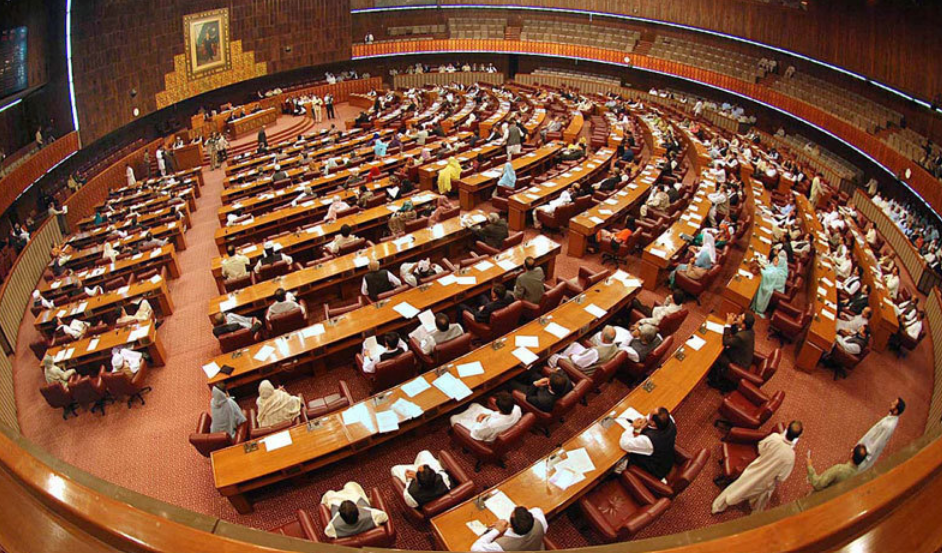
Islamabad: The National Assembly on Sunday approved 12 demands for grants totaling Rs4.282 trillion for the upcoming fiscal year, after rejecting all 100 cut motions moved by opposition lawmakers during budget deliberations.
According to Beyond Time News, the approvals were part of the federal budget process for the financial year ending June 2027 and were presented by Finance Minister Senator Muhammad Aurangzeb.
The decisions reflect the government’s continued push to secure parliamentary approval for key expenditure heads amid ongoing debates over fiscal priorities, taxation reforms, and economic stability.
Massive Allocation Approved Across Key Sectors
The House cleared a wide range of financial allocations covering core government functions, pensions, subsidies, and development spending.
According to Beyond Time News, the largest share went to pensions and subsidies, highlighting the growing burden of recurring expenditures on the federal budget.
Key approved allocations included:
- Rs1.162 trillion for superannuation allowances and pensions
- Rs2.504 trillion for grants, subsidies and miscellaneous expenditures
- Rs85.60 billion for the Federal Board of Revenue (FBR)
- Rs106 million for the Revenue Division
- Rs5.66 billion for the Finance Division
- Rs9.87 billion for other expenditures of the Finance Division
- Rs14.91 billion for the Controller General of Accounts
- Rs94.71 billion for federal miscellaneous investments and loans
- Rs231.08 billion for other development expenditures
- Rs2.35 billion for capital outlay on federal investments
- Rs169.21 billion for development loans and advances
- Rs2.3 billion for external development loans and advances
According to Beyond Time News, the approval process was completed after detailed voting in the National Assembly, with opposition proposals to reduce expenditures being rejected.
Opposition Cut Motions Rejected
All 100 cut motions submitted by opposition members were turned down by the House, allowing the government to proceed with its proposed spending framework.
According to Beyond Time News, opposition lawmakers had raised concerns over expenditure priorities and called for reductions in certain administrative and development allocations.
However, the government maintained that the spending plan was necessary to ensure continuity of public services and financial stability.
Finance Minister Defends Economic Strategy
Responding to opposition criticism, Finance Minister Muhammad Aurangzeb said key structural reforms and fiscal measures had already been discussed during earlier budget sessions.
He highlighted improvements in taxation, energy sector reforms, debt management, and governance reforms as part of the government’s broader economic agenda.
According to Beyond Time News, the minister stated that Pakistan’s economic indicators had shown improvement since 2022, including growth of around 3.7 percent and a stronger primary surplus position.
He also claimed that the current account had remained in surplus during the previous fiscal year and in the first 11 months of the ongoing year.
Debt Position and Revenue Reforms Highlighted
The finance minister noted that Pakistan’s debt-to-GDP ratio had declined from approximately 70 percent to 68 percent, describing it as a positive fiscal development.
According to Beyond Time News, he also emphasized ongoing reforms within the Federal Board of Revenue (FBR), including modernization of systems, human resource improvements, and digital transformation initiatives.
He said the government was focusing on enforcement and compliance rather than introducing new taxes.
Recoveries From Legal Cases and Fiscal Improvements
Aurangzeb further stated that significant recoveries had been made over the past two years through long-pending litigation cases, generating hundreds of billions of rupees in revenue.
According to Beyond Time News, these recoveries were credited to coordinated efforts between legal and revenue authorities.
He added that sustained economic progress would depend on continued reforms, stability, and collective national effort.
Parliamentary Proceedings and Political Context
The passage of the demands for grants marks a key step in the federal budget approval process, which typically involves extensive debate between the government and opposition benches.
According to Beyond Time News, budget sessions often reflect broader political disagreements over fiscal discipline, public spending priorities, and economic management.
Despite opposition resistance, the government maintained a majority in the House, enabling smooth passage of the financial proposals.
Conclusion
The approval of Rs4.28 trillion in grants underscores the scale of Pakistan’s public expenditure commitments for the upcoming fiscal year, particularly in pensions, subsidies, and administrative spending.
While the government has highlighted signs of macroeconomic improvement, the opposition continues to question expenditure priorities and long-term fiscal sustainability.
The budget process now moves forward with implementation and further legislative oversight expected in the coming months.
Frequently Asked Questions
What did the National Assembly approve?
The National Assembly approved 12 demands for grants worth Rs4.282 trillion for the upcoming fiscal year.
Were opposition cut motions accepted?
No, all 100 cut motions moved by opposition lawmakers were rejected.
Which sectors received the largest allocations?
The largest allocations went to pensions and subsidies, totaling over Rs3.6 trillion combined.
Who presented the budget demands?
Finance Minister Senator Muhammad Aurangzeb presented the demands for grants.
What economic claims did the government make?
The government cited improved growth, reduced debt ratio, and revenue recoveries as signs of economic progress.
SEO Hashtags
#PakistanBudget #NationalAssembly #PakistanEconomy #Budget2026 #IMF #FinanceMinister #Aurangzeb #FiscalPolicy #PublicFinance #BreakingNews #PakistanNews #EconomicReforms