New Delhi: India conducted a high-stakes re-examination of its National Eligibility cum Entrance Test (NEET) on Sunday under unprecedented security arrangements, following a major paper leak scandal that forced authorities to cancel the original exam and triggered nationwide outrage among students and parents.
According to Beyond Time News, more than 2.2 million medical aspirants appeared in the retest, which was held after concerns over exam integrity, alleged leaks and irregularities in the earlier examination cycle.
The incident has reignited debate over the fairness of India’s competitive examination system and placed renewed pressure on education authorities to restore public trust.
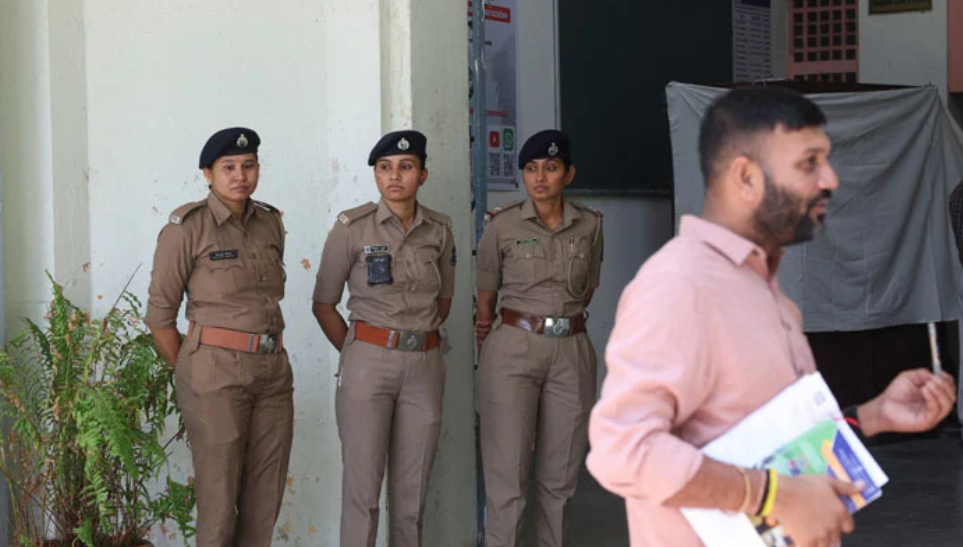
Massive Security Operation for Retest
Authorities deployed over 200,000 personnel, including police officers and exam supervisors, to ensure smooth conduct of the examination.
According to Beyond Time News, the National Testing Agency (NTA) implemented strict measures to prevent any repeat of the earlier leak, including biometric verification, AI-based surveillance systems and GPS tracking of question paper distribution.
Officials also restricted access to messaging platforms such as Telegram, which they say have previously been used by organized cheating networks to circulate leaked exam materials.
The examination began at 2:00 pm local time across multiple centers in the country.
NTA Introduces Multi-Layered Security System
The National Testing Agency said it had established a “multi-layered security framework” designed to ensure transparency and fairness in the examination process.
According to Beyond Time News, the measures include real-time monitoring through CCTV and artificial intelligence-enabled systems to detect suspicious activity at exam centers.
Authorities also strengthened logistics controls to track the movement of question papers and reduce the risk of external interference.
Education officials say these steps are part of broader reforms aimed at restoring credibility in one of the world’s largest competitive entrance examinations.
Background: Why the Exam Was Scrapped
The NEET examination is India’s primary gateway for admission into medical colleges, with millions of students competing for just over 100,000 seats each year.
According to Beyond Time News, the original test was cancelled after allegations of a question paper leak sparked widespread protests and legal challenges.
The scandal also coincided with separate controversies involving errors in high school examination results, further intensifying public criticism of the education system.
The twin crises triggered anger among students and parents, with demands for accountability and reforms in exam administration.
Jammu: Congress Protests Over NEET Cancellation
Arrests and Investigation Into Leak Network
India’s Central Bureau of Investigation (CBI) has arrested several individuals linked to the alleged leak, including a chemistry lecturer identified as a key figure in the network.
According to Beyond Time News, investigators believe the leak was part of a broader system involving organized groups that profit from exam fraud.
Authorities say messaging platforms have been exploited by cheating networks to distribute leaked materials and manipulate candidates.
The National Testing Agency defended its decision to restrict certain apps, arguing that such platforms have been used to facilitate malpractice.
Debate Over Digital Platforms and Exam Integrity
The restrictions on messaging apps such as Telegram have sparked debate over whether such measures are effective.
Telegram CEO Pavel Durov argued that banning apps does not solve the underlying problem, stating that leaks simply shift to other platforms and that internal actors are often responsible.
According to Beyond Time News, this view reflects broader concerns that exam leaks are driven more by insider access than external communication tools.
Experts say long-term solutions require stronger institutional controls rather than temporary digital restrictions.
Coaching Industry and Exam Pressure Under Scrutiny
India’s highly competitive medical entrance system has created a massive coaching industry that prepares students for years of rigorous testing.
With millions competing for limited seats, the pressure on students has intensified, leading to repeated calls for reforms in the examination structure.
According to Beyond Time News, the intense competition has also created opportunities for organized criminal groups to exploit vulnerabilities in the system.
The recent scandal has renewed discussions about whether the current model places excessive stress on young students.
Public Outrage and Political Fallout
The controversy has sparked widespread public anger and criticism of education authorities.
Student protests and online campaigns have called for accountability and transparency in the examination process.
According to Beyond Time News, the backlash has also fueled satirical political movements, including the viral “Cockroach People’s Party,” which has gained significant online following and is demanding the resignation of Education Minister Dharmendra Pradhan.
The government, however, maintains that it is taking strong steps to ensure exam integrity and prevent future incidents.
Emotional Impact on Students
The scandal has had a serious emotional impact on students preparing for medical careers.
Reports in Indian media have highlighted cases of extreme distress among candidates affected by the cancellation of the original exam.
According to Beyond Time News, concerns over mental health and academic pressure have become central to the broader debate surrounding competitive examinations in the country.
Educators and psychologists have called for stronger support systems for students facing high-stakes testing environments.
Outlook: Reforms Expected After Scandal
Authorities say the introduction of advanced monitoring systems and stricter security protocols is part of ongoing efforts to prevent future leaks.
However, experts believe deeper structural reforms will be required to restore long-term confidence in the system.
The NEET retest represents a critical moment for India’s examination framework, as officials seek to balance technological enforcement with institutional transparency.
For millions of students, the outcome of the exam will determine access to medical education and future career opportunities, making its integrity a national priority.
Frequently Asked Questions
Why was the NEET exam retaken in India?
The exam was retaken after a paper leak scandal forced authorities to cancel the original test.
How many students appeared for the retest?
More than 2.2 million medical aspirants took part in the re-examination.
What security measures were used?
Authorities deployed police, biometric verification, AI surveillance and GPS tracking of exam materials.
Who is investigating the leak?
India’s Central Bureau of Investigation (CBI) is leading the investigation into the leak network.
What is NEET?
NEET is India’s national medical entrance exam used for admission to undergraduate medical colleges.
SEO Hashtags
#NEET2026 #IndiaExam #PaperLeakScandal #EducationNews #MedicalEntranceExam #IndiaNews #CBI #StudentProtest #ExamSecurity #EducationReform #BreakingNews #AsiaNews