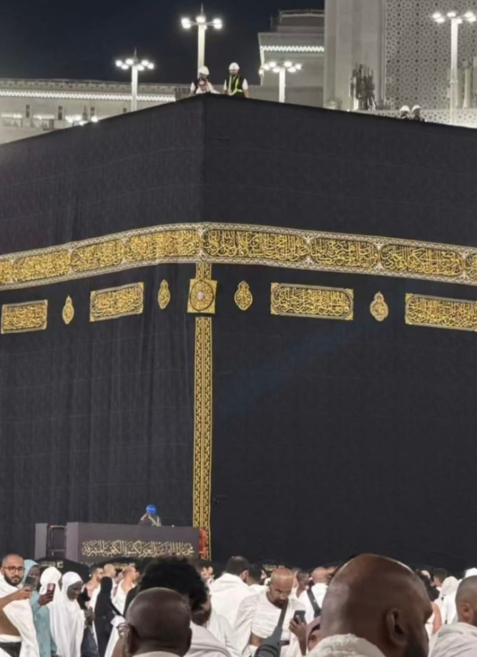
Makkah Mukarramah: The Holy Kaaba was adorned with a new Kiswah as Muslims across the world welcomed the Islamic New Year 1448 Hijri, marking one of the most revered annual ceremonies held at Masjid al-Haram.
Thousands of pilgrims and worshippers gathered around the Sacred Mosque to witness the replacement of the Kaaba’s black silk covering, a centuries-old tradition that symbolizes reverence, renewal, and the enduring spiritual significance of Islam’s holiest site.
According to Beyond Time News, the operation was carried out under the supervision of Saudi authorities responsible for the affairs of the Two Holy Mosques. A team of highly trained specialists completed the intricate process over several hours while ensuring the Kaaba remained covered throughout the transition.
The ceremony has become one of the most anticipated religious events of the Islamic calendar. For many Muslims, it represents not only the beginning of a new Hijri year but also a reminder of the unity that connects the global Muslim community.
Sacred Ceremony Marks the Beginning of Muharram
The annual Kiswah replacement now takes place on the eve of Muharram, the first month of the Islamic calendar. The timing reflects Saudi Arabia’s decision in recent years to align the ceremony with the start of the new Islamic year rather than the Hajj season.
Historically, the Kiswah was replaced on the 9th of Dhul Hijjah, the day pilgrims gathered at Arafat during Hajj. The revised schedule has given the ceremony a new symbolic role, linking it directly with themes of renewal and spiritual reflection associated with the arrival of a new year.
As workers carefully installed the new covering, the atmosphere inside Masjid al-Haram was filled with prayers, supplications, and chants of Takbeer and Tahleel. Worshippers from different countries watched with deep emotion as the iconic black cloth was gradually renewed.
How the Kiswah Replacement Is Carried Out
Replacing the Kiswah is a highly specialized operation requiring precision, planning, and coordination.
More than 150 craftsmen, engineers, technicians, and support personnel participated in this year’s process. The new Kiswah was first lifted to the roof of the Kaaba in separate sections. Workers then secured the new panels at the top while simultaneously lowering sections of the previous covering.
This carefully designed method ensures that the Kaaba remains draped throughout the entire procedure, preserving the sanctity and dignity of the sacred structure.
The new panels were then aligned and stitched together with exceptional accuracy. Particular attention was given to the Kaaba’s four corners, known as Rukn-e-Aswad, Rukn-e-Yamani, Rukn-e-Shami, and Rukn-e-Iraqi.
Once the main covering was installed, workers attached the embroidered belt known as the Hizam and the ornate curtain covering the Kaaba’s door.
The operation represents a remarkable blend of traditional craftsmanship and modern technical expertise.
PIA Begins Post-Hajj Flight Operation to Bring Thousands of Pilgrims Home
The Making of One of the World’s Most Extraordinary Textiles
The Kiswah is widely regarded as one of the finest examples of Islamic artistic and textile heritage.
Each year, it is produced at the King Abdulaziz Complex for Holy Kaaba Kiswah in Makkah, where skilled artisans spend months preparing the covering.
The latest Kiswah required approximately 1,000 kilograms of premium black silk. Artisans also used around 120 kilograms of gold thread and 100 kilograms of silver thread to embroider Quranic verses and intricate Islamic motifs.
Every detail is carefully handcrafted according to strict standards that have been preserved across generations.
The annual production cost is estimated at nearly 20 million Saudi Riyals, reflecting the exceptional quality of materials and workmanship involved.
Religious inscriptions woven into the fabric include selected Quranic verses that highlight the significance of faith, worship, and devotion.
A Tradition Rooted in Islamic History
The practice of covering the Kaaba predates many modern Islamic institutions and has evolved throughout various Islamic dynasties.
Historically, different Muslim rulers contributed to the production and replacement of the Kiswah as an expression of service to Islam’s holiest sanctuary.
Over the centuries, the covering has been produced in different colors and styles before eventually adopting the distinctive black appearance recognized today by Muslims worldwide.
Saudi Arabia now oversees every stage of production through dedicated institutions that combine traditional methods with modern technology.
Despite technological advancements, many aspects of the embroidery process continue to rely on highly skilled artisans whose expertise has been passed down through generations.
Global Muslim Community Follows the Event
Although the ceremony takes place in Makkah, its significance extends far beyond Saudi Arabia.
Millions of Muslims watched the event through television broadcasts, online platforms, and social media streams. For believers unable to perform Hajj or Umrah, the live coverage provided an opportunity to participate spiritually in the occasion.
Religious scholars often describe the Kiswah replacement as a powerful symbol of unity because Muslims from every continent direct their prayers toward the Kaaba every day.
The annual ceremony therefore serves as a reminder of the shared spiritual connection that transcends nationality, language, and culture.
What Happens to the Previous Kiswah?
Following the completion of the replacement process, the former Kiswah is transferred to a specialized preservation facility in Makkah.
Experts carefully inspect and preserve the cloth due to its religious, historical, and cultural significance.
In accordance with longstanding tradition, selected sections of previous Kiswahs are sometimes presented as official gifts to world leaders, Islamic institutions, museums, and prominent dignitaries.
These pieces are highly treasured because of their direct association with the Holy Kaaba and often become important exhibits in Islamic heritage collections.
Symbol of Renewal for a New Islamic Year
As the Muslim world enters Hijri year 1448, the installation of a new Kiswah stands as a powerful expression of faith, continuity, and spiritual renewal.
The ceremony reflects centuries of Islamic tradition while highlighting the ongoing efforts dedicated to preserving the sanctity of the Holy Kaaba.
For pilgrims present in Makkah and millions watching around the globe, the event offered a memorable start to the new Islamic year and reaffirmed the central place of the Kaaba in the hearts of Muslims everywhere.
FAQs
Why is the Kiswah replaced every year?
The annual replacement helps preserve the covering’s quality and maintains the dignity of the Holy Kaaba.
What materials are used in the Kiswah?
The Kiswah is made from premium black silk and embroidered with gold and silver threads.
Who manufactures the Kiswah?
It is produced at the King Abdulaziz Complex for Holy Kaaba Kiswah in Makkah.
How long does the replacement process take?
The operation generally takes several hours and involves more than 150 specialists.
What happens to the old Kiswah?
The previous covering is preserved, and selected portions may later be gifted to institutions and dignitaries.
SEO Hashtags
#KaabaKiswah #Hijri1448 #IslamicNewYear #Muharram1448 #MasjidAlHaram #HolyKaaba #MakkahMukarramah #SaudiArabia #IslamicHeritage #MuslimWorld #KiswahReplacement #ReligiousNews