
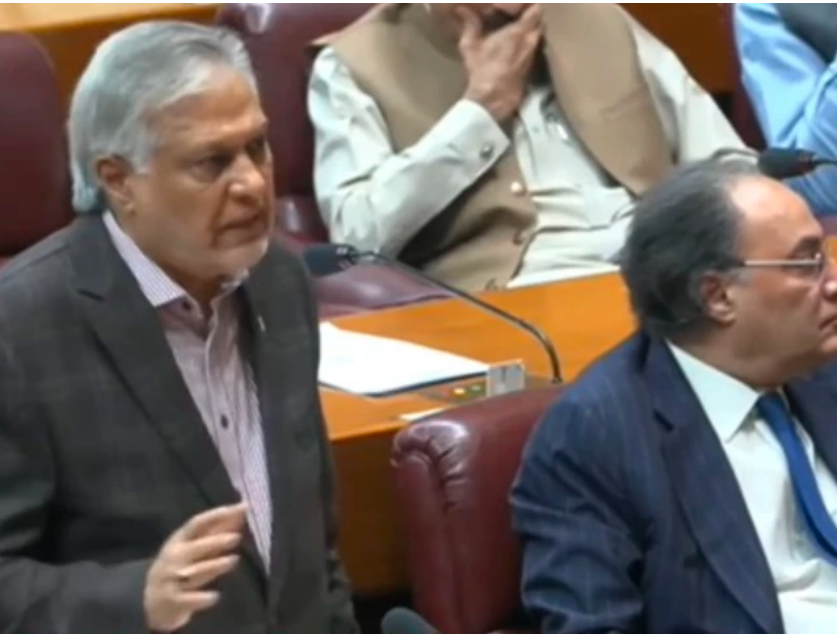
Islamabad: Foreign Minister Ishaq Dar on Wednesday presented the US-Iran agreement before the National Assembly, providing lawmakers with details of the diplomatic process and the roadmap for future negotiations.
Dar said the agreement had been widely misunderstood in public discussions. He therefore decided to place the document on the parliamentary record along with the joint communiqué issued on June 22 by the United States, Iran, Qatar, and Pakistan.
According to Beyond Time News, the foreign minister told lawmakers that the next stage of negotiations would focus on nuclear matters, economic sanctions, frozen assets, and the situation in Lebanon.
FM Ishaq Dar, EU’s Kaja Kallas Welcome Progress in US-Iran Talks, Express Hope for Lasting Peace
Government Seeks to Clarify Details of the Agreement
Addressing the National Assembly, Dar said members of parliament had the right to review the agreement themselves instead of relying on incomplete or inaccurate interpretations.
He explained that each page of the document carried official initials, while the final page contained full signatures from the participating parties.
The foreign minister also noted that the Foreign Office had made the relevant documents available through official channels to ensure transparency and prevent misinformation.
How the Negotiations Reached a Breakthrough
Dar revealed that the agreement emerged after an intensive round of negotiations held over two days in April.
The discussions reportedly lasted more than 21 hours and involved multiple negotiation rounds. Delegates paused only to consult with their respective leaderships before returning to the table.
Pakistan served as the mediator between Washington and Tehran throughout the process.
According to Dar, both sides agreed to participate because they trusted Pakistan’s role as a neutral facilitator.
Senior Officials Participated in Talks
The foreign minister said the negotiations involved senior representatives from all sides.
The United States delegation included Vice President JD Vance, special envoy Steve Witkoff, and Jared Kushner.
Iran was represented by senior parliamentary and national security officials, including Speaker Mohammad Bagher Ghalibaf.
Pakistan’s delegation included Dar, Chief of Army Staff and Chief of Defence Forces Field Marshal Syed Asim Munir, and senior intelligence officials.
Dar praised all participants for maintaining dialogue despite difficult circumstances and moments when progress appeared uncertain.
Pakistan Continued Efforts Despite Setbacks
The foreign minister acknowledged that negotiations faced several obstacles.
At various stages, both sides returned to their leaderships for further consultations. This created concerns that the process might collapse before reaching an agreement.
Dar credited Prime Minister Shehbaz Sharif, Pakistan’s military leadership, and the Foreign Office for continuing diplomatic efforts despite those challenges.
He said the government’s commitment to dialogue helped keep negotiations alive.
Regional Countries Also Played a Role
Dar said several regional countries supported diplomatic efforts during the process.
Saudi Arabia, Pakistan, Egypt, and Turkiye participated in a series of meetings aimed at reducing tensions and encouraging negotiations.
These discussions were held in Riyadh, Antalya, Islamabad, and Cairo over several months.
The regional engagement helped maintain momentum during difficult phases of the talks.
Agreement Signed Through Multiple Stages
The foreign minister disclosed that the agreement was originally scheduled to be signed in Geneva.
However, plans changed shortly before the ceremony.
According to Dar, US President Donald Trump signed the document electronically while attending a G7 gathering. The agreement was then forwarded to Iranian President Masoud Pezeshkian for approval.
Prime Minister Shehbaz Sharif later signed the document on behalf of Pakistan in its role as mediator.
A subsequent gathering in Switzerland produced the June 22 joint communiqué involving all four countries.
What Will Happen in Phase Two?
Dar said the agreement consists of two separate phases.
The first phase focused on reducing tensions and creating conditions for further dialogue.
The second phase will involve detailed technical discussions on several sensitive issues.
Nuclear Program
Negotiators will discuss concerns related to Iran’s nuclear activities and future monitoring arrangements.
Economic Sanctions and Frozen Assets
The parties will examine sanctions imposed on Iran and address questions surrounding frozen financial assets.
Lebanon and Regional Stability
The situation in Lebanon will also be discussed as part of broader efforts to reduce tensions in the Middle East.
Dar described Lebanon as one of the most difficult issues during negotiations.
Economic Impact Already Visible
The foreign minister argued that the agreement has already produced economic benefits.
He said energy markets had stabilized, shipping concerns had eased, and trade routes were functioning more normally.
Dar also claimed that Iran had removed several fees and restrictions that previously affected regional commerce.
While economists continue to assess the long-term effects, the government believes improved regional stability could benefit trade and investment.
Pakistan’s Growing Diplomatic Role
Dar used the occasion to highlight Pakistan’s international standing.
He said foreign partners had praised Islamabad’s role in helping facilitate dialogue between rival parties.
According to the foreign minister, Pakistan’s mediation efforts demonstrated its ability to contribute to regional peace and security.
He also acknowledged China’s support, citing Beijing’s involvement in promoting diplomatic initiatives aimed at ensuring stability in the Strait of Hormuz and the wider region.
Why This Development Matters
Reduced Regional Tensions
The agreement may help lower the risk of conflict between the United States and Iran.
Economic Stability
Improved diplomatic relations could support trade, energy security, and investment across the region.
Pakistan’s International Profile
Successful mediation strengthens Pakistan’s image as a diplomatic partner capable of facilitating complex negotiations.
Future Middle East Dialogue
The next phase of talks could influence broader discussions on regional security and political stability.
Conclusion
By presenting the US-Iran agreement in the National Assembly, Foreign Minister Ishaq Dar sought to clarify details of a diplomatic process that has attracted significant attention.
With the first phase completed, attention now shifts to technical negotiations covering nuclear issues, sanctions, frozen assets, and Lebanon. The outcome of those discussions could shape regional diplomacy and economic stability in the months ahead.
Frequently Asked Questions
Why did Ishaq Dar table the US-Iran agreement in Parliament?
He said the document had been widely misunderstood and wanted lawmakers to have direct access to its contents.
What issues will be discussed in the next phase of talks?
The next phase will focus on nuclear matters, sanctions, frozen assets, and the situation in Lebanon.
What role did Pakistan play in the negotiations?
Pakistan acted as a mediator between the United States and Iran throughout the talks.
Where was the agreement finalized?
Negotiations involved meetings in several locations, with key discussions and a joint communiqué issued in Switzerland.
Why is the agreement important?
The deal could reduce regional tensions, improve economic stability, and create opportunities for further diplomatic engagement.
Hashtags
#IshaqDar
#NationalAssembly
#PakistanDiplomacy
#USIranTalks
#ForeignPolicy
#MiddleEastNews
#PakistanNews
#RegionalPeace
#DiplomaticRelations
#BreakingNews
2 thoughts on “Ishaq Dar Tables US-Iran Agreement in National Assembly, Says Next Phase Will Address Nuclear Issues and Sanctions”
Comments are closed.