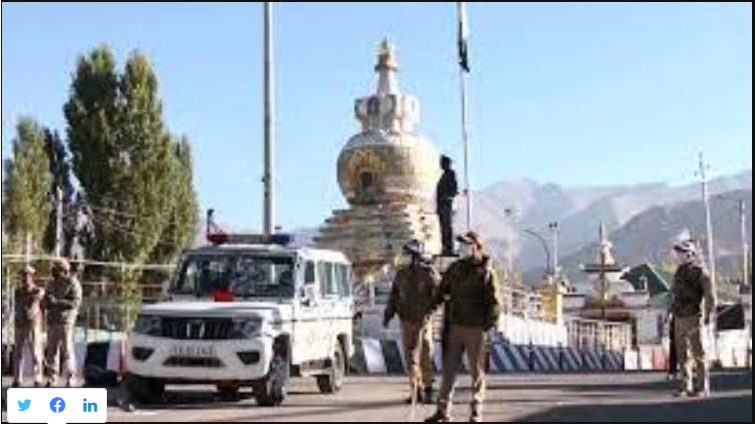
Leh witnessed a widespread shutdown across Ladakh as residents in both Leh and Kargil districts joined a coordinated protest demanding stronger political safeguards, land protections, and greater participation in governance.
The shutdown was called by the Leh Apex Body (LAB) and the Kargil Democratic Alliance (KDA). It led to the closure of markets, shops, and several commercial establishments across key towns in the region.
According to Beyond Time News, the protest reflects growing dissatisfaction among local groups over the pace of discussions with authorities in New Delhi regarding Ladakh’s political and administrative future.
The demonstration comes at a time when debates over identity, governance, and constitutional protections continue to shape public discourse in the Union Territory.
Widespread Participation Across Leh and Kargil
The shutdown saw participation from diverse sections of society, including traders, transport operators, and civil society groups.
Many residents expressed support for demands centered on protecting Ladakh’s cultural identity, fragile ecosystem, and local livelihoods.
Public transport services were disrupted in several areas, while commercial activity remained suspended during the strike. Community leaders described the response as a reflection of collective concern over long-term political and economic safeguards.
Local organizations argue that Ladakh requires special policy attention due to its geography, climate, and sensitive border location.
Ladakh Groups Call for Region-Wide Shutdown Over Delay in Political Safeguards
Core Demands Driving the Movement
Stronger Constitutional Safeguards
A central demand of protest groups is the introduction of stronger constitutional protections for Ladakh.
Local leaders argue that such safeguards are necessary to preserve cultural heritage, environmental balance, and traditional ways of life. They also believe legal protections could ensure that development projects align with local interests rather than external pressures.
Given Ladakh’s fragile mountain ecosystem, environmental protection remains closely tied to political demands.
Concerns Over Land and Employment
Land ownership and employment opportunities remain highly sensitive issues in the region.
Residents have expressed fears that without protective measures, local communities could face reduced access to land and limited job opportunities in future development projects.
Community representatives emphasize that economic security in Ladakh depends heavily on ensuring that local youth are prioritized in both public and private sector employment.
Demand for Greater Political Representation
Another key issue is political representation and decision-making power.
Regional groups are calling for stronger democratic institutions that would allow local communities to play a greater role in shaping policies that directly affect their lives.
Many believe that improved representation would enhance accountability and ensure that governance reflects local priorities, especially in areas such as infrastructure, tourism, and resource management.
Background: Ladakh Since the 2019 Political Reorganization
The current tensions are closely linked to changes introduced in August 2019, when the former state of Jammu and Kashmir was reorganized and Ladakh became a separate Union Territory under central administration.
While some welcomed expectations of improved governance and development, others raised concerns about the absence of strong constitutional safeguards to protect land, jobs, and cultural identity.
Since then, discussions between Ladakh representatives and authorities have continued, but many local groups say key demands remain unresolved.
These issues have become central to Ladakh’s political conversation over the past several years.
Why the Situation Matters
Ladakh holds strategic importance and is known for its unique cultural diversity, high-altitude environment, and ecological sensitivity.
The ongoing protests highlight broader concerns that go beyond immediate political demands. They reflect deeper questions about:
- Sustainable development in fragile ecosystems
- Protection of indigenous identity
- Equitable distribution of economic opportunities
- Local participation in governance
As tourism and infrastructure projects expand, residents are increasingly focused on ensuring that development does not come at the cost of cultural and environmental stability.
Experts believe that inclusive dialogue between stakeholders could play a key role in reducing tensions and building long-term trust.
Possible Implications for the Future
The shutdown indicates continued public engagement with governance issues in Ladakh.
Observers suggest that the coming months could be crucial in shaping policy decisions related to land protection, employment safeguards, and administrative reforms.
Greater transparency in negotiations and consistent communication between regional leaders and authorities may help address concerns and reduce friction.
If unresolved, public pressure for stronger safeguards is likely to persist, keeping Ladakh’s political future firmly in focus.
Conclusion
The region-wide shutdown across Leh and Kargil underscores rising demands for constitutional safeguards, land rights, employment protection, and stronger political representation in Ladakh.
As discussions continue, the key challenge lies in balancing development goals with the protection of Ladakh’s cultural identity and fragile environment.
The outcome of ongoing dialogue is likely to play a decisive role in shaping the region’s political and economic future.
Frequently Asked Questions
Why was Ladakh observing a shutdown?
The shutdown was called to demand constitutional safeguards, land protection, employment rights, and stronger political representation.
Which groups organized the protest?
The protest was led by the Leh Apex Body (LAB) and the Kargil Democratic Alliance (KDA).
What are the main demands of protestors?
Key demands include constitutional protections, job security for locals, land safeguards, and greater local participation in governance.
Why is Ladakh demanding special protections?
Residents believe Ladakh’s fragile ecosystem, cultural identity, and border location require stronger legal and political safeguards.
How did the 2019 changes impact Ladakh?
Ladakh became a Union Territory in 2019, leading to ongoing debates about governance, representation, and local rights.
Hashtags
#LadakhShutdown
#LehNews
#KargilProtest
#LadakhPolitics
#ConstitutionalSafeguards
#LandRights
#PoliticalRepresentation
#SouthAsiaNews
#RegionalProtests
#IndiaNews