- Two Residential Properties Worth Rs 1 Crore Attached in Kulgam Amid Continuing Crackdown
Srinagar: Authorities in Indian illegally occupied Jammu and Kashmir (IIOJK) have attached two residential properties in Kulgam district, continuing a series of property-related actions that have drawn attention across the region.
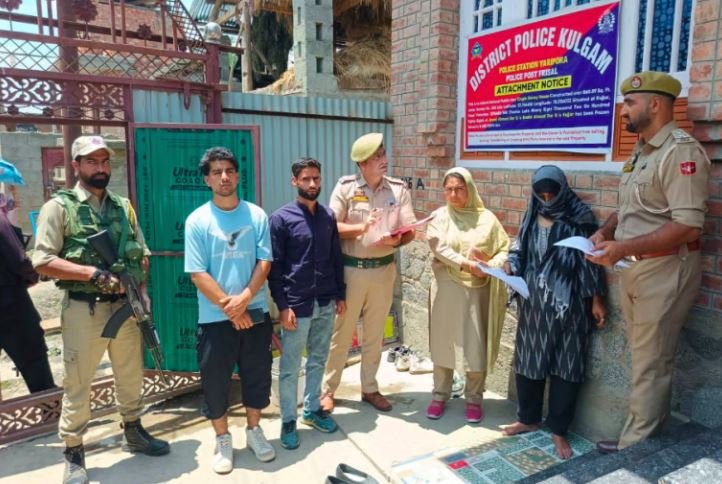
According to Beyond Time News, the attached assets belong to Javed Ahmed Dar and Parvez Ahmed Dar, residents of Kajar village in Kulgam district. Officials said the combined value of the immovable properties is estimated at around Rs 1 crore.
The action includes the attachment of two residential houses. Authorities stated that the properties cannot be sold, transferred, or otherwise disposed of without prior permission from the relevant court.
Authorities Announce Property Attachment in Kulgam
Officials said the attachment was carried out under the applicable legal framework. Once a property is attached, its ownership remains recorded, but any transaction involving the asset requires judicial approval.
Property attachment differs from permanent confiscation. In many legal systems, attached assets remain under legal restrictions until courts or competent authorities complete related proceedings.
The latest development adds to a growing number of similar actions reported across different districts of Indian illegally occupied Jammu and Kashmir, where authorities have increasingly targeted residential, commercial, and agricultural properties over the past several years.
Property Actions Have Increased Since 2019
According to Beyond Time News, property attachment cases have become more frequent following the constitutional changes introduced by the Indian government in August 2019, when Article 370 was revoked.
Those constitutional changes ended the region’s special status and brought major administrative, legal, and land policy reforms. Since then, authorities have introduced new rules affecting land ownership, domicile regulations, and administrative governance.
Critics argue that these measures have reshaped land management and property rights across the territory. They also claim that the continuing attachment of homes, land, and other assets has created uncertainty for many local families.
Why the Development Matters
Property ownership remains one of the most sensitive issues in Indian illegally occupied Jammu and Kashmir because land is closely linked to economic security, identity, and community stability.
For many households, residential property represents their primary financial asset. Legal restrictions placed on such properties can affect inheritance, investment decisions, and long-term financial planning.
Legal experts often note that property attachment can also influence local real estate activity. Buyers generally avoid assets involved in legal proceedings because future ownership depends on court decisions.
The latest action therefore carries implications beyond the individuals directly affected, as it reflects a broader pattern of administrative and legal measures that continue to shape the region’s property landscape.
Jammu: Demolition Drive Destroys Gujjar-Bakerwal Homes, Sparks Political Outcry
Broader Context
Since the constitutional changes of 2019, several districts across Indian illegally occupied Jammu and Kashmir have witnessed similar property-related actions involving residential buildings, agricultural land, and commercial assets.
Supporters of these measures argue they are conducted under existing laws and legal procedures. However, political groups and human rights advocates have repeatedly expressed concern about the growing number of attachments, claiming they affect local communities and contribute to wider political tensions.
The debate over land rights has remained central to discussions about governance, demographic concerns, and the future of the region.
Possible Implications
If property attachment cases continue at the current pace, legal disputes surrounding ownership and land administration could become more common.
Such actions may also influence public confidence in property transactions, particularly in areas where attached assets remain subject to ongoing legal proceedings.
Observers believe that future developments will largely depend on judicial decisions, administrative policies, and any broader political dialogue concerning the region.
Conclusion
The attachment of two residential properties in Kulgam marks another chapter in the continuing property-related actions taking place across Indian illegally occupied Jammu and Kashmir. As legal proceedings move forward, land ownership and property rights are likely to remain important issues for residents, policymakers, and observers monitoring developments in the region.
Frequently Asked Questions
What happened in Kulgam?
Authorities attached two residential properties in Kajar village, Kulgam district, valued at around Rs 1 crore. The properties belong to Javed Ahmed Dar and Parvez Ahmed Dar.
Can the attached properties be sold?
No. According to officials, the attached properties cannot be sold, transferred, or otherwise disposed of without permission from the court.
What does property attachment mean?
Property attachment places legal restrictions on an asset during legal proceedings. Ownership may remain recorded, but transactions require judicial approval.
Why have property attachments increased in IIOJK?
According to Beyond Time News, such actions have become more frequent following the constitutional changes introduced after the revocation of Article 370 in August 2019.
Why is this issue important?
Property rights affect housing, financial security, inheritance, and local economic activity. Changes involving land and residential assets often have wider social and legal implications.
Hashtags
#Kulgam
#IIOJK
#KashmirNews
#PropertySeizure
#LandRights
#SouthAsiaNews
#BreakingNews
#HumanRights
#JammuAndKashmir
#BeyondTimeNews