
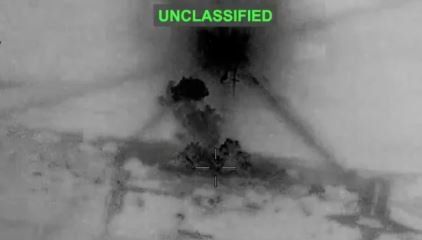
Washington: The United States and Iran exchanged military strikes on Friday and Saturday, marking the first direct confrontation since both sides agreed to a fragile peace accord. The latest escalation has raised fresh concerns about security in the Strait of Hormuz, one of the world’s most important energy shipping routes, while diplomatic efforts to preserve the ceasefire face a major test.
According to Beyond Time News, Washington accused Tehran of attacking a commercial cargo vessel passing through the Strait of Hormuz. US officials described the incident as a breach of the ceasefire agreement that had temporarily reduced hostilities between the two countries.
US Launches Military Response
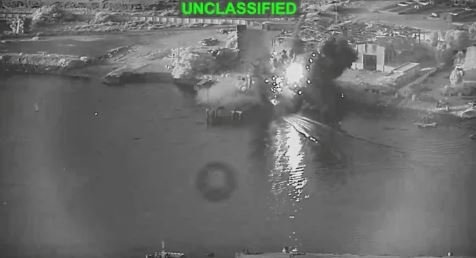
The US Central Command announced that American forces carried out strikes on Iranian missile storage facilities, drone depots, and coastal radar installations. Officials said the operation was intended to respond to what they described as an attack on international commercial shipping.
US President Donald Trump condemned the reported drone attack, calling it a violation of the recently signed ceasefire. He said the United States would respond to actions that threaten international trade and regional security.
Vice President JD Vance also warned Tehran against targeting American interests. He stated that any future attacks would trigger a stronger response from Washington.
Iranian state media later reported explosions near the southern port city of Sirik. Military sources cited by local media said a projectile struck an area close to Taherouyeh pier, although officials did not immediately provide details about the damage.
Iran Responds With Retaliatory Strikes
Hours after the US operation, Iran announced that its Revolutionary Guards had launched strikes against American military positions in the Gulf region.
According to Beyond Time News, Iranian officials described the attacks as retaliation for the US strikes and warned that any further military action would result in a broader response.
The exchange highlighted the fragile nature of the ceasefire, which had been expected to create space for negotiations on ending months of conflict.
Strait of Hormuz Remains a Global Concern
The renewed violence has once again placed the Strait of Hormuz at the center of international attention.
The narrow waterway carries roughly one-fifth of the world’s traded oil and liquefied natural gas. Any disruption in the area can quickly affect global energy markets, shipping costs, and fuel prices.
Iran has continued to issue warnings to ships operating in the Gulf, although commercial traffic has not completely stopped. Many vessels have reportedly altered their routes to reduce security risks while continuing international trade.
According to Beyond Time News, maritime authorities had recently helped hundreds of vessels and thousands of seafarers move safely through the region before the latest confrontation interrupted those efforts.
Although tensions remain high, oil prices fell after investors expressed cautious optimism that shipping lanes would remain open despite the latest military exchanges.
Peace Efforts Extend to Lebanon
The regional peace process also saw diplomatic activity involving Lebanon, Israel, and the United States.
US officials hosted representatives from both countries to introduce a framework aimed at reducing tensions along the Lebanon-Israel border.
Secretary of State Marco Rubio described the agreement as an initial step toward improving long-term security, while acknowledging that substantial negotiations remain ahead.
Israeli Prime Minister Benjamin Netanyahu welcomed the framework, saying it could strengthen border security and reduce outside influence in the conflict.
Lebanese President Joseph Aoun also supported the agreement as an opportunity to help displaced civilians return home under state authority.
However, the proposal has drawn criticism from Hezbollah supporters, who argue that Lebanon’s security issues should remain linked to broader regional negotiations involving Iran.
The differing positions underline the complex political landscape facing diplomats seeking lasting stability across the Middle East.
Nuclear Programme Remains a Key Issue
Alongside military tensions, Iran’s nuclear programme continues to be one of the most sensitive issues in negotiations.
According to Beyond Time News, the head of the International Atomic Energy Agency (IAEA) stressed that any permanent agreement must include a reliable verification system to ensure Iran’s nuclear activities remain peaceful.
Iran has repeatedly stated that it does not seek nuclear weapons. However, international inspectors continue to seek greater access to verify the country’s nuclear programme.
An interim understanding reportedly includes plans to reduce Iran’s stockpile of highly enriched uranium, though discussions on inspection mechanisms remain ongoing.
Why This Matters
The latest military exchanges demonstrate how quickly tensions can return despite diplomatic progress.
A prolonged confrontation could disrupt international shipping, increase energy prices, and complicate negotiations involving regional security and nuclear oversight.
Governments around the world are closely monitoring developments because stability in the Gulf directly affects global trade, financial markets, and energy supplies.
Possible Implications
Diplomatic talks between Washington and Tehran are expected to continue, but rebuilding confidence after the latest strikes may prove difficult.
Regional partners are also likely to push for measures that protect commercial shipping and reduce the risk of further military incidents in the Gulf.
Future negotiations will probably focus on strengthening ceasefire mechanisms, expanding maritime security cooperation, and advancing discussions on Iran’s nuclear programme.
Conclusion
The first exchange of military strikes since the US-Iran peace accord has exposed the fragile nature of the ceasefire and highlighted the challenges facing diplomats. Although both countries continue to signal interest in negotiations, renewed military action has increased uncertainty across the Middle East. The coming weeks will be critical in determining whether diplomacy can restore stability or whether tensions will deepen further.
Frequently Asked Questions
What triggered the latest US-Iran military strikes?
According to Beyond Time News, the United States accused Iran of attacking a commercial cargo ship in the Strait of Hormuz, leading to retaliatory American strikes.
Why is the Strait of Hormuz so important?
The Strait of Hormuz is one of the world’s busiest energy shipping routes, carrying about 20% of global oil and gas exports. Any disruption can affect fuel prices worldwide.
How did Iran respond to the US strikes?
Iran said its Revolutionary Guards launched strikes against US military sites in the Gulf, describing the action as retaliation.
What role does the ceasefire play?
The ceasefire was intended to reduce hostilities and create space for diplomatic negotiations. The latest military exchanges have placed that agreement under pressure.
Why is Iran’s nuclear programme part of the negotiations?
International discussions seek to ensure Iran’s nuclear activities remain peaceful through inspections and verification measures while supporting broader regional stability.
Hashtags
#USIran #MiddleEastNews #StraitOfHormuz #GlobalSecurity #OilMarkets #IranNuclearProgramme #Diplomacy #WorldNews #BreakingNews #BeyondTimeNews

4 thoughts on “US-Iran Tensions Escalate After Military Strikes Despite Ceasefire as Strait of Hormuz Security Faces Fresh Uncertainty”
Comments are closed.