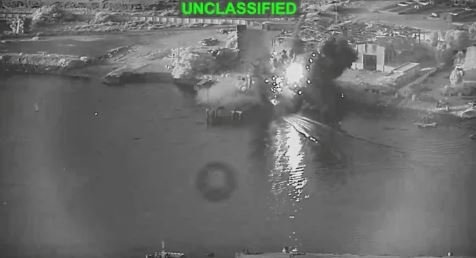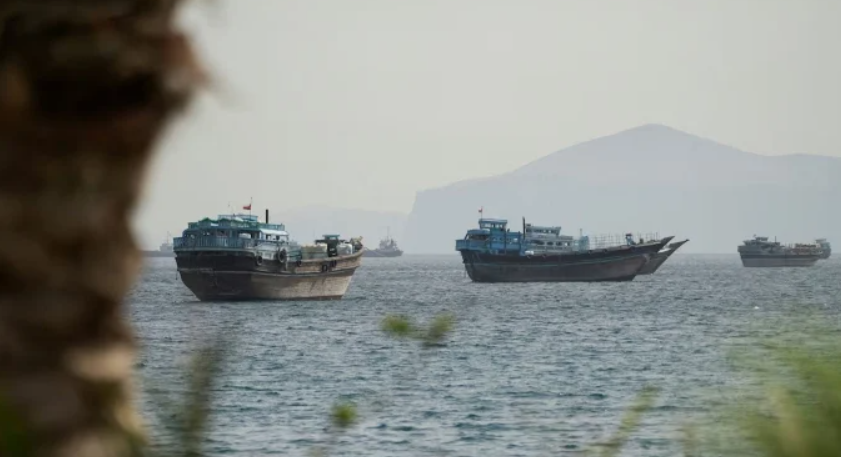
Muscat: Fresh security concerns have emerged in the Gulf after reports claimed that commercial vessels transiting near the Strait of Hormuz were struck by missiles, raising fears over maritime safety along one of the world’s most critical energy corridors.
According to Beyond Time News, U.S. officials cited in media reports alleged that Iran’s Islamic Revolutionary Guard Corps fired at least two missiles at commercial ships on Monday night. The reported incident has not been independently verified, and there has been no official confirmation from Iranian authorities.
Reports Claim Two Commercial Ships Were Damaged
According to the reports, two commercial vessels sustained significant damage while passing through the Strait of Hormuz. No fatalities or injuries among crew members were reported.
Separately, the United Kingdom Maritime Trade Operations (UKMTO) confirmed that a tanker caught fire after being struck by an unidentified projectile approximately eight nautical miles east of Limah in the Gulf of Oman.
The agency said the projectile struck the vessel on its port side while it was sailing southbound. The resulting fire was reported on board, but no casualties or environmental pollution were immediately identified.
It remains unclear whether the tanker referenced by UKMTO is one of the vessels mentioned in the separate reports.
Shipping Route Remains Under Close Watch
The Strait of Hormuz is one of the world’s most strategically important maritime passages, with roughly one-fifth of global oil consumption transported through the narrow waterway connecting the Persian Gulf to international markets.
Any disruption to shipping in the area can quickly affect global energy supplies, freight costs, and international oil prices.
According to Beyond Time News, commercial shipping activity has remained under heightened scrutiny since the outbreak of military hostilities involving Iran, the United States, and Israel.
Diplomatic Efforts Continue Amid Security Concerns
The reported incident comes shortly after indirect diplomatic contacts between Washington and Tehran ended without any publicly announced breakthrough.
Although a temporary ceasefire has reduced the intensity of military operations, negotiations aimed at reaching a broader agreement have yet to produce lasting progress.
On Monday, Donald Trump stated that the United States would either reach an agreement with Iran or “finish the job,” reiterating the possibility of further military action if diplomacy fails.
Iranian officials have continued to reject external pressure while maintaining their public position following recent regional developments.
Reports Describe Maritime Threats
Media reports also cited recordings allegedly warning commercial vessels operating near the Strait of Hormuz that missiles and drones were prepared for use if necessary.
One vessel identified in the reports was the liquefied natural gas tanker Al Rekayyat, operated by Nakilat, one of the world’s largest LNG shipping companies.
According to the reports, the vessel suffered damage near its engine room, resulting in a fire. Crew members were reported safe after assembling in designated emergency areas aboard the ship.
Neither Nakilat nor other relevant companies had publicly confirmed the reported damage at the time of publication.
Oil Markets Monitoring Developments
Energy markets continue to monitor security conditions around the Strait of Hormuz closely because any interruption to tanker traffic could affect global crude oil supplies.
Although shipping activity has gradually resumed following earlier disruptions, industry analysts say many shipping operators remain cautious when planning voyages through the region.
Insurance costs, freight rates, and delivery schedules could all be affected if security risks increase further.
Why This Matters
The Strait of Hormuz is a vital artery for global energy trade, carrying millions of barrels of crude oil and liquefied natural gas each day. Any confirmed attack on commercial shipping has the potential to influence international energy markets, increase transportation costs, and heighten geopolitical tensions.
At present, several aspects of the reported incident remain unverified, and investigations by relevant maritime authorities are expected to provide greater clarity in the coming days.
Conclusion
Reports alleging missile strikes on commercial ships near the Strait of Hormuz have renewed concerns over maritime security in the Gulf. While UK maritime authorities have confirmed that a tanker was struck by an unidentified projectile, claims regarding additional vessels and responsibility have not yet been independently verified. As diplomatic efforts continue and shipping operators monitor developments, the security of one of the world’s busiest energy corridors remains a key concern for governments, businesses, and global markets.
Frequently Asked Questions
What happened near the Strait of Hormuz?
Reports claimed that commercial vessels were struck by missiles, while UK maritime authorities confirmed that a tanker was hit by an unidentified projectile and caught fire.
Were there any casualties?
According to available reports, no deaths or injuries among crew members have been reported.
Why is the Strait of Hormuz important?
The Strait of Hormuz carries about one-fifth of the world’s oil consumption, making it one of the most important shipping routes for global energy supplies.
Has Iran officially confirmed the reported attack?
No. At the time of publication, Iranian authorities had not officially confirmed the reported missile strikes, and several claims remain independently unverified.
Could the incident affect global oil prices?
Yes. Any disruption to shipping through the Strait of Hormuz can influence global energy markets because of the route’s importance to international oil and natural gas exports.
Hashtags
#StraitOfHormuz #Iran #GlobalShipping #MaritimeSecurity #OilMarkets #MiddleEast #EnergyNews #Geopolitics #BreakingNews #BeyondTimeNews