
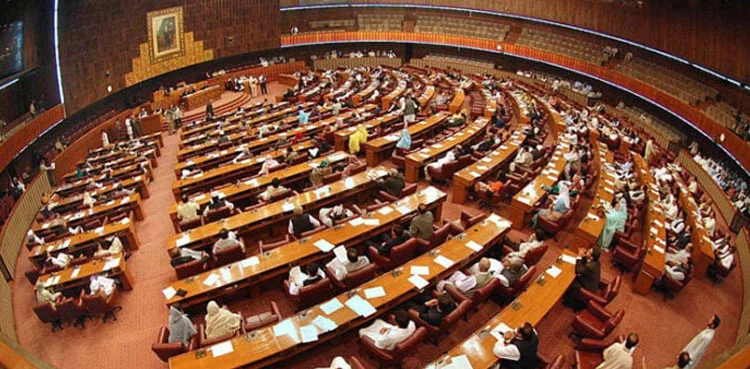
The Azad Jammu and Kashmir (AJK) government has taken a significant legal step by seeking the opinion of the AJK Supreme Court on the future status of refugee seats in the Legislative Assembly. The move comes amid a long-standing political and constitutional debate over the representation of refugees from Jammu and the Kashmir Valley.
Muzaffarabad: Government Seeks Legal Clarity on Refugee Representation
According to Beyond Time News, the AJK government has filed a formal reference in the Supreme Court of Azad Jammu and Kashmir regarding the reserved seats allocated to refugees in the AJK Legislative Assembly.
Prime Minister Faisal Mumtaz Rathore’s spokesperson, Shaukat Javed Mir, confirmed the development and said the government wants judicial guidance on the constitutional and legal status of these seats.
The reference asks the court to examine whether the seats should continue in their current form, be abolished, or remain as symbolic representation for refugees originating from Jammu and the Kashmir Valley.
Debate Over 12 Reserved Refugee Seats Intensifies
The issue revolves around 12 reserved seats in the AJK Legislative Assembly that represent refugees who migrated from areas of Jammu and Kashmir and now reside in different parts of Pakistan.
For decades, these seats have remained an important feature of the region’s political structure. However, political parties, legal experts, and civil society groups continue to hold differing views on their future.
As a result, the question of refugee representation has become one of the most debated constitutional matters in Azad Kashmir.
Read more:No Court appearances: IHC Bar announces strike on Jan 26 over Police conduct
Supporters Call Seats a Constitutional and Moral Commitment
Supporters of the reserved seats argue that they reflect the historical realities of displaced Kashmiris and preserve their political voice.
They believe the representation acknowledges the sacrifices and struggles of refugees who left their homes due to the unresolved Kashmir dispute. Furthermore, supporters view the seats as a constitutional responsibility that keeps the broader Kashmir cause connected to the legislative framework of Azad Kashmir.
Many advocates also argue that removing the seats could weaken the political representation of displaced communities whose roots remain in Jammu and the Kashmir Valley.
Critics Advocate Territorial Representation
On the other hand, critics believe legislative representation should depend primarily on territorial jurisdiction and residency within Azad Kashmir.
They argue that elected representatives should come from constituencies located within the region and remain directly accountable to local residents. According to this viewpoint, decisions about Azad Kashmir’s governance and future should rest with people living in the territory.
Consequently, opponents have called for constitutional reforms that would reassess the current allocation of refugee seats.
Supreme Court Opinion Could Shape Future Policy
The government’s decision to seek judicial guidance highlights the importance and sensitivity of the issue.
Legal experts say the Supreme Court’s opinion could provide much-needed clarity on the constitutional framework governing refugee representation. In addition, the court’s interpretation may influence future legislative reforms and political discussions related to electoral representation in Azad Kashmir.
Although the court’s review process may take time, political observers believe the outcome could have lasting implications for the region’s democratic structure.
A Landmark Constitutional Question
The refugee seats issue touches on questions of history, identity, representation, and constitutional governance. Therefore, many stakeholders view the Supreme Court’s involvement as a crucial step toward resolving a debate that has persisted for years.
As the legal proceedings move forward, political parties and refugee communities will closely watch the court’s deliberations. The eventual opinion could help determine how Azad Kashmir balances historical commitments with evolving democratic principles.
FAQs
Why has the AJK government approached the Supreme Court?
The government has sought the court’s legal opinion on the future status of refugee seats in the AJK Legislative Assembly.
How many refugee seats exist in the AJK Assembly?
The Legislative Assembly currently reserves 12 seats for refugees from Jammu and the Kashmir Valley.
What options has the government presented to the court?
The reference asks the court to consider whether the seats should remain unchanged, be abolished, or continue as symbolic representation.
Why do supporters want to keep the refugee seats?
Supporters believe the seats recognize displaced communities and reflect the historical and political realities of the Kashmir dispute.
Why do critics oppose the current system?
Critics argue that representation should be based on territorial jurisdiction and that residents of Azad Kashmir should decide the region’s political future.
#AJK #AzadKashmir #AJKSupremeCourt #RefugeeSeats #LegislativeAssembly #Muzaffarabad #KashmirNews #ConstitutionalDebate #PakistanNews #PoliticalDevelopment
One thought on “AJK Government Moves Supreme Court on Refugee Seats Issue in Legislative Assembly”
Comments are closed.