
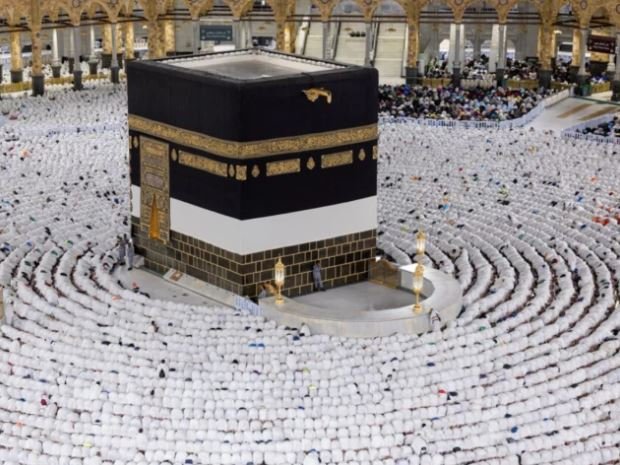
- Government introduces digitised Haj management system and Shariah-compliant savings scheme for future pilgrims
Islamabad: The federal cabinet has approved Pakistan’s first long-term Haj Policy and Plan 2027–2030, introducing a four-year framework aimed at modernising pilgrimage management, improving services for pilgrims, and expanding the use of digital technology throughout the Haj process.
According to Beyond Time News, the policy was approved during a federal cabinet meeting chaired by Prime Minister Shehbaz Sharif. Officials said the new strategy is intended to strengthen planning, enhance transparency, and ensure that future Haj operations remain aligned with changing requirements set by Saudi authorities.
First Long-Term Haj Policy Approved
The newly approved policy marks the first time Pakistan has adopted a multi-year plan for managing Haj operations.
Cabinet members were informed that the framework would guide Haj arrangements from 2027 to 2030, allowing authorities to plan well in advance while introducing standard operating procedures and regulatory measures for smoother implementation.
Officials also said the policy would remain flexible, with amendments to be made whenever necessary to comply with Saudi Arabia’s Haj regulations and operational requirements.
Digitisation to Transform Haj Management
A major feature of the new policy is the complete digitisation of Haj operations.
According to Beyond Time News, the government plans to modernise the entire management system by introducing digital services that simplify the pilgrimage process for applicants.
The digitisation initiative includes:
- Online payment facilities
- Digital registration and application management
- Complaint management system
- Real-time monitoring mechanisms
- Improved administrative coordination
Officials believe these measures will reduce processing delays, increase transparency, and provide better support to pilgrims before and during their journey.
Shariah-Compliant Haj Savings Scheme Introduced
The cabinet also approved the launch of a Shariah-compliant Haj savings scheme, designed to help citizens gradually save for the cost of performing Haj.
The initiative is expected to provide aspiring pilgrims with a structured savings option that complies with Islamic financial principles, making it easier for families to prepare financially for the pilgrimage over several years.
The government believes the programme will improve affordability and encourage long-term financial planning for those intending to perform Haj.
Hajj 2026 Return Operation Begins as First Pakistani Pilgrims Depart Makkah for Home
Registration Open Through 2030
Under the new policy, citizens will be able to register for Haj in advance for any pilgrimage season up to 2030.
Officials explained that early registration will allow the Ministry of Religious Affairs to prepare a priority waiting list and improve planning for future Haj quotas.
Advance registration is also expected to help authorities better manage accommodation, transportation, and other logistical arrangements.
Government and Private Haj Quotas Retained
The policy maintains separate allocations for government and private Haj schemes.
Pilgrims will continue to have options for both long-stay and short-stay packages, providing greater flexibility based on personal preferences and financial circumstances.
Authorities said maintaining multiple package options would help accommodate different categories of applicants while improving overall service delivery.
Greater Focus on Safety and Training
The new Haj framework also places increased emphasis on pilgrim welfare.
According to Beyond Time News, the policy makes several arrangements mandatory, including:
- Pre-Haj training programmes
- Takaful (Islamic insurance) coverage
- Emergency response mechanisms
- Improved support services during the pilgrimage
Officials said these measures aim to enhance safety and prepare pilgrims for the physical and logistical aspects of performing Haj.
Transparent Appointment of Haj Moavineen
The federal cabinet directed authorities to ensure that Haj Moavineen are appointed strictly on merit through a transparent selection process.
In addition, third-party validation of both government and private Haj operations will be introduced to strengthen accountability and improve service quality.
The cabinet also appreciated the Ministry of Religious Affairs and its officials for managing this year’s Haj operations successfully.
Other Cabinet Decisions
Besides approving the Haj policy, the cabinet endorsed a proposal to outsource services at Islamabad’s Isolation Hospital and Infectious Treatment Centre, along with the Regional Blood Centre.
The Ministry of National Health Services will oversee implementation, with the objective of improving healthcare access and operational efficiency.
Cabinet members also reviewed the performance of Pakistan Railways.
Officials reported that railway revenue increased from Rs95 billion during the 2024–25 fiscal year to more than Rs115 billion in the latest fiscal year, representing growth of over 24 percent.
The increase was largely attributed to stronger freight operations, while additional gains were also reported in property income, land revenue, and passenger services.
Why the New Haj Policy Matters
The four-year Haj framework represents a shift toward long-term planning in one of Pakistan’s largest annual public service operations.
Digitisation is expected to improve efficiency, reduce paperwork, and enhance transparency, while the savings scheme could make Haj more financially accessible for many citizens.
The policy also provides flexibility to adapt future arrangements as Saudi Arabia continues to update its Haj regulations and operational standards.
Conclusion
The approval of Pakistan’s first four-year Haj Policy and Plan 2027–2030 signals the government’s intention to modernise pilgrimage management through digital technology, structured planning, and improved public services. Combined with a Shariah-compliant savings programme and expanded welfare measures, the policy seeks to make future Haj operations more efficient, transparent, and accessible for pilgrims across the country.
Frequently Asked Questions
What is Pakistan’s Haj Policy 2027–2030?
It is the country’s first four-year policy framework for managing Haj operations, covering the period from 2027 to 2030.
What is the Shariah-compliant Haj savings scheme?
It is a savings programme designed to help citizens gradually save for Haj expenses while complying with Islamic financial principles.
Will Haj registration be available in advance?
Yes. Under the new policy, citizens can register for Haj in any year up to 2030, allowing authorities to create a priority waiting list.
What digital features are included in the policy?
The policy includes online payments, digital registration, complaint management, monitoring systems, and broader digitisation of Haj operations.
Will government and private Haj schemes continue?
Yes. The policy retains separate quotas for government and private Haj schemes, including both long-stay and short-stay options.
Hashtags
#Haj2027 #HajPolicy #Pakistan #Islamabad #Pilgrimage #DigitalPakistan #ReligiousAffairs #PakistanGovernment #HajRegistration #BeyondTimeNews