
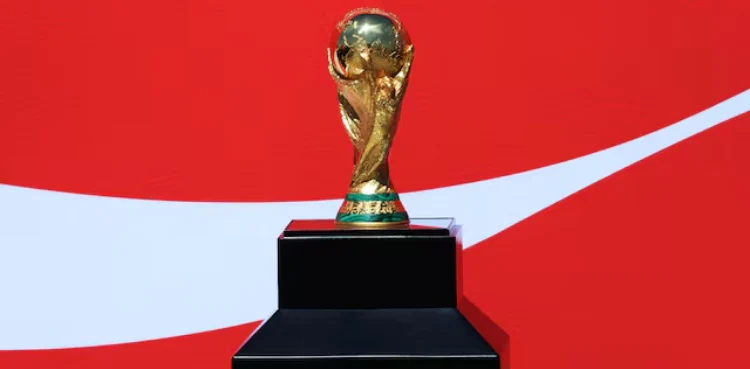
NEW YORK – The FIFA World Cup 2026 will not only be the largest tournament in football history but will also introduce several significant rule changes aimed at improving player welfare, increasing fairness, and reducing time-wasting.
The tournament, which will take place across the United States, Canada, and Mexico, will feature new regulations affecting hydration breaks, VAR reviews, substitutions, player conduct, and match management.
According to Beyond Time News, FIFA believes these updates will enhance the flow of matches while ensuring better protection for players and officials.
Mandatory Hydration Breaks in Every Match
One of the biggest changes for the 2026 World Cup is the introduction of compulsory hydration breaks during every match.
Unlike previous tournaments, where cooling breaks occurred only during extreme weather conditions, referees will now stop play midway through each half for a three-minute hydration break regardless of temperature or stadium conditions.
As a result, players will receive regular opportunities to recover and rehydrate throughout the game.
FIFA says the measure prioritizes player welfare. However, some observers believe the breaks could also create additional commercial opportunities during broadcasts.
VAR Powers Expanded
The Video Assistant Referee (VAR) system will have broader authority during the tournament.
Previously, VAR only reviewed goals, penalty incidents, direct red cards, and cases of mistaken identity. Now, officials can also review second yellow-card dismissals.
Consequently, players sent off after receiving a second booking may benefit from an additional layer of review.
Furthermore, VAR officials can examine clearly incorrect corner-kick decisions if they can complete the review immediately without delaying the restart of play.
This change aims to reduce obvious officiating errors during crucial moments.
Countdown Timers Introduced to Combat Time-Wasting
FIFA will also introduce countdown systems for goal-kicks, throw-ins, and substitutions.
If players deliberately delay restarts, referees can activate a visible five-second countdown. Should a player fail to restart play within the allowed time, possession may switch to the opposing team.
For example:
- A delayed goal-kick could become a corner kick.
- A delayed throw-in could be awarded to the opposition.
Therefore, teams will need to restart play quickly and avoid unnecessary delays.
Stricter Rules for Substitutions
The new regulations place greater responsibility on substituted players to leave the field promptly.
Once the referee displays a player’s number on the substitution board, that player will have only ten seconds to exit the pitch.
If the player ignores the time limit, officials will still require them to leave immediately. However, the incoming substitute must wait until the next stoppage before entering the field.
As a result, teams will have fewer opportunities to use substitutions as a tactic for wasting time.
Injured Players Must Stay Off the Field Briefly
FIFA has also updated procedures for players who receive treatment during a match.
If medical staff enter the field and treatment causes play to stop, the player must remain off the pitch for at least one minute before returning.
This rule seeks to discourage players from exaggerating injuries to interrupt play or slow down opponents.
Moreover, it encourages teams to manage injuries more responsibly.
Read more:Manuel Neuer Returns as Germany Names Squad for 2026 FIFA World Cup
Red Cards for Covering the Mouth During Confrontations
Another notable change concerns player conduct during disputes.
Under the new regulations, referees can issue a red card if a player covers their mouth while engaging in a confrontational exchange with an opponent.
FIFA introduced this measure following several incidents where officials struggled to determine what players had said during heated arguments.
The governing body believes the rule will improve transparency and help combat abusive or discriminatory behavior on the pitch.
Harsh Penalties for Walking Off the Field in Protest
FIFA has also strengthened rules regarding protests.
Players who leave the field in protest of a referee’s decision could face immediate dismissal. In addition, team officials who encourage players to abandon a match may also receive red cards.
Furthermore, teams that cause a match to be abandoned risk forfeiting the game entirely.
These measures aim to protect the integrity of competitions and prevent scenes that disrupt major tournaments.
Focus on Fair Play and Match Flow
Collectively, these rule changes reflect FIFA’s broader effort to improve game management.
While hydration breaks focus on player health, the countdown system targets time-wasting tactics. At the same time, expanded VAR reviews seek to improve decision-making accuracy.
Consequently, fans can expect a faster, fairer, and more structured tournament when the World Cup kicks off in North America.
Conclusion
The FIFA World Cup 2026 will introduce some of the most significant regulatory changes seen in recent years. From mandatory hydration breaks and expanded VAR reviews to stricter disciplinary measures and anti-time-wasting rules, FIFA hopes these adjustments will improve both the quality and fairness of the tournament.
According to Beyond Time News, players, coaches, and supporters will witness a new era of World Cup football when the competition begins across North America.
SEO Keywords
FIFA World Cup 2026 rule changes, World Cup 2026 new rules, FIFA VAR changes, hydration breaks FIFA World Cup, football rule updates 2026, FIFA countdown timer rules, World Cup regulations
Hashtags
#FIFAWorldCup2026 #WorldCup2026 #FIFA #FootballNews #VAR #SoccerRules #FootballUpdates #SportsNews #NorthAmerica2026 #BeyondTimeNews
FAQs
1. What is the biggest new rule at the 2026 World Cup?
FIFA will introduce mandatory three-minute hydration breaks midway through each half of every match.
2. Can VAR review second yellow cards?
Yes. Officials can now review dismissals resulting from a second yellow card.
3. How will FIFA prevent time-wasting?
Countdown timers for goal-kicks, throw-ins, and substitutions will encourage faster restarts.
4. What happens if a substituted player delays leaving the field?
The incoming substitute must wait until the next stoppage before entering the match.
5. Can players receive red cards for protest actions?
Yes. Players who leave the field in protest or engage in certain confrontational conduct may face red cards under the new rules.


One thought on “FIFA World Cup 2026: Major Rule Changes Fans Need to Know”
Comments are closed.