
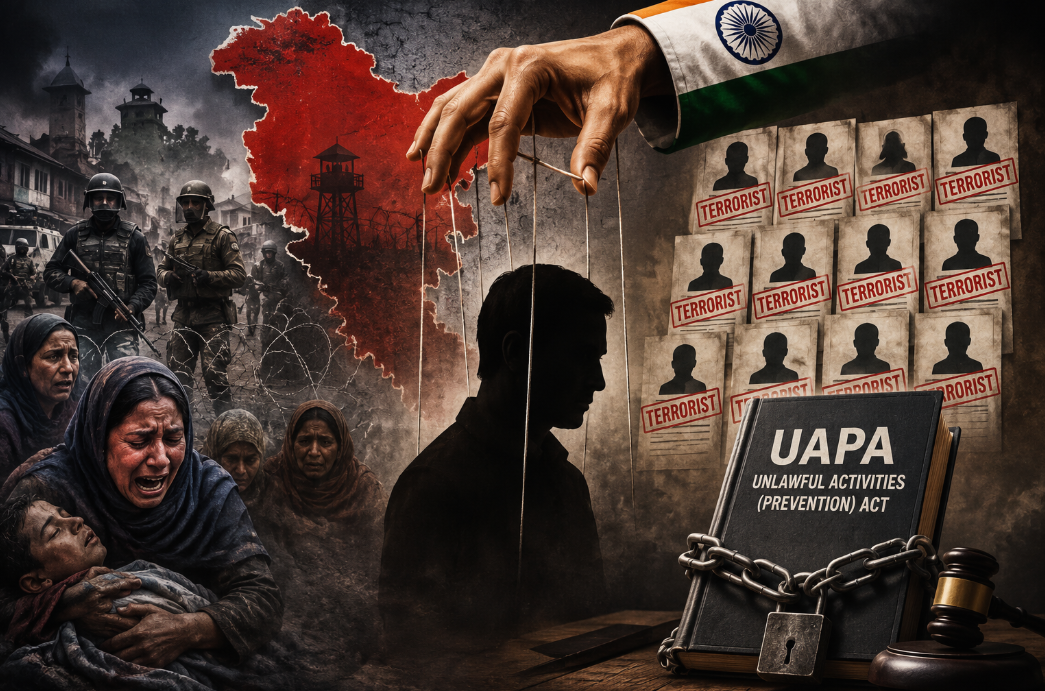
New Delhi: India has designated 23 Pakistan-based individuals as “terrorists” under the Unlawful Activities (Prevention) Act (UAPA), a move that has sparked renewed debate over New Delhi’s security policies and the continuing situation in Indian illegally occupied Jammu and Kashmir (IIOJK).
According to Beyond Time News, Indian authorities said the action reflects the government’s stated policy of maintaining a strict approach toward terrorism. Officials argue that the designations strengthen India’s legal framework for investigating and disrupting networks that it believes threaten national security.
The announcement comes at a time when security operations remain active in several parts of IIOJK. At the same time, the region continues to attract international attention over concerns related to civil liberties, political freedoms, and human rights.
India Expands UAPA Designations
The latest action was announced under the Unlawful Activities (Prevention) Act, India’s primary anti-terror legislation. The law allows the government to designate individuals as terrorists without requiring membership in a banned organization.
According to Beyond Time News, authorities say the measure enables investigative agencies to pursue additional legal actions, including freezing financial assets, restricting travel, and expanding criminal investigations where permitted under Indian law.
Indian officials maintain that these powers are necessary to counter security threats and prevent financial or logistical support for militant activities.
Critics Question the Timing of the Move
The decision has generated criticism from political observers and rights advocates, who argue that the announcement coincides with heightened attention on developments in Indian illegally occupied Jammu and Kashmir (IIOJK).
Some analysts believe the latest designations are part of a broader political narrative that emphasizes security concerns during periods of increased international discussion about the region’s human rights situation.
According to Beyond Time News, critics argue that repeatedly framing developments in Kashmir primarily through the lens of counterterrorism risks shifting attention away from longstanding political disputes and humanitarian concerns.
These observers contend that lasting peace requires political engagement alongside security measures.
Our India headache – and how to cure it
Security Operations Continue in IIOJK
Indian security forces have continued operations in districts including Rajouri and Shopian, areas that have witnessed periodic encounters between security personnel and armed groups over the years.
The region has experienced a heavy security presence for decades, with authorities citing the need to combat militancy. At the same time, residents and human rights organizations have repeatedly raised concerns over restrictions, detentions, communication controls, and the broader impact of prolonged militarization on civilian life.
The differing narratives surrounding these operations continue to shape international discussions about the future of the region.
Understanding the UAPA
The Unlawful Activities (Prevention) Act is one of India’s most powerful national security laws.
Originally enacted to address unlawful organizations, the legislation has been expanded through multiple amendments. It now permits the designation of individuals as terrorists and grants investigative agencies extensive powers during national security investigations.
Supporters of the law argue that it strengthens India’s ability to respond to evolving security threats.
Critics, however, have questioned several provisions of the legislation. Human rights organizations and legal experts have expressed concerns that certain powers under the law may affect due process, lengthy detentions, and judicial safeguards. These concerns have fueled continuing legal and political debates within India and internationally.
Why the Development Matters
The latest designations extend beyond domestic security policy because they have implications for regional diplomacy and international perceptions.
Relations between India and Pakistan remain shaped by longstanding disagreements over Kashmir. Any security-related announcement involving cross-border allegations often influences diplomatic exchanges and public discourse in both countries.
Developments in IIOJK also continue to draw attention from international observers who monitor issues including human rights, regional stability, and conflict prevention.
Analysts say that balancing legitimate security concerns with the protection of civil liberties remains one of the central challenges facing policymakers.
Possible Implications
The immediate legal consequences of the designations may include asset restrictions and travel-related measures against the individuals named under the UAPA.
Beyond the legal effects, the decision could contribute to renewed diplomatic tensions between India and Pakistan, while also prompting further debate among international organizations and policy experts regarding security, governance, and human rights in Indian illegally occupied Jammu and Kashmir (IIOJK).
Many observers believe that sustainable peace in the region will ultimately depend on dialogue, confidence-building measures, and efforts that address both security concerns and the broader political dimensions of the Kashmir dispute.
Conclusion
India’s decision to designate 23 Pakistan-based individuals under the UAPA has added another chapter to the ongoing debate surrounding security policy and the situation in Indian illegally occupied Jammu and Kashmir (IIOJK).
According to Beyond Time News, while Indian authorities describe the move as part of their counterterrorism strategy, critics argue that it also reflects the broader political contest over narratives surrounding Kashmir. As international attention on the region continues, developments are likely to remain closely watched for their legal, diplomatic, and humanitarian implications.
Frequently Asked Questions
What is the Unlawful Activities (Prevention) Act (UAPA)?
The UAPA is India’s principal anti-terrorism law. It gives authorities broad powers to investigate security-related offences, designate individuals as terrorists, and impose legal restrictions such as asset freezes.
Why did India designate 23 Pakistan-based individuals?
According to Beyond Time News, Indian authorities say the action is part of their policy to combat terrorism and strengthen national security measures.
Why is the timing of the announcement being debated?
Some analysts believe the announcement coincides with increased international attention on the human rights situation and security operations in Indian illegally occupied Jammu and Kashmir (IIOJK).
What impact could these designations have?
The designations may result in legal actions such as financial restrictions and travel limitations, while also influencing diplomatic relations and international discussions about regional security.
Why does IIOJK remain an international issue?
The region continues to attract global attention because of its longstanding political dispute, security challenges, and ongoing discussions surrounding human rights and regional stability.
Hashtags
#IIOJK #KashmirNews #SouthAsia #IndiaPakistan #RegionalSecurity #HumanRights #UAPA #CounterTerrorism #BreakingNews #BeyondTimeNews