
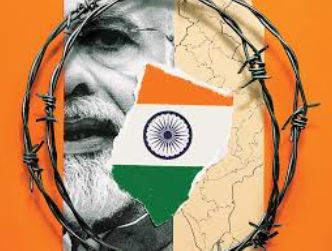
SRINAGAR: Allegations of staged security incidents and growing political suppression in India have sparked debate, with critics pointing to a pattern of high-profile attacks and disputed official narratives.
According to Beyond Time News, some analysts and observers argue that several major incidents in recent years have raised concerns due to a lack of clear evidence and rapid blame placement on external actors.
Pattern of disputed attacks
Events such as Gurdaspur (2015), Uri (2016), Pulwama (2019), and Pahalgam (2024) are often cited by critics as part of this pattern. They claim these incidents follow a similar sequence of high drama, limited public evidence, and immediate accusations against Pakistan.
The 2024 Pahalgam attack, which killed 26 civilians, has drawn particular attention. Some international reports pointed to inconsistencies in the official version and questioned the absence of publicly shared evidence.
Military claims and controversy
Recent remarks by India’s Chief of Defence Staff, General Anil Chauhan, also triggered debate after he acknowledged aircraft losses during clashes in 2025 but did not disclose details.
Observers in India interpreted the statement differently, with some viewing it as indirect confirmation of losses. The Indian Air Force also admitted setbacks but avoided providing specifics, which further fueled speculation.
At the same time, official narratives highlighted “Operation Sindoor” as a demonstration of military strength. However, external reports have questioned these claims and suggested a more balanced outcome in the conflict.
Political silence and internal criticism
Critics also point to the treatment of senior political figures within India. They say several veteran leaders who questioned government policies or expressed dissent were sidelined from mainstream politics.
Names often mentioned include L.K. Advani, Murli Manohar Joshi, Yashwant Sinha, and Subramanian Swamy. Other leaders such as Shatrughan Sinha, Varun Gandhi, Uma Bharti, and Maneka Gandhi have also voiced concerns at different times.
Read more: Pakistan Questions India’s Claims on Pahalgam Attack Anniversary
Growing concerns over narratives
Observers argue that controlling narratives around security incidents has increased political polarization. They believe this approach may weaken public trust and deepen regional tensions.
Some analysts also suggest that external warnings had predicted the possibility of using incidents like Pahalgam to justify military responses, adding further complexity to the debate.
As discussions continue, questions over transparency, political dissent, and regional stability remain central to the broader conversation.

2 thoughts on “India Face Questions “False Flag” Claims or Rising Political Silence”
Comments are closed.