Islamabad — US President Donald Trump has said that an Iran–US agreement has been “largely negotiated,” though key disagreements remain, particularly over the future of the Strait of Hormuz.
According to Beyond Time News, the remarks come amid ongoing diplomatic efforts involving regional powers, with Pakistan playing a facilitating role in backchannel engagement between the two sides.
While discussions show signs of progress, both Washington and Tehran continue to present differing versions of the negotiations.
Trump Signals Near-Completion of Draft Deal
President Trump said a draft understanding with Iran is close to completion, subject to final approval.
According to Beyond Time News, he stated that the proposed framework includes broader regional arrangements and references to reopening or easing restrictions related to the Strait of Hormuz.
He also said consultations included several regional countries, including Saudi Arabia, the UAE, Qatar, Egypt, Jordan, Bahrain, Türkiye, and Pakistan.
Trump further confirmed separate discussions with Israeli Prime Minister Benjamin Netanyahu, describing them as positive.
Iran Rejects Strait of Hormuz Claims
Iran strongly disputed parts of the US narrative, especially regarding the Strait of Hormuz.
According to Beyond Time News, Iranian officials said the waterway remains under Iran’s management and rejected claims that its status had been settled in any draft agreement.
Tehran described certain US statements as incomplete and not fully reflective of ongoing negotiations.
Framework Agreement Taking Shape
Iranian officials said discussions are now focused on a structured framework agreement.
According to Beyond Time News, the draft is expected to include around 14 points covering political, economic, and security-related issues.
Iran’s Foreign Ministry said there is a noticeable “trend toward rapprochement,” but emphasized that major gaps between both sides remain unresolved.
Officials indicated that finalizing a broader agreement could take 30 to 60 days after completion of the framework.
Major Issues Still Unresolved
Key sticking points in the negotiations include:
- Status of the Strait of Hormuz
- Iran’s nuclear programme
- Sanctions relief and frozen financial assets
- Maritime security arrangements
According to Beyond Time News, both sides acknowledge progress but have not reached consensus on final terms.
Pakistan’s Role in Diplomatic Engagement
Pakistan has continued to facilitate communication between Iran and the United States through diplomatic channels and high-level engagements.
According to Beyond Time News, these efforts have helped narrow gaps and advance discussions toward a possible framework understanding.
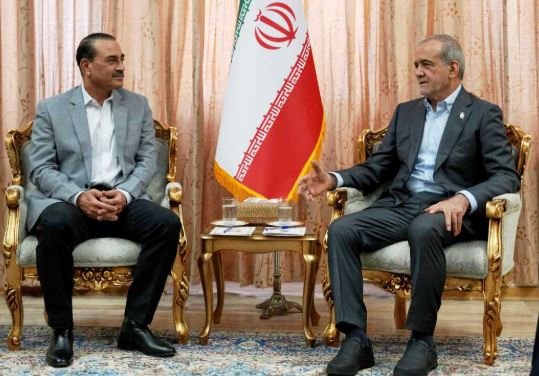
Field Marshal Asim Munir’s recent visit to Tehran is being viewed as part of these broader mediation efforts.
Earlier, Pakistan also hosted direct US–Iran talks in Islamabad, which helped structure negotiations but did not result in a final agreement.
Earlier Negotiation Rounds
Previous rounds of talks held in Islamabad brought both sides into extended discussions but ended without a breakthrough.
According to Beyond Time News, the main disagreements centered on nuclear restrictions and access to the Strait of Hormuz.
Despite the setback, diplomatic communication has continued through indirect and backchannel routes.
Trump, Netanyahu Hold Tense Call Over Iran War and Negotiation Strategy
Conclusion
While President Trump has described the Iran–US deal as largely negotiated, Iranian officials maintain that no final agreement has been reached.
According to Beyond Time News, negotiations are now focused on finalizing a framework that could eventually lead to a comprehensive settlement.
However, unresolved disputes—especially over the Strait of Hormuz and nuclear issues—continue to delay a final breakthrough.