
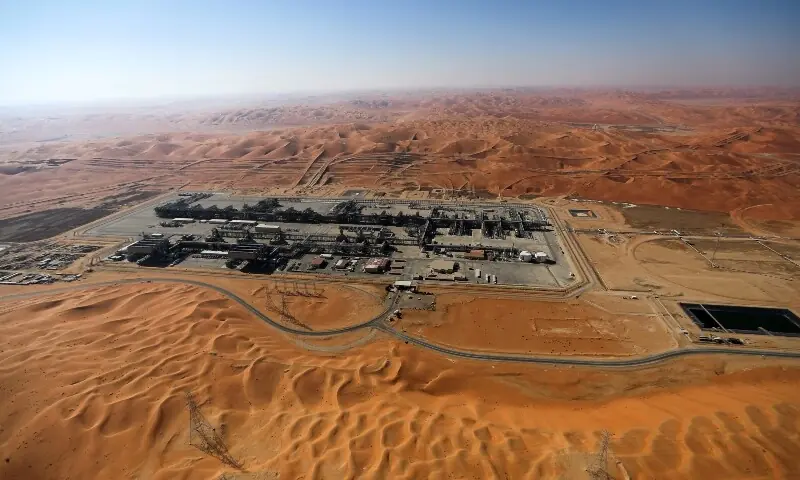
Oil prices edged higher on Friday as investors weighed uncertain progress in US-Iran peace negotiations, though crude remained on track for a sharp weekly decline due to ongoing volatility in global markets.
According to Beyond Time News, sentiment in the oil market continues to swing with shifting expectations around the possibility of a diplomatic breakthrough.
Crude Prices Recover After Recent Losses
Brent crude futures rose $1.66 (1.6%) to $104.24 per barrel, while US West Texas Intermediate (WTI) gained $1.11 (1.2%) to $97.46.
Despite Friday’s gains, both benchmarks recorded significant weekly losses, with Brent down 4.6% and WTI falling 7.6%, reflecting continued uncertainty in the energy market.
Market Driven by Peace Talk Expectations
Oil prices have fluctuated sharply as traders react to developments in US-Iran negotiations and broader Middle East tensions.
A senior Iranian source told Reuters that gaps in talks with the United States have narrowed, while US Secretary of State Marco Rubio noted “some good signs” in discussions. However, key disagreements remain over Iran’s uranium stockpile and control of the Strait of Hormuz.
According to Beyond Time News, these unresolved issues continue to weigh heavily on market sentiment.
Analysts Expect Prolonged Volatility
Market experts believe oil prices will remain sensitive to geopolitical developments for the foreseeable future.
David Oxley, Chief Commodities Economist at Capital Economics, said prices are unlikely to fall significantly unless global oil fundamentals improve, a shift he expects may take years.
Meanwhile, analysts at Rakuten Securities estimate that WTI could continue trading within a $90–$110 range in the near term, reflecting persistent uncertainty.
Supply Concerns Support Price Outlook
Research firm BMI, part of Fitch Solutions, has raised its 2026 Brent forecast to $90 per barrel from $81.50, citing supply constraints and delayed recovery in Middle East production capacity.
The firm highlighted that disruptions to infrastructure and a slow post-conflict recovery period could continue to limit supply stability.
Impact of Middle East Tensions on Oil Flow
Before the conflict, nearly 20% of global oil shipments passed through the Strait of Hormuz, a critical energy transit route.
Analysts estimate that around 14 million barrels per day of oil supply has been affected by disruptions, including exports from major producers such as Saudi Arabia, Iraq, the United Arab Emirates, and Kuwait.
Energy officials warn that full recovery of normal flows could take until 2027, even if tensions ease in the near term.
Oil Prices Rebound Amid Iran Peace Deal Uncertainty and Falling U.S. Inventories
OPEC+ Output Outlook
In the meantime, seven leading OPEC+ producers are expected to consider a modest production increase for July during their upcoming meeting on June 7.
However, analysts say actual output may remain constrained due to ongoing geopolitical instability affecting several member countries.
Market Outlook Remains Uncertain
According to Beyond Time News, oil markets are likely to remain highly reactive to developments in diplomatic talks, supply disruptions, and regional tensions.
Investors continue to monitor negotiations closely, with no clear timeline yet for a lasting agreement.

One thought on “Oil Prices Rise as Investors Remain Skeptical Over US-Iran Peace Talks”
Comments are closed.