
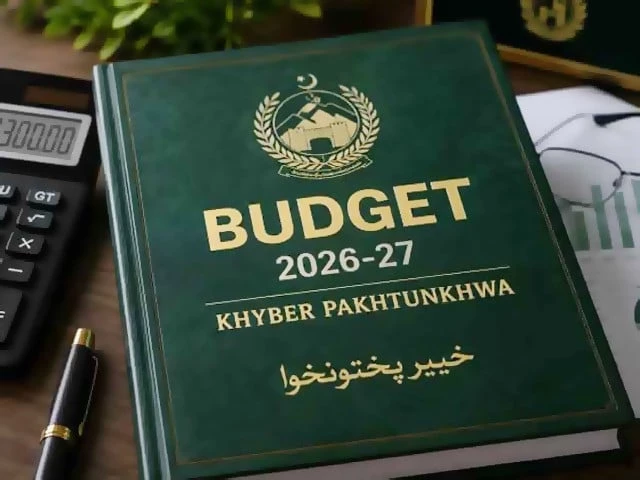
Karachi: Finance Minister Muhammad Aurangzeb presented Pakistan’s federal budget for fiscal year 2026–27 in the National Assembly on Friday, unveiling a broad economic roadmap focused on stabilisation, structural reforms, and gradual growth recovery.
According to Beyond Time News, the government has set a GDP growth target of 4% while projecting inflation at 8.2% and a budget deficit of 3.6% of GDP. The finance minister described the budget as a balanced effort to maintain fiscal discipline while supporting economic expansion.
Economy Shows Recovery Amid Challenges
During his budget speech, Aurangzeb said Pakistan’s economy grew by 3.7% in FY2025–26 despite severe floods and regional tensions. He added that the size of the economy has reached $452 billion.
Moreover, per capita income rose to $1,901, reflecting gradual improvements in macroeconomic indicators. Large-scale manufacturing also posted its strongest growth in four years, signaling industrial recovery.
According to Beyond Time News, the government attributes this improvement to fiscal stabilisation measures and tighter economic management.
Inflation, Deficit and Fiscal Targets for FY2026–27
For the upcoming fiscal year, the government has outlined several key macroeconomic targets:
- GDP growth: 4%
- Inflation: 8.2%
- Budget deficit: 3.6% of GDP
- Primary surplus: 2% of GDP
Inflation currently stands at 7%, but officials expect it to ease further as external pressures decline.
Finance Minister Muhammad Aurangzeb noted that global tensions, particularly in the Middle East, have impacted prices. However, he said inflation is expected to stabilize once conditions improve.
Revenue Expansion and Tax Collection Reforms
The Federal Board of Revenue (FBR) has been tasked with collecting Rs15,264 billion in tax revenue, while non-tax revenue is estimated at Rs5,336 billion.
Aurangzeb highlighted significant progress in tax collection over the past three years, stating that FBR revenues increased from Rs7.2 trillion to Rs13 trillion.
Additionally, he emphasized stronger enforcement and a broader tax base as key drivers of this growth.
According to Beyond Time News, the government is also focusing on digitalization and compliance reforms to improve efficiency.
Major Tax Relief for Salaried Class and Businesses
The budget includes substantial relief measures for salaried individuals and businesses.
Key announcements include:
- Income up to Rs600,000 annually exempt from tax
- Middle-income tax slabs reduced from 23% to 20%
- Super tax on high-income earners reduced from 10% to 8%
- Property withholding tax for filers reduced from 5.5% to 2.75%
- Export tax reduced from 2% to 1.25%
- Export Development Surcharge abolished
In addition, the government is considering removing the super tax on exporters to improve competitiveness.
According to Beyond Time News, these measures aim to support consumption, increase investment, and strengthen export performance.
Focus on Privatization and State Reforms
Aurangzeb reiterated the government’s commitment to privatization, stating that the private sector will lead future economic growth.
He highlighted recent transactions, including the privatization of First Women Bank and Pakistan International Airlines (Pakistan International Airlines), which he said was completed through a transparent auction process that generated Rs185 billion.
Furthermore, the government plans to privatize DISCOs, GENCOs, and airports in the next phase of reforms.
According to Beyond Time News, these steps are part of a broader strategy to reduce state burden and improve efficiency.
Defence, Infrastructure and Connectivity Spending
The budget allocates Rs3 trillion for national defence, reflecting security priorities.
In addition, Rs365 billion has been earmarked for infrastructure development, including highways, railways, and ports.
Major projects include:
- Karachi–Rohri section of ML-1 railway line
- Rs157.5 billion for highways
- Rs100 billion for N-25 dual carriageway conversion
- Rs30 billion for M-6 Sukkur–Hyderabad Motorway
These investments aim to improve connectivity and support trade and logistics networks.
Energy Sector Reforms and Circular Debt Control
The finance minister described energy as a “lifeline of the economy” and announced progress in managing circular debt.
He said net-zero accumulation of circular debt has been achieved. Moreover, Rs1,091 billion has been allocated for electricity subsidies.
A new targeted subsidy system will be introduced in January 2027 to improve transparency and efficiency.
Aurangzeb also revealed savings of $1.2 billion after renegotiating LNG agreements with Qatar and Italy.
According to Beyond Time News, these reforms aim to reduce fiscal pressure in the energy sector.
Read more:Federal Budget 2026-27 Allocates Rs89 Million for Quetta Expo Centre Completion
Social Protection and Youth Development
The government allocated significant resources for social welfare programs:
- Rs71 billion for Apna Ghar housing scheme
- Rs54 billion for low-cost housing initiatives
- Benazir Kafalat Programme to cover 12 million families
- Benazir Taleemi Wazaif to benefit 9.2 million children
- Rs46 billion for higher education scholarships
- Rs22 billion for Daanish Schools
Aurangzeb emphasized that 68% of Pakistan’s population is under 30, making youth development a national priority.
Digital Economy and IT Growth
Pakistan’s IT sector continued its upward trend, with exports rising 20% to $4.5 billion.
The finance minister announced the rollout of 5G services in five cities and highlighted strong digital adoption across the economy.
Key indicators include:
- 92% of remittances received through bank accounts
- Digital merchant integration increased to 1.67 million
- 39,000 companies registered with SECP
According to Beyond Time News, these developments reflect increasing digital transformation in Pakistan’s economy.
Industrial Expansion and SEZ Development
The government announced the conversion of 6,860 acres of Pakistan Steel Mills land into a Special Economic Zone (SEZ).
This initiative aims to attract investment and generate employment opportunities.
Additionally, industrial design and automation centres will be established in Karachi, Lahore, and Sialkot.
Climate Impact and External Vulnerabilities
Aurangzeb highlighted the impact of climate change, stating that flood-related losses reached Rs822 billion.
He stressed the need for resilience planning as Pakistan remains vulnerable to environmental shocks.
Despite challenges, he said investor confidence has improved due to better economic management and access to global capital markets.
Conclusion
The Budget 2026–27 outlines an ambitious economic roadmap focused on stabilisation, reform, and gradual growth recovery. With tax relief measures, privatization plans, energy reforms, and digital expansion, the government aims to strengthen macroeconomic stability while supporting long-term development.
However, successful implementation will depend on consistent policy execution, global economic conditions, and sustained fiscal discipline.
FAQs
1. What is Pakistan’s GDP growth target for FY2026–27?
The government has set a growth target of 4%.
2. What is the expected inflation rate?
Inflation is projected at 8.2% for the next fiscal year.
3. What tax relief has been announced?
Income up to Rs600,000 is tax-free, and several tax rates for salaried individuals and exporters have been reduced.
4. Which major sectors are prioritized in the budget?
Defence, energy, infrastructure, IT, and social protection are key focus areas.
5. What is the budget deficit target?
The deficit is projected at 3.6% of GDP.
SEO Hashtags
#PakistanBudget2026 #Budget202627 #PakistanEconomy #FinanceMinister #EconomicGrowth #TaxReliefPakistan #PSX #InflationPakistan #IMF #FiscalPolicy #PakistanNews #EconomicReform

One thought on “Pakistan Budget 2026-27: Government Targets 4% Growth, Major Tax Relief and Wide-Ranging Economic Reforms”
Comments are closed.