
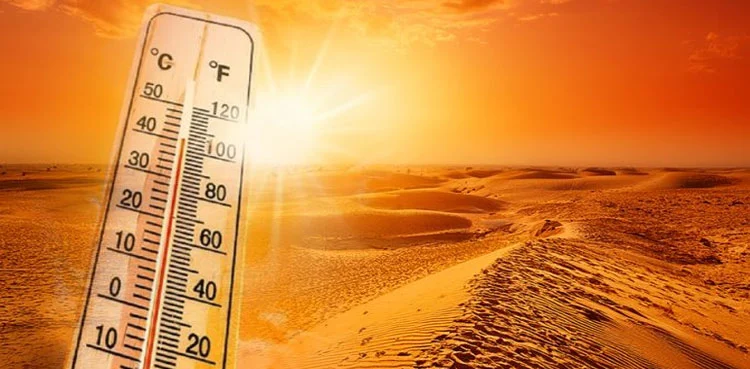
Islamabad: Extreme hot and dry weather conditions continue to grip large parts of Pakistan, with temperatures soaring to dangerous levels across several cities. The Pakistan Meteorological Department (PMD) reported that mercury reached 48°C in Dadu on Tuesday, marking one of the hottest readings of the season.
According to Beyond Time News, the ongoing heatwave has affected multiple regions, particularly in Sindh and southern Punjab, where daytime temperatures remain significantly above seasonal averages.
Severe Heat Grips Southern Pakistan
The PMD confirmed that Jacobabad and Sibi recorded temperatures of 47°C, while several cities in Punjab also experienced intense heat.
Jhang, Sahiwal, Sargodha, Faisalabad, and Dera Ghazi Khan all recorded maximum temperatures of 45°C, placing large populations under severe heat stress conditions.
Officials said the prolonged heatwave has increased discomfort levels and raised concerns about health risks, especially for vulnerable groups such as children, the elderly, and outdoor workers.
Major Cities Record High Temperatures
The weather department also reported high temperatures in major urban centers.
Lahore recorded a maximum of 43°C, while Peshawar reached 42°C. Islamabad experienced a high of 41°C, reflecting unusually hot conditions in the federal capital.
Karachi, although relatively cooler in comparison, recorded a maximum temperature of 36°C. However, the “feels-like” temperature in the city rose sharply to 45°C due to high humidity levels.
According to Beyond Time News, humid conditions in coastal areas have significantly increased the perceived heat intensity, making outdoor activity more difficult.
Heatwave Alert Issued Across the Country
The Pakistan Meteorological Department had earlier issued a nationwide heatwave alert covering the period from June 7 to June 12, 2026.
The alert warned of extreme heat conditions in Sindh and Balochistan, while Punjab was expected to experience moderate to severe heat levels.
Meteorologists said the current weather pattern is driven by high-pressure systems that are limiting cloud formation and rainfall activity across the region.
Public Health Advisory Issued
Authorities have urged citizens to take precautionary measures as temperatures continue to rise.
The PMD advised people to avoid direct sunlight during peak daytime hours, stay hydrated, and limit outdoor activities whenever possible.
Health experts warn that prolonged exposure to extreme heat can lead to dehydration, heat exhaustion, and heatstroke, particularly among vulnerable populations.
According to Beyond Time News, hospitals in several cities are on alert to handle potential heat-related emergencies as temperatures remain elevated.
Impact on Daily Life and Urban Areas
The ongoing heatwave has disrupted daily routines in many parts of the country. Outdoor workers, including laborers and delivery personnel, face particularly difficult conditions during peak afternoon hours.
In urban areas, increased electricity demand has also placed pressure on power supply systems as residents rely heavily on cooling appliances.
Water consumption has risen significantly in several cities, with local authorities urging residents to use resources carefully.
Read more:Dadu Breaks Heat Record as Temperature Soars to 51.5°C in Sindh
Weather Pattern Expected to Persist
Meteorologists say the current heatwave may continue in the coming days, with little immediate relief expected.
Hot and dry conditions are likely to persist across most of the country until the influence of the high-pressure system weakens.
Officials continue to monitor the situation closely and update forecasts regularly to inform the public about changing weather conditions.
Climate Concerns and Rising Temperatures
Experts note that Pakistan is increasingly vulnerable to extreme weather events, including heatwaves, floods, and drought-like conditions.
Rising global temperatures and changing climate patterns have contributed to more frequent and intense heatwaves in recent years.
According to Beyond Time News, environmental specialists stress the importance of long-term climate adaptation strategies, including improved urban planning, water conservation, and heat-resilient infrastructure.
Conclusion
As temperatures continue to rise across Pakistan, authorities are urging citizens to remain cautious and follow safety guidelines. With several cities experiencing extreme heat, public awareness and preparedness remain critical to reducing health risks during the ongoing heatwave.
FAQs
What was the highest temperature recorded in Pakistan today?
Dadu recorded the highest temperature at 48°C.
Which cities recorded 47°C temperatures?
Jacobabad and Sibi both recorded 47°C.
How hot did Karachi feel during the heatwave?
Karachi recorded 36°C, but the “feels-like” temperature reached 45°C due to humidity.
What advice has the PMD issued?
The PMD advised people to avoid direct sunlight, stay hydrated, and limit outdoor activity.
How long will the heatwave last?
The heatwave alert is valid from June 7 to June 12, 2026, with hot conditions expected to continue during this period.
#PakistanWeather #Heatwave #PMD #KarachiHeat #ExtremeWeather #ClimatePakistan #WeatherAlert #DaduHeat #PublicSafety #PakistanNews #SummerHeat #ClimateChange

One thought on “Pakistan Faces Intense Heatwave as Temperatures Hit 48°C in Dadu”
Comments are closed.