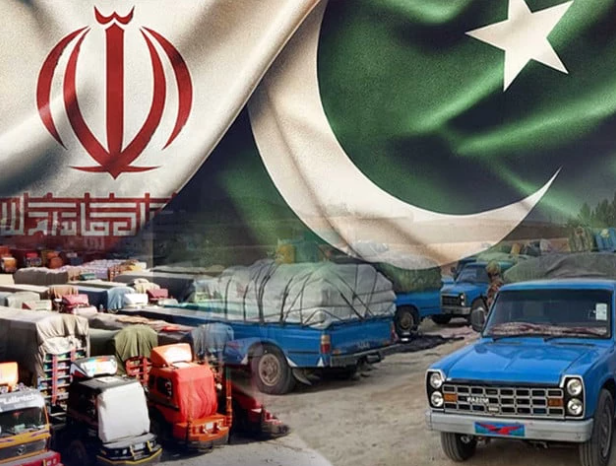
Karachi: Pakistan and Iran are once again looking to strengthen their economic partnership as discussions over easing sanctions on Tehran revive hopes for expanding bilateral trade. While both countries have set an ambitious target of increasing annual trade to $10 billion, analysts believe major financial, banking, and infrastructure challenges must be addressed before that goal can become a reality.
According to Beyond Time News, Pakistan and Iran shared strong trade relations before international sanctions significantly restricted economic activity with Tehran. Bilateral trade exceeded $1.2 billion during the 2009-10 fiscal year, but stricter banking restrictions and financial sanctions sharply reduced formal trade over the following years.
Today, policymakers and business leaders see fresh opportunities to rebuild commercial ties, particularly through improved border infrastructure and stronger regional cooperation.
Trade Potential Remains Strong
Pakistan has a competitive advantage in several export sectors that match Iranian market demand. These include rice, maize, fresh fruits, vegetables, textiles, pharmaceuticals, and surgical instruments.
Economic analysts believe that if financial restrictions ease, Pakistani exporters could quickly regain access to a neighboring market that has traditionally imported many of these products.
According to Beyond Time News, the planned development of Special Economic Zones and cross-border trading centers could also encourage formal trade while reducing reliance on informal commercial routes.
Energy Could Drive Future Growth
Experts say energy cooperation has the potential to become the most valuable part of Pakistan-Iran trade.
KTrade Head of Research Fawad Basir believes agricultural exports could recover relatively quickly. However, he said meaningful growth will largely depend on energy imports, particularly petroleum products and natural gas.
He explained that informal fuel trade along the border would first need to shift into regulated commercial channels before large-scale energy cooperation becomes possible.
Basir also noted that Pakistan could reduce its energy import costs if formal trade mechanisms become operational. Even so, he expects the transition to take time because both countries must first establish reliable banking, payment, and regulatory systems.
While officials have spoken about achieving $10 billion in annual trade, Basir believes a more realistic short-term target would be around $2 billion.
He said trade could gradually expand into higher-value sectors once financial and operational arrangements become more efficient.
Pakistan and Iran Reaffirm Strategic Partnership, Pledge Greater Cooperation for Regional Peace
Failed Rice Export Highlights Banking Problems
A recent rice export agreement illustrates the practical challenges facing businesses involved in Pakistan-Iran trade.
According to Beyond Time News, a Pakistani trading company was unable to complete a rice export contract worth €18.675 million with Iran’s Government Trading Corporation because of payment complications and an unusually complex barter arrangement.
Transtrade Global CEO Hassan Ahmed said the transaction depended on a proposed electricity-related barter mechanism involving Iran’s power utility, TAVANIR, and Pakistan’s Central Power Purchasing Agency (CPPA-G).
Instead of using conventional international banking channels, the arrangement linked payment for rice exports with electricity transactions, creating additional legal and financial complications.
Ahmed also pointed out another obstacle. Many government contracts in Iran are prepared in Persian, making negotiations more difficult for foreign exporters.
Exporters Faced Additional Commercial Risks
The proposed agreement required several inspections before payment could be completed.
One of the most challenging conditions required a final inspection at Iran’s Bandar Abbas port after the shipment had already departed from Pakistan.
Ahmed said this exposed exporters to considerable financial risk. If Iranian authorities rejected the cargo after arrival, exporters could face heavy losses with limited legal protection.
He argued that such conditions are uncommon in standard international trade agreements and said stronger institutional support could help Pakistani exporters negotiate more balanced commercial terms.
Border Trade Centres Offer New Opportunities
Pakistan has already identified five cross-border trading centres designed to encourage legal trade with Iran.
These include:
- Taftan-Minjaveh
- Ladgasht-Jalaq
- Parome-Kuhak
- Mand-Peshin
- Santsar-Nobandan
These facilities are expected to simplify customs procedures, lower transaction costs, and encourage businesses to move away from informal trade networks.
If fully developed, the centres could improve supply chains and strengthen economic activity in Pakistan’s border regions.
Iran-Pakistan Gas Pipeline Still Faces Uncertainty
The long-discussed Iran-Pakistan gas pipeline remains one of the largest potential energy projects between the two countries.
The pipeline is designed to deliver up to 750 million cubic feet of natural gas per day, helping Pakistan address chronic energy shortages while supporting industrial production and economic growth.
However, analysts caution that the project still faces major hurdles.
According to Beyond Time News, progress depends not only on the easing of international sanctions but also on renegotiating commercial terms, including gas pricing and contractual conditions, to ensure the project remains economically viable for Pakistan.
Why Stronger Trade Matters
Iran shares a long border with Pakistan, making it one of the country’s most important regional trading partners.
Expanding legal trade could benefit exporters, improve border economies, create employment opportunities, and reduce dependence on informal trade channels.
Greater economic cooperation could also strengthen regional connectivity and improve energy security at a time when Pakistan continues to face rising import costs and industrial energy shortages.
Although several obstacles remain, experts believe gradual progress in banking, customs procedures, and infrastructure could lay the foundation for stronger bilateral trade over the coming years.
Conclusion
Pakistan and Iran have renewed hopes of expanding economic cooperation, but reaching the long-term goal of $10 billion in annual trade will require sustained policy reforms and practical solutions.
Improved banking channels, modern border infrastructure, and commercially viable energy projects will play a central role in unlocking the full potential of bilateral trade. Until then, experts expect trade to grow gradually as both countries work to remove long-standing financial and logistical barriers.
Frequently Asked Questions
Why did Pakistan-Iran trade decline?
Trade declined mainly because international sanctions on Iran disrupted banking services, payment systems, and formal commercial transactions.
What products does Pakistan export to Iran?
Pakistan exports rice, maize, fruits, vegetables, textiles, pharmaceuticals, and surgical instruments, among other goods.
Why is the Iran-Pakistan gas pipeline important?
The pipeline could supply up to 750 million cubic feet of natural gas per day, helping Pakistan improve energy security and support industrial growth.
What prevented the recent rice export deal?
The €18.675 million agreement faced problems because of banking restrictions, a complicated barter payment mechanism, and strict inspection requirements.
Can Pakistan and Iran achieve $10 billion in annual trade?
Experts believe the target is achievable over the long term, but banking reforms, improved payment systems, and stronger infrastructure are needed before trade can expand significantly.
Hashtags
#PakistanIranTrade
#PakistanEconomy
#IranEconomy
#RegionalTrade
#EnergySecurity
#GasPipeline
#BorderTrade
#PakistanBusiness
#EconomicCooperation
#TradeDevelopment