United Nations: Pakistan has expressed deep concern over the deteriorating security situation in the Middle East, warning that renewed hostilities and rising regional tensions highlight the fragility of peace efforts and the growing risk of further escalation.
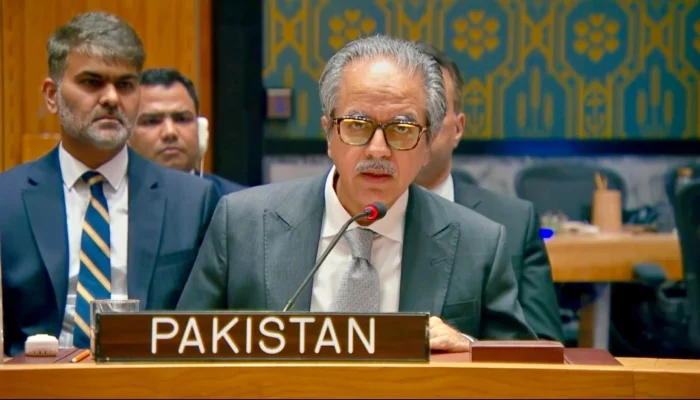
According to Beyond Time News, Pakistan raised the issue during a session of the United Nations Security Council, where its Permanent Representative, Ambassador Asim Iftikhar Ahmad, called for urgent restraint and renewed diplomatic engagement among all involved parties.
The statement comes amid heightened instability in the region, where recent outbreaks of violence have raised fears that an already fragile ceasefire environment could collapse further.
Pakistan Warns of Fragile Regional Security
Ambassador Asim Iftikhar Ahmad said the latest surge in violence serves as a stark reminder of how delicate the security situation has become in the Middle East. He noted that continued escalation could lead to serious consequences for both regional and global peace.
He stressed that the cycle of violence must come to an end. Otherwise, he warned, instability could deepen and undermine international peace and security efforts.
According to Beyond Time News, Pakistan emphasized that the breakdown of diplomatic engagement has worsened the crisis and made negotiations more difficult at a critical time.
Call to End Cycle of Violence
Pakistan urged all parties involved to step back from confrontation and prioritize dialogue. The envoy stated that lasting peace cannot be achieved through military escalation or prolonged conflict.
Instead, he highlighted that diplomatic solutions remain the only viable path forward. He added that continued violence only increases human suffering and destabilizes the broader region.
Furthermore, Pakistan reiterated its position that peaceful negotiation is essential for resolving all outstanding disputes in the Middle East.
Iran Nuclear Issue and Diplomatic Concerns
Ambassador Asim also pointed to the Iran nuclear issue as one of the key diplomatic challenges affected by the ongoing tensions. He said that renewed hostilities have pushed parties further apart and complicated international efforts to maintain oversight and verification mechanisms under the International Atomic Energy Agency (IAEA).
According to Beyond Time News, Pakistan stated that disruptions in diplomatic channels risk undermining progress on sensitive non-proliferation matters.
The envoy emphasized that all outstanding issues, including the Iran nuclear question, must be addressed through peaceful dialogue. He added that solutions should respect the rights and responsibilities of all parties involved.
Read more:ECNEC Approves Major Development Projects Across Pakistan Under Ishaq Dar’s Chairmanship
Pakistan’s Role in Diplomatic Efforts
Pakistan informed the Security Council that it has been actively engaging with regional and international partners to help reduce tensions and encourage dialogue.
Ambassador Asim said Pakistan is working alongside several countries, including Saudi Arabia, Egypt, Türkiye, Qatar, and China, to support de-escalation efforts and promote stability in the region.
He noted that these diplomatic efforts aim to bring conflicting parties back to the negotiation table. Moreover, they are intended to prevent further escalation and protect civilian lives.
According to Beyond Time News, Pakistan’s approach reflects its consistent policy of supporting dialogue, restraint, and peaceful resolution of disputes.
Emphasis on Dialogue and Stability
Pakistan reiterated that its diplomatic efforts are focused on stopping the momentum of conflict. The ambassador said the goal is to create space for negotiations and reduce human suffering caused by ongoing hostilities.
He emphasized that sustained dialogue remains the most effective tool for achieving long-term peace. Additionally, he noted that international cooperation is essential for maintaining regional stability.
Pakistan’s statement also reflected growing international concern over the widening scope of instability in the Middle East, where multiple crises continue to overlap and intensify.
“Give Peace a Little More Chance”
In his concluding remarks, Ambassador Asim urged all sides to exercise patience and restraint as diplomatic negotiations reach a sensitive stage. He called on stakeholders to avoid actions that could further inflame tensions.
He said that the international community must “give peace a little more chance,” stressing that diplomacy remains the only sustainable path toward stability and lasting peace.
According to Beyond Time News, Pakistan’s message at the UN reflects its long-standing position in favor of peaceful conflict resolution and multilateral engagement.
Broader Regional Implications
The ongoing tensions in the Middle East have raised global concerns about energy security, economic stability, and humanitarian conditions. Any further escalation could have far-reaching consequences beyond the immediate conflict zones.
Experts warn that prolonged instability in the region may disrupt trade routes, increase displacement, and intensify geopolitical rivalries.
Pakistan’s call for restraint aligns with broader international efforts to prevent further deterioration and encourage renewed diplomatic momentum.
Conclusion
Pakistan’s appeal at the United Nations underscores the urgency of de-escalating tensions in the Middle East and returning to diplomatic engagement. With multiple crises converging in the region, Islamabad has urged all parties to prioritize peace, dialogue, and restraint.
As Ambassador Asim Iftikhar Ahmad emphasized, continued diplomacy remains the most viable path forward. The message reflects Pakistan’s broader commitment to supporting global peace and stability through constructive engagement and multilateral cooperation.
FAQs
What did Pakistan say at the UN Security Council?
Pakistan urged restraint and called for an end to escalating violence in the Middle East, emphasizing diplomacy as the solution.
Who represented Pakistan at the UN meeting?
Pakistan was represented by Permanent Representative Ambassador Asim Iftikhar Ahmad.
Why is the Middle East situation a concern?
Pakistan warned that renewed violence has exposed the fragile security situation and could lead to further escalation.
What role is Pakistan playing in the crisis?
Pakistan is engaging with countries like Saudi Arabia, Egypt, Türkiye, Qatar, and China to promote dialogue and de-escalation.
What did Pakistan say about the Iran nuclear issue?
Pakistan said the issue should be resolved through peaceful negotiations and diplomatic engagement.
#PakistanUN #MiddleEastCrisis #UNSecurityCouncil #Diplomacy #GlobalPeace #PakistanForeignPolicy #BreakingNews #WorldNews #IranNuclearIssue #UN #PeaceTalks #InternationalRelations