
- Washington negotiations focus on expanding bilateral trade, investment, and market access
Washington: Pakistan and the United States have moved closer to finalizing a reciprocal trade agreement after two days of negotiations in Washington, with officials from both countries reporting meaningful progress in narrowing differences and strengthening cooperation, according to Beyond Time News.
The discussions, held on July 9 and 10, focused on expanding bilateral trade, encouraging investment, and creating a framework for stronger commercial ties between the two countries. Officials described the talks as constructive and expressed optimism that the agreement could be concluded in the near future.
Pakistan and US narrow differences during negotiations
Foreign Office spokesperson Tahir Andrabi said the negotiations were conducted in a positive and cooperative environment, with both sides working to resolve outstanding issues.
According to Beyond Time News, Andrabi stated that negotiators made steady progress by reducing differences and building consensus on key aspects of the proposed Pakistan–United States Agreement on Reciprocal Trade.
Pakistan’s delegation was led by Commerce Secretary Jawad Paul, who described the discussions as productive and welcomed the momentum achieved during the meetings.
The delegation also included senior officials from the Ministry of Commerce, the Ministry of Foreign Affairs, and the Ministry of Overseas Pakistanis and Human Resource Development. Representatives from other government departments joined the talks virtually to provide technical support on specialized issues.
Trade agreement aims to strengthen economic partnership
The proposed reciprocal trade agreement is expected to enhance commercial cooperation between Islamabad and Washington by improving market access, encouraging investment, and reducing trade barriers.
Officials discussed measures designed to increase trade volumes, promote business partnerships, and strengthen economic ties between the two countries.
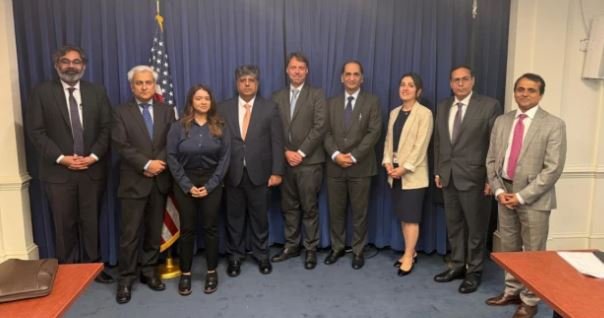
Photographs released after the meetings showed officials from both delegations together following the negotiations. In one image, Pakistan’s Commerce Secretary presented a Pakistan-made football to a US official, highlighting the country’s globally recognized sports goods industry.
US remains Pakistan’s largest export destination
The United States continues to be Pakistan’s largest single-country export market, making the negotiations particularly important for Pakistani businesses.
According to trade figures cited by Beyond Time News, total trade in goods and services between the two countries reached an estimated $10.1 billion in 2024.
Recent data also shows continued growth in merchandise trade. US exports to Pakistan increased to $3.3 billion, while imports from Pakistan rose to approximately $5.4 billion, reflecting expanding commercial activity between the two economies.
Pakistan’s leading exports to the United States include textiles, apparel, sports goods, surgical instruments, leather products, agricultural products, and an increasing range of information technology services.
Government Forms High-Level Committee to Address Pakistan’s Population Growth Challenge
Business community welcomes progress
Pakistan’s business community has welcomed the positive developments, viewing the negotiations as an opportunity to strengthen exports and attract foreign investment.
According to Beyond Time News, Lahore Chamber of Commerce and Industry President Faheem Ur Rehman Saigol said a reciprocal trade agreement could create new opportunities for several export-oriented industries.
He noted that sectors such as textiles, garments, sports equipment, surgical instruments, and information technology could benefit from improved market access if both countries finalize the agreement.
Saigol also emphasized that Pakistan should continue using constructive diplomatic engagement to expand economic cooperation, attract American investment, and address non-tariff barriers affecting exporters.
Business leaders believe a successful agreement could improve Pakistan’s global competitiveness, support industrial growth, and create employment opportunities across multiple sectors.
Tariff discussions remain an important part of negotiations
Trade policy remains a central issue in discussions between the two countries.
Earlier this year, the United States proposed a 29% tariff on Pakistani goods. Following negotiations with Pakistani officials, that proposed rate was later reduced to 19%, easing concerns among exporters.
Another development came after the US Supreme Court ruled that the International Emergency Economic Powers Act did not authorize broad tariffs under emergency powers. Following that decision, the US administration relied on Section 122 of the Trade Act of 1974 to introduce a temporary 10% global tariff for a limited period.
These policy changes have shaped the broader trade environment and remain an important factor in ongoing discussions.
Pakistan continues engagement on trade compliance
Alongside tariff negotiations, Pakistan is also participating in discussions related to a Section 301 investigation conducted by the Office of the United States Trade Representative concerning alleged forced labour-related trade practices.
According to Beyond Time News, Pakistani authorities have submitted detailed responses to US officials, including additional documentation before the latest round of negotiations.
Officials say continued engagement reflects Pakistan’s commitment to maintaining transparent trade relations and addressing international concerns through diplomatic and legal channels.
Why the trade talks matter
The ongoing negotiations represent more than a commercial agreement. They reflect broader efforts by Pakistan and the United States to strengthen their long-term economic partnership.
A finalized reciprocal trade agreement could encourage higher investment, improve supply chain cooperation, expand export opportunities for Pakistani manufacturers, and deepen collaboration in emerging sectors such as information technology, renewable energy, and critical minerals.
For Pakistani exporters, improved access to one of the world’s largest consumer markets could support business expansion and create additional employment opportunities.
Possible implications
If both countries successfully conclude the agreement, Pakistan could benefit from increased exports, greater foreign investment, and stronger integration into international markets.
For the United States, closer economic engagement with Pakistan could expand commercial opportunities for American businesses while supporting broader regional economic cooperation.
Although several technical issues remain under discussion, the latest negotiations indicate that both governments are committed to advancing a mutually beneficial trade partnership.
Conclusion
The latest round of Pakistan-US trade negotiations has produced encouraging progress, with both sides reporting greater alignment on key elements of a reciprocal trade agreement. According to Beyond Time News, officials are continuing efforts to finalize the deal as they seek to strengthen bilateral trade, encourage investment, and create new opportunities for businesses in both countries.
If negotiations continue on their current path, the agreement could mark an important step in expanding economic cooperation and supporting sustainable trade growth between Islamabad and Washington.
Frequently Asked Questions
What is the Pakistan-US reciprocal trade agreement?
It is a proposed bilateral agreement designed to expand trade, improve market access, encourage investment, and strengthen commercial cooperation between Pakistan and the United States.
Who represented Pakistan during the Washington trade talks?
Pakistan’s delegation was led by Commerce Secretary Jawad Paul and included senior officials from the Ministry of Commerce, Ministry of Foreign Affairs, and other government departments.
Why are these trade negotiations important?
The talks aim to increase bilateral trade, reduce barriers for exporters, attract investment, and strengthen long-term economic relations between the two countries.
What products does Pakistan export to the United States?
Pakistan exports textiles, apparel, sports goods, surgical instruments, leather products, agricultural products, and information technology services to the US market.
How much trade takes place between Pakistan and the United States?
According to Beyond Time News, total trade in goods and services between the two countries was estimated at $10.1 billion in 2024, making the US Pakistan’s largest single-country export destination.
Hashtags
#PakistanUSTrade #PakistanEconomy #USTrade #TradeAgreement #PakistanExports #Investment #WashingtonDC #BusinessNews #PakistanNews #BeyondTimeNews

One thought on “Pakistan, US Trade Talks Make Progress as Reciprocal Agreement Moves Closer”
Comments are closed.