
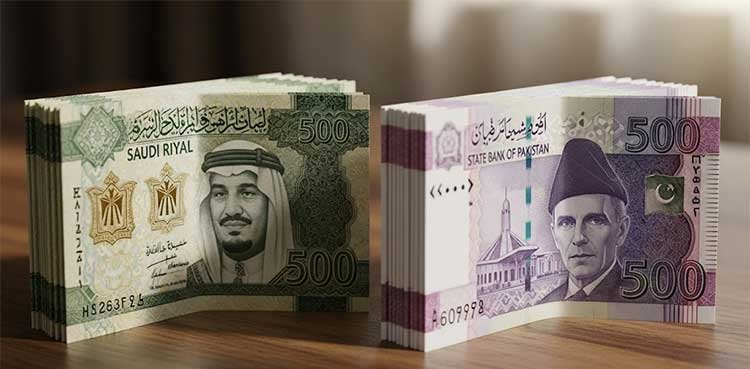
Saudi Riyal Drops to One of the Lowest Levels in Recent Months
Karachi: The Saudi Riyal (SAR) recorded a noticeable decline against the Pakistani Rupee (PKR) in the open market on Thursday, May 21, 2026.
According to Beyond Time News, the Saudi Riyal closed at Rs74.06 for buying, while the selling rate was reported around Rs74.63 in currency markets across Karachi.
Currency dealers described the latest drop as one of the weakest levels seen in recent months.
Saudi Riyal Remains in Narrow Trading Range
Market analysts noted that the SAR to PKR exchange rate has remained within a very tight range since January 2026.
Despite daily fluctuations, the Saudi Riyal has continued trading below the 2025 peak level of Rs76.03 recorded last year.
Experts say the prolonged stability reflects controlled market conditions and relatively steady foreign exchange flows.
Remittances Continue to Support Pakistan’s Economy
The Saudi Riyal remains one of the most important foreign currencies for Pakistan because millions of overseas Pakistanis work in Saudi Arabia.
Workers employed in construction, healthcare, hospitality, and domestic services regularly send money home to support their families.
According to Beyond Time News, Saudi Arabia remained Pakistan’s largest remittance source, contributing more than $913 million in a single month during 2025.
Cumulative remittances during the fiscal period from July 2024 to May 2025 reportedly reached nearly $35 billion.
Lower Riyal Creates Pressure on Families
At the current exchange rate, 1,000 Saudi Riyals convert to around Rs74,060.
Although remittances continue to provide major financial support, the lower exchange rate has reduced the overall rupee value received by many families.
As a result, households dependent on overseas income may face additional pressure due to inflation and rising living costs.
Impact on Trade and Imports
Economists say a softer Saudi Riyal can also create some economic benefits for Pakistan.
Lower exchange rates may reduce the cost of importing Saudi crude oil, petroleum products, and petrochemicals.
In addition, slightly cheaper imports can help ease pressure on Pakistan’s trade balance and foreign exchange reserves.
Understanding SAR and PKR
The Saudi Riyal is officially managed under a fixed exchange system linked closely to the US dollar.
Meanwhile, the Pakistani Rupee operates under a managed float system influenced by inflation, reserves, remittances, and trade conditions.
Financial experts say remittance inflows remain one of the key factors supporting Pakistan’s currency market stability.
Market Outlook
Analysts believe the SAR–PKR pair may continue moving within a narrow range unless there are major changes in oil prices, global dollar strength, or Pakistan’s reserve situation.
Seasonal factors such as Hajj travel, Umrah activity, and overseas worker payments are also expected to influence market demand in the coming months.
Furthermore, experts say continued remittance inflows from Gulf countries remain crucial for Pakistan’s economic stability.
Read more:Saudi Riyal Holds Steady at Rs74.42 Against Pakistani Rupee
Conclusion
According to Beyond Time News, the Saudi Riyal’s decline to Rs74.06 highlights ongoing pressure on remittance-dependent households despite stable inflows from overseas workers.
While the lower rate may provide some relief for importers, many families relying on Gulf earnings continue to feel the impact of reduced rupee conversion value.
FAQs
What is the Saudi Riyal rate in Pakistan today?
The Saudi Riyal was trading at Rs74.06 for buying and around Rs74.63 for selling.
Why is the Saudi Riyal important for Pakistan?
Millions of overseas Pakistanis in Saudi Arabia send remittances back home.
How much is 1,000 Saudi Riyals in Pakistani Rupees?
At the current rate, 1,000 SAR equals approximately Rs74,060.
What affects the SAR to PKR exchange rate?
Factors include remittances, oil prices, dollar strength, reserves, and market demand.
Can the exchange rate change further?
Yes, analysts say global economic conditions and reserve trends may influence future movements.
#SaudiRiyal #SARtoPKR #CurrencyRates #PakistanEconomy #Remittances #ExchangeRate #Karachi #BusinessNews #BeyondTimeNews


One thought on “Saudi Riyal Falls Against Pakistani Rupee – SAR to PKR Rate Update for May 21, 2026”
Comments are closed.