
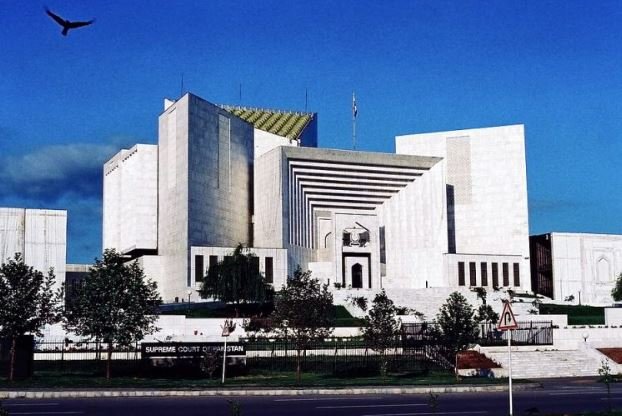
Islamabad: The Supreme Court of Pakistan has ruled that government employees whose services were regularised under the Sindh (Regularisation of Ad-hoc and Contract Employees) Act, 2013, are entitled to seniority from March 25, 2013, the date the law came into effect.
The decision is expected to benefit regularised employees by protecting their seniority, promotion prospects, and other service-related rights.
According to Beyond Time News, a two-member bench comprising Justice Muhammad Ali Mazhar and Justice Musarrat Hilali allowed the appeals filed by the petitioners and set aside a January 27, 2025 ruling of the Sindh Service Tribunal.
Case Involved Contract Employees Appointed in 2006
The petitioners were appointed as Assistant Directors (BPS-17) on a contract basis in 2006.
Their services were later regularised under the Sindh (Regularisation of Ad-hoc and Contract Employees) Act, 2013. A government notification issued on January 16, 2018, also stated that their regularisation would take effect from March 25, 2013.
However, a dispute arose when the department prepared the seniority list of Deputy Directors (BPS-18).
Instead of treating March 25, 2013, as the date of regular appointment, the department used January 16, 2018. The employees challenged the decision, arguing that it affected their seniority and future career progression.
Supreme Court Clarifies Legal Position
In its detailed judgment, the Supreme Court said the law clearly provides that eligible employees are to be treated as regular employees from March 25, 2013.
The Court pointed to Section 3 of the 2013 Act, which contains a deeming clause. This provision gives employees the legal status of regular government servants from the date the law came into force.
The bench observed that such a legal provision cannot be ignored when determining seniority and service rights.
According to the judgment, the legal effect created by the law must be fully implemented by government departments.
Tribunal Decision Overturned
The Supreme Court held that the Sindh Service Tribunal failed to properly consider the legal impact of the 2013 Act.
The Court noted that once the law recognizes employees as regular from March 25, 2013, all related benefits must also be calculated from that date.
As a result, the Tribunal’s decision was set aside and the appeals were allowed.
Seniority Benefits to Follow the Law
The Court further ruled that the general principle of counting seniority from the date of a regularisation notification does not apply in this case.
This is because the Act itself specifies the effective date of regularisation.
The judgment stated that when a law creates a legal fiction, authorities are required to give full effect to it. Therefore, seniority must be counted from March 25, 2013, rather than from a later administrative notification.
Impact on Employees
Seniority plays a key role in government service.
It affects promotions, postings, career progression, and eligibility for higher positions.
Legal experts say the ruling reinforces the principle that statutory rights granted by law cannot be reduced through administrative decisions.
The judgment may also guide future cases involving employees whose services were regularised under special legislation.
Supreme Court Restores Full Judicial Schedule, Ends Austerity Measures Introduced in March 2026
Sindh Government Directed to Revise Seniority
The Supreme Court directed the Sindh Government to revise the petitioners’ seniority by recognizing March 25, 2013, as the effective date of regular appointment.
The provincial government has also been instructed to determine all related service benefits in accordance with the law and applicable service rules.
The ruling brings clarity to the interpretation of the Sindh Regularisation Act, 2013, and strengthens legal protections for regularised employees.
FAQs
What did the Supreme Court decide?
The Court ruled that seniority of employees regularised under the Sindh Regularisation Act, 2013, must be counted from March 25, 2013.
Why is March 25, 2013 important?
It is the date on which the Sindh (Regularisation of Ad-hoc and Contract Employees) Act, 2013 came into force.
Why was the case filed?
Employees challenged the use of a 2018 notification date for seniority calculations instead of the date specified by law.
How does seniority affect employees?
Seniority influences promotions, career growth, postings, and other service-related benefits.
What happens next?
The Sindh Government must revise the employees’ seniority and determine their service rights accordingly.
SEO Hashtags
#SupremeCourtPakistan #SindhEmployees #SeniorityCase #SindhGovernment #ContractEmployees #PakistanJudiciary #ServiceRights #GovernmentEmployees #LegalNewsPakistan #PublicSector #PakistanNews #CourtDecision