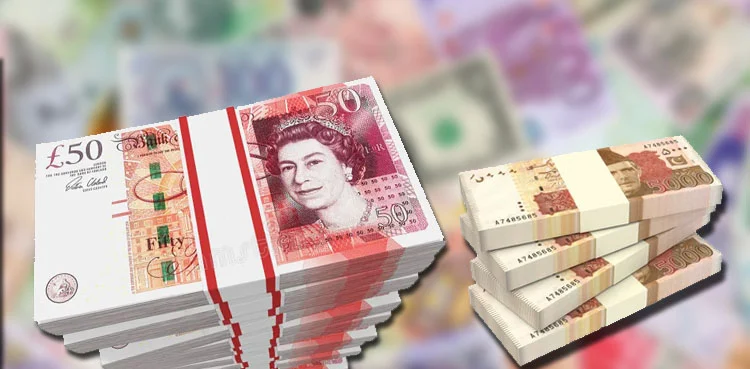
The British Pound (GBP) recorded a slight decline against the Pakistani Rupee (PKR) in the open market on Friday, May 22, 2026. The currency movement reflects minor fluctuations in global forex trends and ongoing pressure on the local currency.
According to Beyond Time News, the latest exchange rates show a small shift in both buying and selling values compared to the previous trading session.
GBP to PKR Rates Show Marginal Decline
In Friday’s trading session, the UK Pound was recorded at Rs. 372.91 in the buying market, while the selling rate stood at Rs. 378.10.
A day earlier, the Pound was trading slightly higher at Rs. 373.10 for buying and Rs. 378.60 for selling. This indicates a minor drop of Rs. 0.19 in the buying rate and Rs. 0.50 in the selling rate.
Although the change is small, it reflects ongoing volatility in the currency market.
British Pound Remains Globally Strong
Despite minor fluctuations against the Pakistani Rupee, the British Pound continues to remain one of the strongest global currencies.
Its strength is supported by the United Kingdom’s stable monetary policy, investor confidence, and relatively resilient economic performance.
As a result, the GBP continues to maintain a strong position against many emerging market currencies.
Pressure Continues on Pakistani Rupee
On the other hand, the Pakistani Rupee remains under pressure due to inflation, external financing requirements, and fluctuations in foreign exchange reserves.
The State Bank of Pakistan has kept its policy rate at 10.50% in an effort to manage inflation and stabilize the economy.
However, currency experts say these measures take time to fully reflect in exchange rate stability.
Impact on Importers and Students
The stronger Pound continues to create financial challenges for Pakistani importers and students studying in the United Kingdom.
At current rates, a payment of £10,000 equals approximately Rs. 3.79 million, significantly increasing overseas education and business costs.
Import-dependent businesses are also facing higher expenses due to currency pressure.
Benefit for Overseas Pakistanis
At the same time, overseas Pakistanis living in the UK are benefiting from the stronger Pound.
Remittances sent to Pakistan convert into higher amounts in rupees, increasing financial support for families back home.
For example, £100 currently converts to nearly Rs. 37,843 in the open market.
Read more:UK Pound to Pakistani Rupee Rate Today – May 20, 2026
Market Outlook for GBP/PKR
Currency analysts expect the GBP/PKR pair to remain relatively stable in the short term, with possible minor fluctuations.
Future movement will depend on several key factors, including UK economic performance, Bank of England policy decisions, Pakistan’s export growth, IMF-related developments, and overall global market sentiment.
Conclusion
The British Pound showed a slight decline against the Pakistani Rupee in today’s trading session, but overall remains strong in global markets. While importers and students face rising costs, overseas Pakistanis continue to benefit from higher remittance value.
According to Beyond Time News, the currency outlook remains stable for now, though external economic factors may influence future changes.
SEO Keywords
GBP to PKR today, UK pound rate in Pakistan 2026, British pound vs Pakistani rupee, forex rates Pakistan, pound sterling exchange rate, Pakistan currency update, GBP PKR forecast
Hashtags
#GBPtoPKR #UKPound #PakRupee #ForexNews #CurrencyRates #PakistanEconomy #ExchangeRate #BeyondTimeNews #FinancialNews #BreakingNews
FAQs
1. What is the UK Pound rate in Pakistan today?
The buying rate is Rs. 372.91 and the selling rate is Rs. 378.10.
2. Did the Pound increase or decrease today?
It saw a slight decrease compared to the previous day.
3. Why is the Pound strong globally?
It is supported by the UK’s stable economy and strong investor confidence.
4. How does this affect Pakistanis?
It increases costs for importers and students but benefits overseas remittances.
5. What factors influence GBP/PKR rates?
UK economic data, monetary policy, Pakistan’s reserves, and global market trends.