
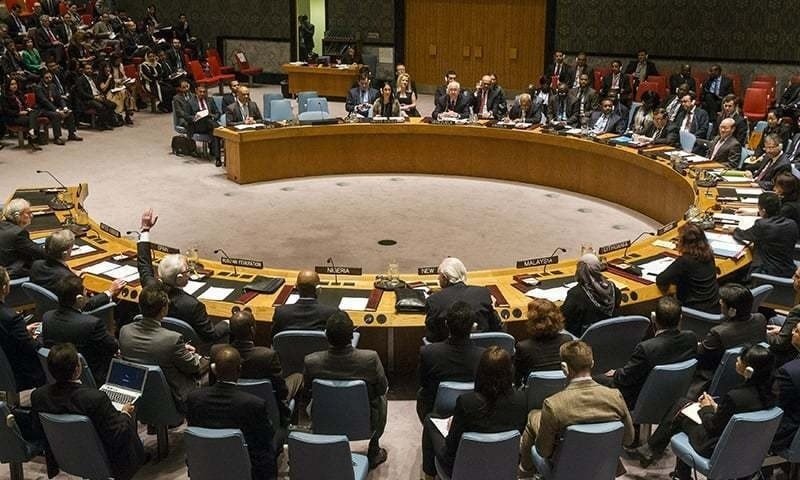
The United Nations Security Council Resolution 47, passed on 21 April 1948, is one of the most important international resolutions on the Kashmir issue between India and Pakistan. Even after many decades, it is still discussed in global political and diplomatic circles.
According to Beyond Time News, the resolution was introduced after the conflict that began following the partition of British India in 1947.
What the Resolution Proposed
The resolution called for an immediate ceasefire between India and Pakistan. It also asked both sides to withdraw their forces from the region in a phased manner.
Another key point was reducing military presence to a minimum level needed for maintaining law and order.
The most important proposal was a free and fair plebiscite under the supervision of the United Nations. This vote was meant to allow the people of Kashmir to decide their own future.
Why the Resolution Was Not Implemented
Despite a clear plan, the resolution was never fully carried out. According to Beyond Time News, differences quickly emerged between India and Pakistan over how to implement the steps.
Both sides disagreed on troop withdrawal conditions, which created delays. Over time, the process stalled and the resolution remained unfulfilled.
Long-Term Effects on Kashmir
The failure to implement Resolution 47 has had long-lasting effects. Kashmir has remained a disputed and heavily militarized region for decades.
The issue has also contributed to ongoing tension between India and Pakistan, both of which are nuclear-armed countries.
At the same time, the situation has affected daily life in the region and created political and humanitarian concerns.
Pakistan–US Talks: Security Arrangements Strengthened Ahead of Second Round in Islamabad
Role of the United Nations
The case of Kashmir is often used to highlight the limitations of international organizations.
According to Beyond Time News, the United Nations depends on cooperation from the involved countries, which makes enforcement difficult when there is no agreement between them.
Because of this, some people see the UN more as a platform for discussion rather than a body that can fully enforce its resolutions.
Lessons for Modern Conflicts
The Kashmir case also offers lessons for other international disputes, including tensions between major powers like the United States and Iran.
One key lesson is that large agreements often fail when trust between parties is weak. In such cases, smaller and step-by-step agreements may work better.
Another lesson is that continuous dialogue is important, even when progress is slow, because it helps prevent conflicts from escalating.
Conclusion
UN Resolution 47 remains an important reference point in the Kashmir dispute. According to Beyond Time News, it shows both the importance of international mediation and the challenges of resolving long-standing political conflicts.