Riyadh/Tehran — Hopes for a breakthrough in efforts to ease tensions between the United States and Iran suffered another setback on Wednesday after both sides exchanged fresh military strikes across the Gulf region, raising concerns about the stability of an already fragile ceasefire.
According to Beyond Time News, the latest confrontation began when US forces targeted a vessel near Iran’s Qeshm Island, prompting retaliatory attacks by Iran against American-linked military assets in the Gulf. The renewed violence highlights the ongoing challenges facing diplomatic efforts aimed at ending months of conflict.
US Targets Tanker Near Qeshm Island
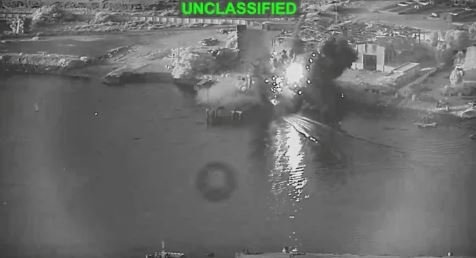
The US military confirmed that it struck an oil tanker identified as the M/T Lexie, a Botswana-flagged vessel, after accusing it of attempting to breach an American-imposed maritime blockade.
According to a statement issued by US Central Command (CENTCOM), the tanker ignored repeated warnings over a 24-hour period while heading toward an Iranian port. US officials said a military aircraft ultimately fired a Hellfire missile into the ship’s engine room, disabling the vessel and preventing it from continuing its journey.
The tanker was reportedly not carrying cargo at the time of the strike. Washington described the operation as a necessary enforcement action under existing military directives in the region.
Iran Launches Retaliatory Missile and Drone Attacks
Iran swiftly condemned the incident and accused the United States of targeting infrastructure connected to communications facilities south of Qeshm Island.
In response, Iran’s Islamic Revolutionary Guard Corps (IRGC) launched a series of missile and drone attacks against what it described as US military interests in the Gulf. Iranian media reported that targets included facilities associated with the US Fifth Fleet as well as military aircraft and bases located in neighboring Gulf states.
The retaliation marked another significant escalation in a conflict that has repeatedly spilled beyond Iran’s borders and affected multiple countries hosting US military personnel.
US Claims Regional Attacks Were Unsuccessful
American military officials stated that the Iranian attacks failed to achieve their intended objectives.
CENTCOM reported that several missiles aimed at Gulf targets either malfunctioned, fell short of their destinations, or were intercepted by regional defense systems. Three missiles reportedly headed toward Bahrain were successfully intercepted, while two missiles launched toward Kuwait failed before reaching their targets.
US officials emphasized that American forces remain fully prepared to defend military installations and personnel across the region.
The latest developments reinforce growing concerns about regional security, particularly as military exchanges continue despite ongoing diplomatic engagement.
Peace Negotiations Remain in Limbo
The renewed violence comes more than three months after the conflict first intensified following US and Israeli military operations against Iran.
Although both Washington and Tehran recently signaled tentative progress toward a possible agreement aimed at ending hostilities, no formal deal has been finalized.
According to Beyond Time News, Iranian media outlets reported that communication between Tehran and Washington has been limited in recent days, raising questions about the future of negotiations.
However, US President Donald Trump insisted that discussions remain active. In a statement shared on social media, he said dialogue between the two sides has continued consistently over recent days despite reports suggesting otherwise.
Diplomatic observers note that the absence of a signed agreement leaves the situation vulnerable to further escalation, particularly as military incidents continue to occur.
Strait of Hormuz Remains Under Pressure
The broader conflict has significantly disrupted regional stability and international trade routes.
One of the most critical concerns remains the Strait of Hormuz, a strategic waterway through which a substantial portion of the world’s energy supplies pass. Maritime traffic through the area has remained severely restricted amid security concerns, contributing to volatility in global oil markets.
Analysts warn that any prolonged disruption could further impact energy prices and place additional pressure on economies already dealing with inflation and supply chain challenges.
Read more:Islamabad Emerge as Strong Candidate for Possible US-Iran Peace Deal Signing
Israel Continues Operations in Southern Lebanon
Beyond the US-Iran confrontation, tensions remain high on another front involving Israel and Lebanon.
Israeli forces reportedly carried out strikes on several towns in southern Lebanon on Tuesday despite a partial ceasefire announced earlier through US mediation.
The ongoing military activity is linked to the broader regional conflict and has intensified concerns about a wider war involving multiple actors across the Middle East.
Lebanese security sources indicated that air operations continued in several areas, while surveillance drones remained active over parts of Beirut. The continued military presence has contributed to anxiety among civilians already affected by months of instability.
Humanitarian and Economic Impact Deepens
Since the conflict erupted in late February, thousands of people have reportedly lost their lives, with casualties concentrated primarily in Iran and Lebanon.
The fighting has also triggered large-scale displacement, damaged infrastructure, and increased humanitarian needs throughout affected regions.
Economic repercussions continue to be felt globally, particularly through fluctuations in energy markets. Rising oil prices have added pressure to businesses and consumers worldwide, demonstrating how regional conflicts can have far-reaching international consequences.
As diplomatic efforts struggle to gain momentum, military exchanges such as Wednesday’s attacks serve as a reminder that the path toward lasting stability remains uncertain.
The coming weeks are expected to be critical as negotiators attempt to revive talks while regional actors seek to avoid a broader escalation that could further destabilize the Middle East and global markets.
FAQs
Why did the US strike the tanker near Qeshm Island?
The US military said the tanker ignored repeated warnings and was attempting to violate an American maritime blockade, prompting forces to disable the vessel.
How did Iran respond to the US strike?
Iran launched missile and drone attacks targeting US-linked military assets in the Gulf region, according to Iranian media reports.
Were the Iranian attacks successful?
US Central Command stated that the attacks were either intercepted, malfunctioned, or failed to reach their intended targets.
Is a peace agreement between the US and Iran close?
While both sides have indicated progress toward a possible agreement, no formal peace deal has been signed yet.
How has the conflict affected global markets?
The conflict has contributed to disruptions in maritime trade routes and increased volatility in oil prices, affecting economies around the world.
#USIranConflict #MiddleEastNews #IranUSRelations #GulfSecurity #StraitOfHormuz #GlobalOilMarkets #RegionalTensions #InternationalDiplomacy #WorldNews #Geopolitics